
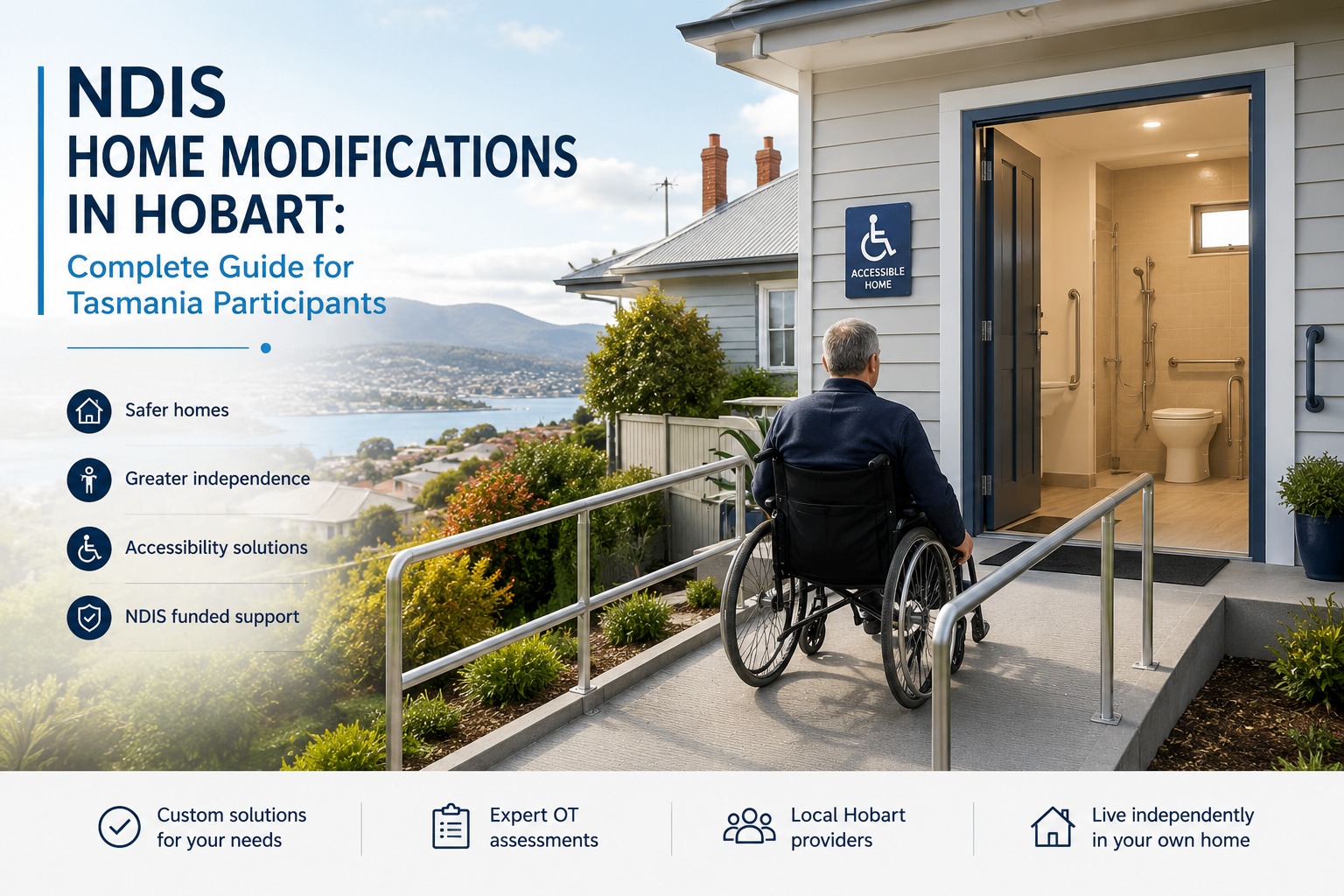
Living in Hobart as a participant with disability or aged care needs can be challenging when your home isn’t designed for accessibility. Standard housing layouts, narrow doorways, steep stairs, and bathrooms without grab rails aren’t just inconvenient; they’re safety hazards that limit your independence.
The frustration is real. You want to stay in your own home, maintain your dignity, and live life on your terms. But without the right modifications, even basic daily activities like showering, moving between rooms, or getting in and out of bed become stressful and potentially dangerous.
Here’s the good news: the National Disability Insurance Scheme (NDIS) provides funding specifically for home modifications that make your Hobart home safer, more accessible, and genuinely liveable. Whether you need a simple grab rail installation or a major bathroom renovation, this guide walks you through everything you need to know about NDIS home modifications in Hobart, Tasmania.
What Are NDIS Home Modifications?
NDIS home modifications Hobart cover structural changes and installations designed to improve accessibility and safety in your home. Think of them as personalized adjustments that transform your living space to match your needs, not the other way around.
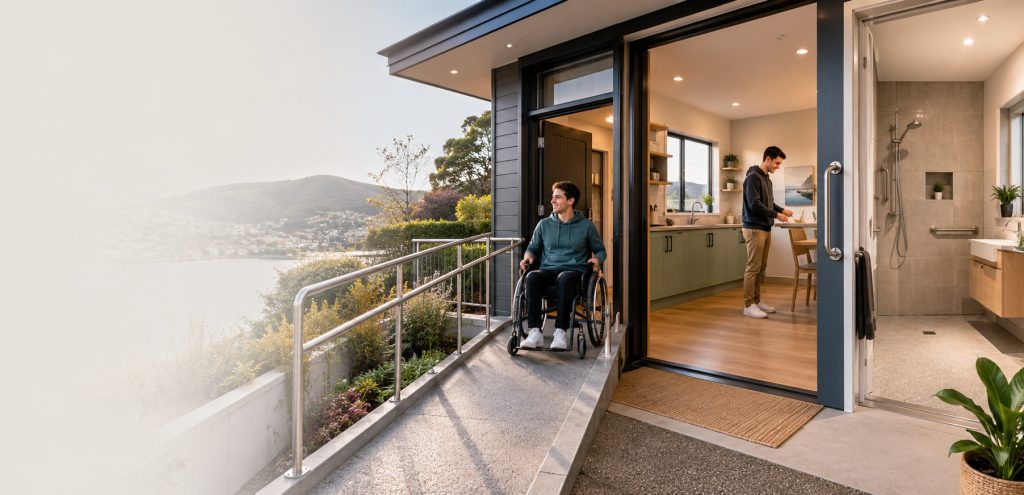
Common modifications include:
- Ramps and rails for wheelchair access and fall prevention
- Bathroom renovations (accessible showers, grab bars, raised toilets)
- Widened doorways to accommodate wheelchairs
- Stair lifts or elevators for multi-story homes
- Accessible kitchen modifications (lowered benches, pull-out drawers)
- Flooring changes (non-slip surfaces, level entries)
- Lighting and electrical outlet adjustments
- Bedroom modifications (bed risers, accessible storage)
- Portable and temporary solutions for rental properties
What makes home modifications Tasmania unique is that they’re funded based on your individual NDIS plan, not a one-size-fits-all approach. Your plan recognizes your specific disability, living situation, and goals, then allocates funding accordingly.
Hobart participants often ask: “Will the NDIS actually pay for this?” The answer is yes, if the modification is reasonable and necessary to help you achieve your goals and increase your independence.
Why NDIS Home Modifications Matter in Hobart
Hobart’s housing stock tells a story. Many homes feature older architecture, narrow hallways, heritage considerations, and designs that predate modern accessibility standards. Add Tasmania’s regional climate and rural areas, and you’ve got a unique set of challenges.
NDIS assistive technology Hobart and modification services aren’t luxuries here, they’re essential services that enable Hobart residents to participate fully in community life.
Key reasons why modifications matter:
- Safety First: Falls are one of the leading causes of disability-related injury. A simple grab rail in the bathroom or ramp at the front door prevents serious accidents.
- Independence: Modifications mean you can shower, cook, and move around your home without constant assistance.
- Cost Savings: While modifications cost money upfront, preventing falls and injuries saves the disability support system money long-term.
- Mental Health: Living in a home that works for your body, not against it, dramatically improves confidence and wellbeing.
- Aging in Place: Whether you’re a younger participant with permanent disability or an aging person with emerging accessibility needs, modifications let you stay in your own home longer.
For Hobart and Tasmania participants, funded modifications are a game-changer. They’re not a handout, they’re an investment in your independence.
How NDIS Funding for Home Modifications Works
Understanding the funding process removes the mystery and helps you plan effectively.
Step 1: Get an Occupational Therapy (OT) Assessment
Your journey toward NDIS home mods Tasmania starts with an Occupational Therapist. An OT assessment for your Hobart home identifies:
- What modifications you actually need (not just want)
- How they’ll help you achieve your NDIS goals
- Realistic costs and timelines
- Whether temporary or permanent solutions work better
Hobart-based OTs can visit your home, understand your specific living situation, and recommend modifications tailored to your space. The NDIS recognizes OT assessments as the gold standard for determining modification necessity.
Many Hobart participants get their OT assessment costs partially or fully covered through their NDIS plan. Ask about this at your NDIS planning meeting.
Step 2: Include Modifications in Your NDIS Plan
When you have your planning meeting with the NDIS, bring:
- Your OT assessment report
- Photos of your home
- Clear explanation of how modifications help you reach your goals
- Quotes from local Hobart providers (if you have them)
The NDIS will allocate a funding amount for NDIS equipment funding Tasmania and modifications. This funding sits in your plan until you use it. Funding lines typically include:
- Home modification line items (exact amount allocated)
- Equipment and assistive technology allowance
- Support coordination to help you organize the work
Step 3: Get Quotes from Local Hobart Providers
Not all builders understand NDIS work. You need providers experienced with:
- NDIS compliance and documentation requirements
- Working with disability and accessibility standards
- Local Hobart knowledge (heritage property restrictions, council regulations)
- Transparent quoting and project management
Getting multiple quotes is standard practice. Quality NDIS-experienced builders will provide detailed quotes that reference your OT assessment and break down costs clearly.
Step 4: Approval and Project Management
Once you have quotes, your NDIS planner or support coordinator reviews them for a reasonable cost. Hobart has competitive pricing compared to major capitals, which works in your favor.
After approval, the builder schedules work. Most modifications take 2-8 weeks, depending on complexity. The NDIS expects regular updates and final completion reports.
What’s Actually Funded? NDIS Home Modifications Coverage
Not everything gets funded, and understanding the boundaries helps you plan realistically.
Definitely Funded (if in your plan):
- Ramps and handrails (outdoor and indoor)
- Accessible bathroom modifications
- Widened doorways for wheelchair access
- Stair lifts or platform lifts
- Accessible kitchen modifications
- Non-slip flooring
- Accessible parking areas
- Smart home technology for accessibility
- Home security modifications (accessible locks, intercoms)
Possibly Funded (depends on your goals and situation):
- General home repairs that happen to improve accessibility
- Portable ramp solutions
- Temporary modifications for rentals
- Modifications for shared living spaces
- Minor electrical or plumbing work related to accessibility
Not Funded:
- General home maintenance or improvements unrelated to disability
- Cosmetic renovations
- Modifications that benefit housemates but not you
- Modifications required by law (like fire exits for rental properties)
- Modifications deemed unreasonable in cost
The key principle: wheelchair accessible homes, Hobart, and other modifications are funded when they’re reasonable, necessary, and help you achieve your NDIS goals.
NDIS Home Modifications in Hobart: What’s Different?
Hobart and Tasmania present unique challenges compared to mainland Australian cities. Understanding these differences helps you navigate the process more smoothly.
Hobart’s Older Housing Stock
Hobart’s charm comes partly from heritage architecture. Beautiful Victorian and colonial homes line the streets, but older construction often means:
- Narrow hallways and doorways (expensive widening)
- Uneven floors and high thresholds
- Limited space for modifications
- Heritage restrictions on external changes (ramps, rails)
- Smaller bathrooms that require creative solutions
If you live in a heritage property, council approval may be needed alongside NDIS approval. Factor this into your timeline and budget.
Tasmania’s Regional Factors
Living outside Hobart’s central area brings additional considerations:
- Limited local providers in rural Tasmania
- Longer travel times for contractors from Hobart
- Regional cost variations
- Fewer equipment suppliers nearby
- Importance of NDIS-experienced builders who understand remote area logistics
Many rural Tasmanian participants successfully get modifications funded, but transport costs and availability require more advance planning.
Builder Availability in Hobart
Hobart’s disability support community is tight-knit. Word-of-mouth recommendations carry real weight. Key facts:
- Fewer NDIS-experienced builders than in Melbourne or Sydney
- Higher per-project attention from builders (smaller market)
- Builders who understand Hobart’s specific housing challenges
- Longer wait times during peak seasons (spring/summer)
- Local builders often charge reasonable rates
NDIS Local Area Coordinator Support
Your Local Area Coordinator (LAC) in Hobart can:
- Recommend trusted local providers
- Explain regional availability and costs
- Help you understand what’s reasonable in Hobart context
- Connect you with other participants who’ve done similar work
Don’t hesitate to lean on your LAC for local guidance.
Finding NDIS Home Modification Providers in Hobart
Success depends partly on finding the right team. Here’s where to look and what to ask.
Occupational Therapists in Hobart
Your OT assessment is foundational. Hobart-based OTs with NDIS experience include:
- Local disability support agencies (Apex Support and others)
- Private OT practices specializing in accessibility
- Community health services
- Rehabilitation centers
When contacting an OT, ask:
- Do you have NDIS experience?
- Can you do home visits in Hobart and surrounding areas?
- What’s your timeline for assessment?
- Will you write recommendations specific to NDIS funding?
Builders and Contractors
Finding the right builder for wheelchair accessible homes Hobart modifications is crucial. Look for:
- Previous NDIS project experience
- References from other participants or disability support agencies
- Professional licenses and insurance
- Detailed quoting process
- Project management capabilities
Questions to ask potential builders:
- How many NDIS home modification projects have you completed?
- Can you work with OT assessments and NDIS approval processes?
- What’s your timeline for a [specific project]?
- Do you have experience with Hobart’s older homes?
- Can you provide references from disability service providers?
Equipment Suppliers
For ramps and rails NDIS Hobart and other equipment:
- Disability equipment retailers in Hobart
- Online suppliers with Hobart delivery
- Builders who supply as part of modification packages
- Apex Support partner suppliers
Support Coordination Services
Your NDIS plan may include support coordination funding. Support coordinators help you:
- Understand your modification options
- Source and vet providers
- Manage the modification process
- Ensure quality work
- Document completion for the NDIS
The Process: Step-by-Step Timeline for Hobart Modifications
Planning helps reduce stress and surprises. Here’s a realistic timeline.
Weeks 1-2: Assessment and Planning
- Contact an Occupational Therapist in Hobart
- Schedule your home assessment
- Complete the assessment
- Receive your OT report with recommendations
Weeks 3-4: NDIS Planning Meeting
- Discuss modifications at your planning meeting
- Present your OT assessment
- Negotiate funding allocation
- Receive your updated NDIS plan with modification funding
Weeks 5-8: Getting Quotes
- Contact 2-3 local Hobart builders
- Request detailed quotes based on your OT assessment
- Review quotes and ask questions
- Select your preferred builder
- Submit quotes to your NDIS planner or support coordinator for approval
Weeks 9-10: Approval and Scheduling
- NDIS approves your chosen provider and quote
- Builder schedules the work
- Confirm timelines and contact person
- Arrange any temporary accommodations if needed
Weeks 11-18: Actual Modification Work
- Contractor completes modifications
- You inspect progress and final work
- Clarify any issues immediately
- Obtain final quotes and completion certificates
- Keep all receipts and documentation
Weeks 19-20: NDIS Completion and Reimbursement
- Provide completion paperwork to your planner
- NDIS reimburses the costs
- Enjoy your more accessible home
This is a realistic timeline for straightforward projects. Complex modifications may take 3-6 months from assessment to completion.
Real Story: Sarah’s Hobart Bathroom Modification
Sarah is a 34-year-old Hobart resident with mobility challenges following a spinal cord injury. She uses a wheelchair and lives in a 1970s weatherboard house with a tiny, inaccessible bathroom.
“I couldn’t shower independently,” Sarah says. “The bathroom was too narrow for my wheelchair, and the shower was a bathtub with high walls. I was relying on my carer twice a day just to get clean.”
Sarah’s journey:
The Assessment: Her occupational therapist recommended a complete bathroom renovation including wheelchair-accessible shower, grab rails, non-slip flooring, accessible toilet, and storage. Cost: $18,500.
The NDIS Planning Meeting: Sarah’s plan allocated $20,000 for home modifications based on her goals of independence and reducing reliance on support. This covered the bathroom fully with $1,500 left for future maintenance.
Getting Quotes: Sarah’s support coordinator helped her contact three Hobart builders. She chose one with strong NDIS experience and who’d worked on heritage Hobart homes before.
The Work: The renovation took 6 weeks. The builder worked around Sarah’s schedule and kept her informed throughout. A few unexpected issues with the old plumbing added $2,000, but it came from her modification budget.
The Outcome: “Now I shower independently every day. It sounds simple, but it’s changed my life. I’m more confident, my carer can focus on other tasks, and I feel like I’m in control of my own space again.”
Sarah’s modification is exactly what the NDIS intended: reasonable, necessary, and genuinely life-changing.
Accessible Bathroom Modifications in Hobart: What You Need to Know
Bathroom modifications are the most common NDIS home mods Tasmania request. Here’s what you should understand about this critical space.
Why Bathrooms Matter
The bathroom is where vulnerability meets independence. For many participants, bathroom accessibility determines whether they can live independently or need daily support.
Standard Hobart Bathroom Modifications Include:
- Accessible shower (walk-in, level entry, or roll-in)
- Grab rails (strategically placed for safety)
- Non-slip flooring
- Accessible toilet (correct height, space for transfers)
- Sink and vanity modifications for wheelchair access
- Accessible storage for personal care items
- Adequate lighting
- Ventilation improvements
- Temperature controls
Costs for Hobart Bathroom Modifications
Expect:
- Simple modifications (rails, flooring): $5,000-$8,000
- Mid-level renovation (new shower, toilet, some structural work): $12,000-$18,000
- Complete bathroom rebuild: $20,000-$35,000+
Hobart’s costs tend to be lower than Melbourne or Sydney but may include travel time for specialized contractors.
Getting the Design Right
Work closely with your OT and builder to design a bathroom that’s both accessible and pleasant to use. You’ll spend significant time in this space.
Key questions:
- Will you use a shower chair or transfer in/out?
- Do you need grab rails for stability or safety?
- What’s your preferred shower style (walk-in, roll-in, seated)?
- Can you use standard toilets or do you need specific heights?
- What storage do you need?
Your OT will help answer these during the assessment. Don’t settle for a generic accessible bathroom; design one that works for you.
Ramps and Rails: Essential Safety for Hobart Homes
Ramps and rails NDIS Hobart modifications are often overlooked but incredibly important for safety and independence.
Where Ramps Are Needed
- Front and back entry points to your home
- Deck or patio access
- Level changes inside your home
- Garage entry
Hobart homes often have multiple entry points and level changes due to the terrain and older construction. Each entry point should be assessed.
Ramp Specifications That Matter
- Gradient: 1:12 ratio (1 meter rise = 12 meters ramp length) is standard
- Width: Minimum 900mm (wider for wheelchair users)
- Surface: Non-slip, durable (wood treated, concrete, rubber)
- Handrails: 900-950mm high, both sides if possible
- Landings: Flat areas at top and bottom
Non-compliant ramps can actually create safety hazards, so quality installation matters.
Rail Placement for Maximum Safety
Interior and exterior rails serve different purposes:
- Outdoor rails: Usually around stairs or ramp edges, prevent falls
- Bathroom rails: Strategically placed near toilet, shower, and sink
- Hallway rails: Provide stability and confidence for people with balance issues
- Bedroom rails: Help with bed transfers and mobility
Your OT will recommend specific placements based on your mobility and strength.
Cost Breakdown for Hobart Ramp Projects
- Simple single ramp (5-6 meters): $3,000-$5,000
- Double ramp with landing: $6,000-$9,000
- Complex multi-level ramp system: $10,000+
Hobart builders often recommend durable materials suited to Tasmania’s weather (rainfall, wind).
Hobart Rental Properties: NDIS Home Modifications When You Don’t Own
Many Hobart participants rent. The good news: you can still get modifications funded. The process is just different.
Why Rentals Complicate Things
- You need landlord permission for permanent modifications
- Your landlord may be reluctant to allow changes
- You’ll lose the modifications when you move
- Portable solutions cost more than permanent ones
- Lease terms matter
The NDIS understands rental challenges and funds solutions appropriate to your situation.
What’s Possible for Rental Modifications
- Portable ramps (removable, no installation)
- Temporary grab rails (adhesive, not screwed)
- Removable shower chairs and seating
- Portable lighting solutions
- Temporary flooring solutions
- Furniture-based accessibility solutions
These solutions are less ideal than permanent modifications but still make a real difference.
Negotiating With Hobart Landlords
Many landlords worry about modifications damaging their property. Here’s how to approach it:
- Provide your OT assessment explaining medical necessity
- Offer portable solutions that cause no damage
- Suggest temporary modifications that are easily reversible
- Explain that better accessibility reduces emergency calls
- Offer to restore the property when you move
Some landlords surprise you with willingness once they understand the genuine need.
Getting Landlord Permission in Writing
Always get written permission before any modification, even portable ones. A simple email confirmation works:
“I approve of [specific modification] being installed in the property at [address] for accessibility purposes by [date]. The modification will be [removed/restored] by [date or upon move-out].”
This protects both you and your landlord.
NDIS Assistive Technology and Equipment in Hobart
While home modifications are structural, NDIS assistive technology Hobart services include equipment and smart devices that complement your modifications.
Common Assistive Technology Items
- Mobility devices (wheelchairs, walkers, scooters)
- Bathroom safety equipment (shower chairs, commodes)
- Bed rails and pressure relief mattresses
- Communication devices for speech disabilities
- Hearing and vision aids
- Smart home automation (voice-controlled lights, doors)
- Fall detection systems
- Environmental controls
Smart Home Technology for Accessibility
Emerging smart home solutions help Hobart participants:
- Voice-controlled lighting (no reaching switches)
- Automated door openers
- Remote-controlled blinds and climate control
- Motion-sensor lighting for nighttime safety
- Monitoring systems for fall detection
These integrate well with structural modifications to create truly accessible homes.
Where to Source Equipment in Hobart
- Disability equipment retailers in Hobart
- Online suppliers with Hobart delivery
- Apex Support and allied providers
- Occupational Therapists (often have supplier relationships)
- Community equipment libraries
Your OT assessment should include equipment recommendations alongside structural modifications.
Support Coordination: Your Guide Through the Process
This might be the most valuable part of your NDIS plan. NDIS OT assessment Hobart and modification services work best with professional support coordination.
What Support Coordinators Actually Do
- Explain your NDIS plan and available funding
- Help you identify suitable modifications
- Research and vet local providers
- Facilitate communication between you, your builder, and the NDIS
- Troubleshoot problems during the project
- Ensure quality and NDIS compliance
- Document completion and outcomes
A good support coordinator reduces stress and prevents costly mistakes.
How to Access Support Coordination
Your NDIS plan may include a support coordination budget (usually $2,000-$5,000 annually). Use this to:
- Work with someone experienced in home modifications
- Get local Hobart knowledge
- Avoid picking the wrong provider
- Ensure smooth project completion
Apex Support offers support coordination services for Hobart participants. Your support coordinator works for you, not the NDIS, so they advocate for your needs.
Common Challenges and How to Overcome Them in Hobart
- Challenge 1: “My NDIS Planner Says My Requested Modification Isn’t Reasonable”
Solution: Get a detailed OT assessment explaining why it’s necessary. Often, a thorough assessment changes the planner’s mind. The NDIS values professional assessment over general intuition.
- Challenge 2: “Hobart Builders Have Long Wait Times”
Solution: Start your planning in August-September for spring modifications. Book your builder early. Alternatively, consider contractors from greater Tasmania who service Hobart.
- Challenge 3: “I’m Renting and My Landlord Won’t Allow Modifications”
Solution: Get your landlord in writing about portable solutions. If they refuse all modifications, this is a planning issue to raise with your NDIS planner or support coordinator.
- Challenge 4: “The Modification Cost More Than My NDIS Budget”
Solution: Break the project into stages (bathroom first, ramp later). Discuss cost overruns with your support coordinator before they happen. The NDIS sometimes approves additional funding for reasonable cost escalations.
- Challenge 5: “I’m in a Rural Area and Can’t Get Providers”
Solution: This is exactly what the NDIS anticipates for regional participants. Discuss it at your planning meeting. The NDIS understands rural service limitations and may approve higher costs or remote solutions.
Conculusion
Ready to Make Your Hobart Home More Accessible?
NDIS home modifications don’t have to be stressful or confusing. The right support makes all the difference.
At Apex Support, we help Hobart participants navigate the entire process:
- Expert Occupational Therapy assessments tailored to your needs
- Support coordination to guide you through home modification planning
- Connections to trusted local Hobart builders and providers
- Ongoing support until your modifications are complete
Whether you need a simple bathroom modification, accessible ramp, or complete home renovation, Apex Support is here to help you achieve independence in your own space.
Your next step:
- Contact us for a free consultation – Tell us about your home and accessibility needs
- Schedule your OT assessment – Get professional recommendations specific to your situation
- Let us guide the process – From NDIS planning to completion, we’re with you every step
Don’t wait another day wondering how to make your Hobart home work for you.
Frequently Asked Questions About NDIS Home Modifications in Hobart
1. How long does the entire NDIS home modification process take from start to finish?
From first OT appointment to completed work typically takes 4-6 months. Simple projects can be 2-3 months. Complex renovations or those involving heritage considerations may take 6-12 months. Hobart-based providers help keep timelines realistic.
2. What if my modification costs more than my NDIS funding?
You have options: (1) Break the project into stages and spread costs across planning periods, (2) Contribute your own money for costs above the NDIS allocation, or (3) Discuss with your support coordinator if you can appeal for additional funding based on changed circumstances. Always discuss cost concerns early.
3. Can I use my NDIS modification budget for general home repairs?
No, the NDIS is strict about this. Funding must directly relate to accessibility or safety outcomes for your disability. General repairs, even if they happen to improve accessibility, typically don’t qualify unless explicitly approved.
4. What happens to my modification if I move house?
Permanent structural modifications stay with the house (they benefit the property). Movable equipment comes with you. Plan modifications with your long-term housing situation in mind.
5. Do I need multiple quotes for NDIS home modifications in Hobart?
It’s not required, but it’s recommended and often expected. Most providers request 2-3 quotes to ensure reasonable cost. You don’t need to get quotes from unqualified builders; focus on NDIS-experienced contractors.
6. Can the NDIS fund modifications for shared accommodation or group homes?
Yes, but modifications must directly benefit you, not just your housemates. Shared spaces might be funded if your disability requires it. This requires careful documentation and clear benefit explanation.
7. What if my OT recommends something, but I disagree with their recommendation?
You have the right to get a second opinion. Request another OT assessment or discuss concerns with your support coordinator. Your preferences matter, and a good OT will work with you, not against you.
8. How do I know if a Hobart builder is NDIS-compliant and trustworthy?
Ask for references from other NDIS participants or disability service providers. Check their insurance and licensing. A good builder will have examples of previous NDIS work and be happy to discuss their process.
9. Can I upgrade my modifications later with additional NDIS funding?
Yes. If you reach a new planning cycle and your needs have changed, modifications can be added or upgraded. The NDIS reviews and adjusts plans regularly, so bring these requests to your next planning meeting.
10. What’s the difference between NDIS funding and aged care funding (ACAT) for home modifications in Hobart?
NDIS is disability-focused for people under 65. Aged care funding (ACAT) is for older people. If you’re transitioning from NDIS to aged care, discuss continuity of modifications with both services. Some modifications bridge both systems.