
Skip to content

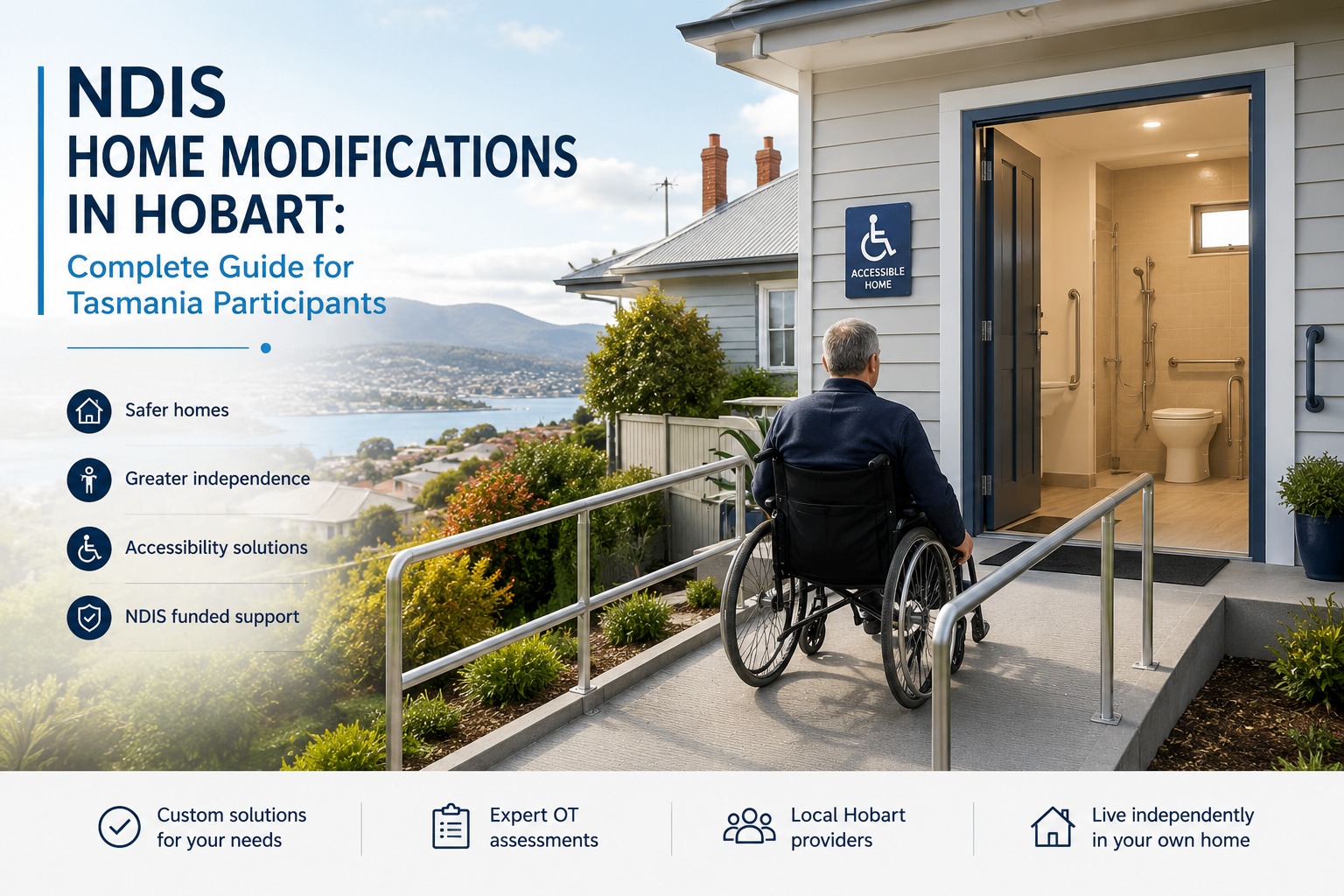
NDIS Home Modifications in Hobart: Complete Guide for Tasmania Participants

Living in Hobart as a participant with disability or aged care needs can be challenging when your home isn’t designed for accessibility. Standard housing layouts, narrow doorways, steep stairs, and bathrooms without grab rails aren’t just inconvenient; they’re safety hazards that limit your independence.

The frustration is real. You want to stay in your own home, maintain your dignity, and live life on your terms. But without the right modifications, even basic daily activities like showering, moving between rooms, or getting in and out of bed become stressful and potentially dangerous.

Here’s the good news: the National Disability Insurance Scheme (NDIS) provides funding specifically for home modifications that make your Hobart home safer, more accessible, and genuinely liveable. Whether you need a simple grab rail installation or a major bathroom renovation, this guide walks you through everything you need to know about NDIS home modifications in Hobart, Tasmania.

What Are NDIS Home Modifications?

NDIS home modifications Hobart cover structural changes and installations designed to improve accessibility and safety in your home. Think of them as personalized adjustments that transform your living space to match your needs, not the other way around.

Wheelchair accessible homes Hobart

Common modifications include:

  • Ramps and rails for wheelchair access and fall prevention
  • Bathroom renovations (accessible showers, grab bars, raised toilets)
  • Widened doorways to accommodate wheelchairs
  • Stair lifts or elevators for multi-story homes
  • Accessible kitchen modifications (lowered benches, pull-out drawers)
  • Flooring changes (non-slip surfaces, level entries)
  • Lighting and electrical outlet adjustments
  • Bedroom modifications (bed risers, accessible storage)
  • Portable and temporary solutions for rental properties

What makes home modifications Tasmania unique is that they’re funded based on your individual NDIS plan, not a one-size-fits-all approach. Your plan recognizes your specific disability, living situation, and goals, then allocates funding accordingly.

Hobart participants often ask: “Will the NDIS actually pay for this?” The answer is yes, if the modification is reasonable and necessary to help you achieve your goals and increase your independence.

Why NDIS Home Modifications Matter in Hobart

Hobart’s housing stock tells a story. Many homes feature older architecture, narrow hallways, heritage considerations, and designs that predate modern accessibility standards. Add Tasmania’s regional climate and rural areas, and you’ve got a unique set of challenges.

NDIS assistive technology Hobart and modification services aren’t luxuries here, they’re essential services that enable Hobart residents to participate fully in community life.

Key reasons why modifications matter:

  • Safety First: Falls are one of the leading causes of disability-related injury. A simple grab rail in the bathroom or ramp at the front door prevents serious accidents.
  • Independence: Modifications mean you can shower, cook, and move around your home without constant assistance.
  • Cost Savings: While modifications cost money upfront, preventing falls and injuries saves the disability support system money long-term.
  • Mental Health: Living in a home that works for your body, not against it, dramatically improves confidence and wellbeing.
  • Aging in Place: Whether you’re a younger participant with permanent disability or an aging person with emerging accessibility needs, modifications let you stay in your own home longer.

For Hobart and Tasmania participants, funded modifications are a game-changer. They’re not a handout, they’re an investment in your independence.

How NDIS Funding for Home Modifications Works

Understanding the funding process removes the mystery and helps you plan effectively.

Step 1: Get an Occupational Therapy (OT) Assessment

Your journey toward NDIS home mods Tasmania starts with an Occupational Therapist. An OT assessment for your Hobart home identifies:

  • What modifications you actually need (not just want)
  • How they’ll help you achieve your NDIS goals
  • Realistic costs and timelines
  • Whether temporary or permanent solutions work better

Hobart-based OTs can visit your home, understand your specific living situation, and recommend modifications tailored to your space. The NDIS recognizes OT assessments as the gold standard for determining modification necessity.

Many Hobart participants get their OT assessment costs partially or fully covered through their NDIS plan. Ask about this at your NDIS planning meeting.

Step 2: Include Modifications in Your NDIS Plan

When you have your planning meeting with the NDIS, bring:

  • Your OT assessment report
  • Photos of your home
  • Clear explanation of how modifications help you reach your goals
  • Quotes from local Hobart providers (if you have them)

The NDIS will allocate a funding amount for NDIS equipment funding Tasmania and modifications. This funding sits in your plan until you use it. Funding lines typically include:

  • Home modification line items (exact amount allocated)
  • Equipment and assistive technology allowance
  • Support coordination to help you organize the work

Step 3: Get Quotes from Local Hobart Providers

Not all builders understand NDIS work. You need providers experienced with:

  • NDIS compliance and documentation requirements
  • Working with disability and accessibility standards
  • Local Hobart knowledge (heritage property restrictions, council regulations)
  • Transparent quoting and project management

Getting multiple quotes is standard practice. Quality NDIS-experienced builders will provide detailed quotes that reference your OT assessment and break down costs clearly.

Step 4: Approval and Project Management

Once you have quotes, your NDIS planner or support coordinator reviews them for a reasonable cost. Hobart has competitive pricing compared to major capitals, which works in your favor.

After approval, the builder schedules work. Most modifications take 2-8 weeks, depending on complexity. The NDIS expects regular updates and final completion reports.

What’s Actually Funded? NDIS Home Modifications Coverage

Not everything gets funded, and understanding the boundaries helps you plan realistically.

Definitely Funded (if in your plan):

  • Ramps and handrails (outdoor and indoor)
  • Accessible bathroom modifications
  • Widened doorways for wheelchair access
  • Stair lifts or platform lifts
  • Accessible kitchen modifications
  • Non-slip flooring
  • Accessible parking areas
  • Smart home technology for accessibility
  • Home security modifications (accessible locks, intercoms)

Possibly Funded (depends on your goals and situation):

  • General home repairs that happen to improve accessibility
  • Portable ramp solutions
  • Temporary modifications for rentals
  • Modifications for shared living spaces
  • Minor electrical or plumbing work related to accessibility

Not Funded:

  • General home maintenance or improvements unrelated to disability
  • Cosmetic renovations
  • Modifications that benefit housemates but not you
  • Modifications required by law (like fire exits for rental properties)
  • Modifications deemed unreasonable in cost

The key principle: wheelchair accessible homes, Hobart, and other modifications are funded when they’re reasonable, necessary, and help you achieve your NDIS goals.

NDIS Home Modifications in Hobart: What’s Different?

Hobart and Tasmania present unique challenges compared to mainland Australian cities. Understanding these differences helps you navigate the process more smoothly.

Hobart’s Older Housing Stock

Hobart’s charm comes partly from heritage architecture. Beautiful Victorian and colonial homes line the streets, but older construction often means:

  • Narrow hallways and doorways (expensive widening)
  • Uneven floors and high thresholds
  • Limited space for modifications
  • Heritage restrictions on external changes (ramps, rails)
  • Smaller bathrooms that require creative solutions

If you live in a heritage property, council approval may be needed alongside NDIS approval. Factor this into your timeline and budget.

Tasmania’s Regional Factors

Living outside Hobart’s central area brings additional considerations:

  • Limited local providers in rural Tasmania
  • Longer travel times for contractors from Hobart
  • Regional cost variations
  • Fewer equipment suppliers nearby
  • Importance of NDIS-experienced builders who understand remote area logistics

Many rural Tasmanian participants successfully get modifications funded, but transport costs and availability require more advance planning.

Builder Availability in Hobart

Hobart’s disability support community is tight-knit. Word-of-mouth recommendations carry real weight. Key facts:

  • Fewer NDIS-experienced builders than in Melbourne or Sydney
  • Higher per-project attention from builders (smaller market)
  • Builders who understand Hobart’s specific housing challenges
  • Longer wait times during peak seasons (spring/summer)
  • Local builders often charge reasonable rates

NDIS Local Area Coordinator Support

Your Local Area Coordinator (LAC) in Hobart can:

  • Recommend trusted local providers
  • Explain regional availability and costs
  • Help you understand what’s reasonable in Hobart context
  • Connect you with other participants who’ve done similar work

Don’t hesitate to lean on your LAC for local guidance.

Finding NDIS Home Modification Providers in Hobart

Success depends partly on finding the right team. Here’s where to look and what to ask.

Occupational Therapists in Hobart

Your OT assessment is foundational. Hobart-based OTs with NDIS experience include:

  • Local disability support agencies (Apex Support and others)
  • Private OT practices specializing in accessibility
  • Community health services
  • Rehabilitation centers

When contacting an OT, ask:

  • Do you have NDIS experience?
  • Can you do home visits in Hobart and surrounding areas?
  • What’s your timeline for assessment?
  • Will you write recommendations specific to NDIS funding?

Builders and Contractors

Finding the right builder for wheelchair accessible homes Hobart modifications is crucial. Look for:

  • Previous NDIS project experience
  • References from other participants or disability support agencies
  • Professional licenses and insurance
  • Detailed quoting process
  • Project management capabilities

Questions to ask potential builders:

  • How many NDIS home modification projects have you completed?
  • Can you work with OT assessments and NDIS approval processes?
  • What’s your timeline for a [specific project]?
  • Do you have experience with Hobart’s older homes?
  • Can you provide references from disability service providers?

Equipment Suppliers

For ramps and rails NDIS Hobart and other equipment:

  • Disability equipment retailers in Hobart
  • Online suppliers with Hobart delivery
  • Builders who supply as part of modification packages
  • Apex Support partner suppliers

Support Coordination Services

Your NDIS plan may include support coordination funding. Support coordinators help you:

  • Understand your modification options
  • Source and vet providers
  • Manage the modification process
  • Ensure quality work
  • Document completion for the NDIS

The Process: Step-by-Step Timeline for Hobart Modifications

Planning helps reduce stress and surprises. Here’s a realistic timeline.

Weeks 1-2: Assessment and Planning

  • Contact an Occupational Therapist in Hobart
  • Schedule your home assessment
  • Complete the assessment
  • Receive your OT report with recommendations

Weeks 3-4: NDIS Planning Meeting

  • Discuss modifications at your planning meeting
  • Present your OT assessment
  • Negotiate funding allocation
  • Receive your updated NDIS plan with modification funding

Weeks 5-8: Getting Quotes

  • Contact 2-3 local Hobart builders
  • Request detailed quotes based on your OT assessment
  • Review quotes and ask questions
  • Select your preferred builder
  • Submit quotes to your NDIS planner or support coordinator for approval

Weeks 9-10: Approval and Scheduling

  • NDIS approves your chosen provider and quote
  • Builder schedules the work
  • Confirm timelines and contact person
  • Arrange any temporary accommodations if needed

Weeks 11-18: Actual Modification Work

  • Contractor completes modifications
  • You inspect progress and final work
  • Clarify any issues immediately
  • Obtain final quotes and completion certificates
  • Keep all receipts and documentation

Weeks 19-20: NDIS Completion and Reimbursement

  • Provide completion paperwork to your planner
  • NDIS reimburses the costs
  • Enjoy your more accessible home

This is a realistic timeline for straightforward projects. Complex modifications may take 3-6 months from assessment to completion.

Real Story: Sarah’s Hobart Bathroom Modification

Sarah is a 34-year-old Hobart resident with mobility challenges following a spinal cord injury. She uses a wheelchair and lives in a 1970s weatherboard house with a tiny, inaccessible bathroom.

“I couldn’t shower independently,” Sarah says. “The bathroom was too narrow for my wheelchair, and the shower was a bathtub with high walls. I was relying on my carer twice a day just to get clean.”

Sarah’s journey:

The Assessment: Her occupational therapist recommended a complete bathroom renovation including wheelchair-accessible shower, grab rails, non-slip flooring, accessible toilet, and storage. Cost: $18,500.

The NDIS Planning Meeting: Sarah’s plan allocated $20,000 for home modifications based on her goals of independence and reducing reliance on support. This covered the bathroom fully with $1,500 left for future maintenance.

Getting Quotes: Sarah’s support coordinator helped her contact three Hobart builders. She chose one with strong NDIS experience and who’d worked on heritage Hobart homes before.

The Work: The renovation took 6 weeks. The builder worked around Sarah’s schedule and kept her informed throughout. A few unexpected issues with the old plumbing added $2,000, but it came from her modification budget.

The Outcome: “Now I shower independently every day. It sounds simple, but it’s changed my life. I’m more confident, my carer can focus on other tasks, and I feel like I’m in control of my own space again.”

Sarah’s modification is exactly what the NDIS intended: reasonable, necessary, and genuinely life-changing.

Accessible Bathroom Modifications in Hobart: What You Need to Know

Bathroom modifications are the most common NDIS home mods Tasmania request. Here’s what you should understand about this critical space.

Why Bathrooms Matter

The bathroom is where vulnerability meets independence. For many participants, bathroom accessibility determines whether they can live independently or need daily support.

Standard Hobart Bathroom Modifications Include:

  • Accessible shower (walk-in, level entry, or roll-in)
  • Grab rails (strategically placed for safety)
  • Non-slip flooring
  • Accessible toilet (correct height, space for transfers)
  • Sink and vanity modifications for wheelchair access
  • Accessible storage for personal care items
  • Adequate lighting
  • Ventilation improvements
  • Temperature controls

Costs for Hobart Bathroom Modifications

Expect:

  • Simple modifications (rails, flooring): $5,000-$8,000
  • Mid-level renovation (new shower, toilet, some structural work): $12,000-$18,000
  • Complete bathroom rebuild: $20,000-$35,000+

Hobart’s costs tend to be lower than Melbourne or Sydney but may include travel time for specialized contractors.

Getting the Design Right

Work closely with your OT and builder to design a bathroom that’s both accessible and pleasant to use. You’ll spend significant time in this space.

Key questions:

  • Will you use a shower chair or transfer in/out?
  • Do you need grab rails for stability or safety?
  • What’s your preferred shower style (walk-in, roll-in, seated)?
  • Can you use standard toilets or do you need specific heights?
  • What storage do you need?

Your OT will help answer these during the assessment. Don’t settle for a generic accessible bathroom; design one that works for you.

Ramps and Rails: Essential Safety for Hobart Homes

Ramps and rails NDIS Hobart modifications are often overlooked but incredibly important for safety and independence.

Where Ramps Are Needed

  • Front and back entry points to your home
  • Deck or patio access
  • Level changes inside your home
  • Garage entry

Hobart homes often have multiple entry points and level changes due to the terrain and older construction. Each entry point should be assessed.

Ramp Specifications That Matter

  • Gradient: 1:12 ratio (1 meter rise = 12 meters ramp length) is standard
  • Width: Minimum 900mm (wider for wheelchair users)
  • Surface: Non-slip, durable (wood treated, concrete, rubber)
  • Handrails: 900-950mm high, both sides if possible
  • Landings: Flat areas at top and bottom

Non-compliant ramps can actually create safety hazards, so quality installation matters.

Rail Placement for Maximum Safety

Interior and exterior rails serve different purposes:

  • Outdoor rails: Usually around stairs or ramp edges, prevent falls
  • Bathroom rails: Strategically placed near toilet, shower, and sink
  • Hallway rails: Provide stability and confidence for people with balance issues
  • Bedroom rails: Help with bed transfers and mobility

Your OT will recommend specific placements based on your mobility and strength.

Cost Breakdown for Hobart Ramp Projects

  • Simple single ramp (5-6 meters): $3,000-$5,000
  • Double ramp with landing: $6,000-$9,000
  • Complex multi-level ramp system: $10,000+

Hobart builders often recommend durable materials suited to Tasmania’s weather (rainfall, wind).

Hobart Rental Properties: NDIS Home Modifications When You Don’t Own

Many Hobart participants rent. The good news: you can still get modifications funded. The process is just different.

Why Rentals Complicate Things

  • You need landlord permission for permanent modifications
  • Your landlord may be reluctant to allow changes
  • You’ll lose the modifications when you move
  • Portable solutions cost more than permanent ones
  • Lease terms matter

The NDIS understands rental challenges and funds solutions appropriate to your situation.

What’s Possible for Rental Modifications

  • Portable ramps (removable, no installation)
  • Temporary grab rails (adhesive, not screwed)
  • Removable shower chairs and seating
  • Portable lighting solutions
  • Temporary flooring solutions
  • Furniture-based accessibility solutions

These solutions are less ideal than permanent modifications but still make a real difference.

Negotiating With Hobart Landlords

Many landlords worry about modifications damaging their property. Here’s how to approach it:

  • Provide your OT assessment explaining medical necessity
  • Offer portable solutions that cause no damage
  • Suggest temporary modifications that are easily reversible
  • Explain that better accessibility reduces emergency calls
  • Offer to restore the property when you move

Some landlords surprise you with willingness once they understand the genuine need.

Getting Landlord Permission in Writing

Always get written permission before any modification, even portable ones. A simple email confirmation works:

“I approve of [specific modification] being installed in the property at [address] for accessibility purposes by [date]. The modification will be [removed/restored] by [date or upon move-out].”

This protects both you and your landlord.

NDIS Assistive Technology and Equipment in Hobart

While home modifications are structural, NDIS assistive technology Hobart services include equipment and smart devices that complement your modifications.

Common Assistive Technology Items

  • Mobility devices (wheelchairs, walkers, scooters)
  • Bathroom safety equipment (shower chairs, commodes)
  • Bed rails and pressure relief mattresses
  • Communication devices for speech disabilities
  • Hearing and vision aids
  • Smart home automation (voice-controlled lights, doors)
  • Fall detection systems
  • Environmental controls

Smart Home Technology for Accessibility

Emerging smart home solutions help Hobart participants:

  • Voice-controlled lighting (no reaching switches)
  • Automated door openers
  • Remote-controlled blinds and climate control
  • Motion-sensor lighting for nighttime safety
  • Monitoring systems for fall detection

These integrate well with structural modifications to create truly accessible homes.

Where to Source Equipment in Hobart

  • Disability equipment retailers in Hobart
  • Online suppliers with Hobart delivery
  • Apex Support and allied providers
  • Occupational Therapists (often have supplier relationships)
  • Community equipment libraries

Your OT assessment should include equipment recommendations alongside structural modifications.

Support Coordination: Your Guide Through the Process

This might be the most valuable part of your NDIS plan. NDIS OT assessment Hobart and modification services work best with professional support coordination.

What Support Coordinators Actually Do

  • Explain your NDIS plan and available funding
  • Help you identify suitable modifications
  • Research and vet local providers
  • Facilitate communication between you, your builder, and the NDIS
  • Troubleshoot problems during the project
  • Ensure quality and NDIS compliance
  • Document completion and outcomes

A good support coordinator reduces stress and prevents costly mistakes.

How to Access Support Coordination

Your NDIS plan may include a support coordination budget (usually $2,000-$5,000 annually). Use this to:

  • Work with someone experienced in home modifications
  • Get local Hobart knowledge
  • Avoid picking the wrong provider
  • Ensure smooth project completion

Apex Support offers support coordination services for Hobart participants. Your support coordinator works for you, not the NDIS, so they advocate for your needs.

Common Challenges and How to Overcome Them in Hobart

  • Challenge 1: “My NDIS Planner Says My Requested Modification Isn’t Reasonable”

Solution: Get a detailed OT assessment explaining why it’s necessary. Often, a thorough assessment changes the planner’s mind. The NDIS values professional assessment over general intuition.

  • Challenge 2: “Hobart Builders Have Long Wait Times”

Solution: Start your planning in August-September for spring modifications. Book your builder early. Alternatively, consider contractors from greater Tasmania who service Hobart.

  • Challenge 3: “I’m Renting and My Landlord Won’t Allow Modifications”

Solution: Get your landlord in writing about portable solutions. If they refuse all modifications, this is a planning issue to raise with your NDIS planner or support coordinator.

  • Challenge 4: “The Modification Cost More Than My NDIS Budget”

Solution: Break the project into stages (bathroom first, ramp later). Discuss cost overruns with your support coordinator before they happen. The NDIS sometimes approves additional funding for reasonable cost escalations.

  • Challenge 5: “I’m in a Rural Area and Can’t Get Providers”

Solution: This is exactly what the NDIS anticipates for regional participants. Discuss it at your planning meeting. The NDIS understands rural service limitations and may approve higher costs or remote solutions.

Conculusion

Ready to Make Your Hobart Home More Accessible?

NDIS home modifications don’t have to be stressful or confusing. The right support makes all the difference.

At Apex Support, we help Hobart participants navigate the entire process:

  • Expert Occupational Therapy assessments tailored to your needs
  • Support coordination to guide you through home modification planning
  • Connections to trusted local Hobart builders and providers
  • Ongoing support until your modifications are complete

Whether you need a simple bathroom modification, accessible ramp, or complete home renovation, Apex Support is here to help you achieve independence in your own space.

Your next step:

  1. Contact us for a free consultation – Tell us about your home and accessibility needs
  2. Schedule your OT assessment – Get professional recommendations specific to your situation
  3. Let us guide the process – From NDIS planning to completion, we’re with you every step

Don’t wait another day wondering how to make your Hobart home work for you.

Frequently Asked Questions About NDIS Home Modifications in Hobart

1. How long does the entire NDIS home modification process take from start to finish?

From first OT appointment to completed work typically takes 4-6 months. Simple projects can be 2-3 months. Complex renovations or those involving heritage considerations may take 6-12 months. Hobart-based providers help keep timelines realistic.

2. What if my modification costs more than my NDIS funding?

You have options: (1) Break the project into stages and spread costs across planning periods, (2) Contribute your own money for costs above the NDIS allocation, or (3) Discuss with your support coordinator if you can appeal for additional funding based on changed circumstances. Always discuss cost concerns early.

3. Can I use my NDIS modification budget for general home repairs?

No, the NDIS is strict about this. Funding must directly relate to accessibility or safety outcomes for your disability. General repairs, even if they happen to improve accessibility, typically don’t qualify unless explicitly approved.

4. What happens to my modification if I move house?

Permanent structural modifications stay with the house (they benefit the property). Movable equipment comes with you. Plan modifications with your long-term housing situation in mind.

5. Do I need multiple quotes for NDIS home modifications in Hobart?

It’s not required, but it’s recommended and often expected. Most providers request 2-3 quotes to ensure reasonable cost. You don’t need to get quotes from unqualified builders; focus on NDIS-experienced contractors.

6. Can the NDIS fund modifications for shared accommodation or group homes?

Yes, but modifications must directly benefit you, not just your housemates. Shared spaces might be funded if your disability requires it. This requires careful documentation and clear benefit explanation.

7. What if my OT recommends something, but I disagree with their recommendation?

You have the right to get a second opinion. Request another OT assessment or discuss concerns with your support coordinator. Your preferences matter, and a good OT will work with you, not against you.

8. How do I know if a Hobart builder is NDIS-compliant and trustworthy?

Ask for references from other NDIS participants or disability service providers. Check their insurance and licensing. A good builder will have examples of previous NDIS work and be happy to discuss their process.

9. Can I upgrade my modifications later with additional NDIS funding?

Yes. If you reach a new planning cycle and your needs have changed, modifications can be added or upgraded. The NDIS reviews and adjusts plans regularly, so bring these requests to your next planning meeting.

10. What’s the difference between NDIS funding and aged care funding (ACAT) for home modifications in Hobart?

NDIS is disability-focused for people under 65. Aged care funding (ACAT) is for older people. If you’re transitioning from NDIS to aged care, discuss continuity of modifications with both services. Some modifications bridge both systems.

NDIS Employment Support in Hobart: Your Complete Career Guide

Finding your first job feels overwhelming when you’re managing a disability. You might worry about how to explain your needs to employers or whether you’ll succeed in the workplace.

Without proper support, these worries can hold you back from pursuing your dreams. The stress of navigating employment alone feels impossible.

NDIS employment support helps you succeed. This guide shows you exactly how it works in Hobart and Tasmania, what services exist, and how to get started with confidence.

What Is NDIS Employment Support?

Think of NDIS employment support like having a career coach in your corner. It’s a range of services helping young people and adults with disabilities find, get, and keep meaningful work.

Here’s what makes it different:

  • It focuses on your abilities, not limitations
  • Your coach works at your pace
  • Support continues even after you land a job
  • Everything is tailored just for you
  • There’s zero pressure to work full-time

NDIS employment support includes job searching help, resume writing, interview coaching, skill development, workplace modifications, on-the-job support, and ongoing assistance. It’s comprehensive support designed specifically for success.

Who Can Access NDIS Employment Support

Who Can Access NDIS Employment Support?

You need to be an NDIS participant with an active plan and employment goals. If employment isn’t included in your plan, you can add it at your next planning meeting.

Strong employment goals sound like:

  • “I want part-time retail employment within 12 months.”
  • “I want to develop communication skills for hospitality work.”
  • “I want to increase independence by working 10 hours weekly.”

Notice how these are specific, measurable, and show how employment helps your well-being? Your planner needs to understand that employment support isn’t just about paychecks. It’s about building independence, confidence, and community contribution.

Different age groups access support through different categories. School leavers use School Leaver Employment Supports (SLES). Others use the “Finding and Keeping a Job” category under Capacity Building. Either way, support is available for you.

NDIS Employment Services in Hobart and Tasmania

Hobart has excellent NDIS employment providers with different service types for different needs.

  • School Leaver Employment Supports (SLES) helps young people aged 15-24 transition from school to work through vocational assessments, workplace readiness training, and work trials.
  • Job Coaching and Workplace Assistance provides one-on-one support in your new job, helping you learn tasks, build relationships, and understand workplace expectations while your coach gradually steps back.
  • Skills Development and Training includes digital skills, communication training, soft skills, and industry-specific competencies directly connecting to actual job opportunities.
  • Job Placement and Matching Services uses provider connections to find opportunities matching your skills and interests, then introduces you to employers.
  • Resume Writing and Application Support helps you highlight achievements, explain gaps, and tailor applications for different jobs.
  • Interview Preparation includes mock interviews, feedback, confidence building, and practical tips for interview day success.
  • Workplace Modifications and Accessibility makes adjustments helping you succeed, like quieter workspaces, flexible hours, written instructions, or assistive technology.
  • Ongoing Support provides regular check-ins helping you maintain employment, solve problems, and plan career growth.

The Real Process: From Start to Success

Phase One: Pre-Planning (Weeks 1-2)

Think about what type of work interests you. Write down your skills and achievements. Gather certificates, volunteer experience, and any work you’ve done. Research local NDIS employment providers.

Phase Two: Planning Meeting

Walk in with clear goals written down. Explain why employment matters for your well-being. Have questions ready about funding, timeframe, and support options.

Phase Three: Choosing Your Provider (Weeks 2-4)

Interview two or three providers. Ask about experience, success rates, Hobart employer connections. Do they understand your field of interest? Trust your gut about who gets you.

Phase Four: Getting Started (Weeks 4-6)

Your coach understands you. Together, you create an employment action plan as your roadmap for coming months.

Phase Five: Active Work (Ongoing)

You’re job searching, building skills, preparing for interviews. Your coach helps navigate challenges and stay motivated.

Phase Six: Job Coaching (After Job Placement)

Your coach helps you learn your role, build colleague relationships, understand workplace culture, and handle challenges.

Phase Seven: Long-Term Support (After 6+ Months)

Regular check-ins help you maintain employment, plan career growth, and troubleshoot problems. Support doesn’t disappear.

Common Challenges and Real Solutions

  • Challenge: Not Knowing How to Search for Jobs

Your coach knows where to look and has employer connections. They match your strengths with opportunities. You’re strategically introduced to employers, not randomly applying online.

  • Challenge: Interview Anxiety

Your coach prepares you thoroughly. Mock interviews let you practice without pressure. You learn techniques for answering tough questions and managing disability disclosure.

  • Challenge: Workplace Adjustment Fears

Your coach handles conversations about workplace modifications. Many Hobart employers understand how adjustments help everyone succeed.

  • Challenge: Skill Gaps

Targeted training teaches what you need. You’re not sitting through generic courses; you’re learning what directly connects to actual job opportunities.

  • Challenge: Maintaining Employment

Ongoing support helps you navigate the long term. If something stops working, you adjust together. This isn’t temporary help; it’s sustained support.

Real Success Stories

Jasmine’s Story: School to Retail Supervisor

Jasmine finished Year 12 with anxiety making interviews terrifying. She accessed School Leaver Employment Supports with a coach, understanding her anxiety. Together, they identified her love for helping people and fashion knowledge. Her coach connected her with a Hobart retailer committed to inclusive hiring.

The first months were intense. Her coach worked alongside her, helping manage customer interactions and build confidence. Within six months, she handled shifts independently. Within two years, she became a supervisor training new employees. Employment support changed her entire trajectory.

Marcus’s Story: Return to Work After Injury

Marcus worked construction before a workplace accident left him managing chronic pain. NDIS employment support helped him reimagine work. His coach completed a functional capacity assessment, then helped explore modified roles with his previous employer.

With workplace accommodations like flexible hours and modified tasks, Marcus returned as a supervisor instead of physical labor. Two years later, he’s thriving in a role valuing his experience while respecting his limitations.

Aisha’s Story: Following Her Passion

Aisha had depression making employment feel impossible. NDIS services included employment support with psychosocial coaching. Her coach helped her understand mental health triggers and develop work coping strategies.

Aisha discovered she wanted disability services work. Her coach connected her with Hobart disability organizations actively hiring. She completed training, gained real experience, and now works full-time supporting other people with disabilities.

Understanding NDIS Employment Funding

You don’t personally pay for NDIS employment support. Funding comes from your NDIS plan.

What’s Typically Funded:

  • Job coach wages
  • Training programs
  • Workplace assessments
  • Interview preparation
  • Skill development
  • On-the-job coaching
  • Employer liaison

What’s Usually NOT Funded:

  • Tertiary education
  • General work travel
  • Employer wages

Be specific during planning meetings about what you need. Clear goals mean adequate funding. If circumstances change, you can adjust funding allocation.

Finding NDIS Employment Providers in Hobart

How to Find Providers

Use the NDIS Provider Locator by searching your postcode and selecting “Employment.” Read reviews. Ask your NDIS planner for recommendations.

What to Look For

  • Real experience: How many people have they helped get jobs?
  • Hobart employer connections: Real relationships matter
  • Person-centered approach: Do they listen to your goals?
  • Trained, qualified staff: Professional development matters
  • Long-term support: Placement follow-up is essential

Questions to Ask

  • What’s your success rate?
  • How many people are you currently supporting?
  • Which Hobart employers do you work with?
  • What happens if a job doesn’t work out?
  • How often will I meet with my coach?
  • Do you provide support after I get a job?

Hobart Providers

Everyday Independence (Collins Street) offers comprehensive employment services including job coaching and vocational assessments. WISE Employment (Hobart CBD) provides extensive NDIS support with strong local employer connections. Both serve greater Hobart including Glenorchy, Kingston, and Lauderdale.

Preparing for Your NDIS Planning Meeting

  • Two to Four Weeks Before

Gather documentation showing you’re employment-ready: school certificates, volunteer experience, work samples. Reflect on employment dreams. Write down actual skills and what environments help you thrive.

  • Create Your Employment Goals

Instead of “I want a job,” try “I want part-time retail employment working 15 hours weekly starting within six months.” Be specific.

  • List Your Support Needs

What help do you actually need? Interview coaching? Job searching help? Skill training? Someone working alongside you? Regular check-ins? Write it down.

  • Prepare Questions

What employment services are available in Hobart? How much funding should you request? Can you change jobs if the first doesn’t work? What happens with time off?

  • Bring Support

Bring a family member, friend, or advocate who knows you well. They help explain abilities, take notes, and support you emotionally.

  • During the Meeting

Be clear about employment needs. Help your planner understand that employment support is essential, not extra. Connect it to independence, confidence, and wellbeing. Negotiate if initial offers feel low.

Myths vs. Reality

  • Myth: “NDIS will just give me a job.” Reality: NDIS funds coaching services. You work together with your coach to achieve employment through effort and provider connections.
  • Myth: “I have to work full-time.” Reality: Support covers part-time, casual, or volunteer work matching your needs.
  • Myth: “Only young people can access support.” Reality: Adults of all ages can access employment support.
  • Myth: “I have to disclose my disability.” Reality: Disclosure is completely your choice.
  • Myth: “Support stops once I get a job.” Reality: Ongoing support helps you maintain employment long-term.
  • Myth: “I can’t change jobs.” Reality: You absolutely can change jobs with support help.
  • Myth: “Employment support costs me money.” Reality: NDIS funds the service. You don’t pay personally.
  • Myth: “NDIS will force me into a specific job.” Reality: Your goals and direction matter. You decide what success looks like.

Your Next Steps

If You’re Not an NDIS Participant

Visit https://ndis.gov.au/ or contact your local NDIS Access Point. They’ll guide you through the application process.

If You’re Already Participating

Contact your NDIS planner. Tell them you want employment support included. Send your goals, needed support, and evidence of why this matters.

If You’re Ready to Choose a Provider

Research Hobart-based providers using the NDIS Provider Locator. Call a few providers. Ask your planner for recommendations. Interview providers and choose someone you trust.

Three Things to Remember

First, employment support is real investment in your future. You deserve this support.

Second, you’re in control. This is your career, your goals, your timeline.

Third, you’re not alone. Hundreds of young people in Hobart are successfully using NDIS employment support right now.

Conclusion: Start Your Employment Journey with Apex Support

At the end of the day, NDIS employment support exists because employment is about more than money. It’s about purpose, independence, confidence, and belonging. It’s about proving to yourself that you’re capable of contributing something valuable.

Young people in Hobart deserve the chance to work in jobs they care about, with the support they need to succeed. That’s exactly what NDIS employment support provides.

Your journey to meaningful employment starts with one step. Maybe that step is preparing for your NDIS planning meeting. Maybe it’s contacting a provider for the first time. Whatever your next step is, solid support is available.

Ready to Get Started? Contact Apex Support Today

Apex Support is your partner in achieving meaningful employment through NDIS funding. We understand your goals, your challenges, and your dreams for the future. Our experienced team has helped hundreds of young people in Hobart build successful careers with disabilities.

Frequently Asked Questions

1. What exactly is NDIS employment support?
NDIS employment support is a range of services helping people with disabilities find, get, and keep meaningful work through coaching, skills training, and ongoing support.

2. How much does NDIS employment support cost? 
NDIS employment support doesn’t cost you money. Funding comes from your NDIS plan.

3. Can I access employment support part-time? 
Yes. Employment support covers part-time, casual, or volunteer work based on your goals.

4. How long does it take to find a job? 
It varies. Typical timelines range from 2-6 months depending on your goals and readiness.

5. What if I’m not good at interviews? 
Your coach provides mock interviews, feedback, and confidence building before real interviews.

6. Can I change jobs if my first one doesn’t work? 
Yes. Your coach helps transition to something different if needed.

7. Do I have to tell employers about my disability? 
No. Disclosure is completely your choice. Your coach can help you decide when and how.

8. What if I need mental health support while working? 
Many providers include psychosocial recovery coaching for mental health management at work.

9. Can I get employment support if I’m over 25?
Yes. Employment support is available to adults of all ages with NDIS plans.

10. What happens if I need time off work?
Your coach helps manage time off and return-to-work planning. Your support continues.

11. How do I find employment providers near me?
Use the NDIS Provider Locator, ask your planner, or search online for local providers.

12. Can NDIS fund training for a specific job?
Yes. Training directly connecting to employment goals is typically funded.

13. What if my workplace needs modifications?
Your coach works with employers to make adjustments helping you succeed.

14. How often will I meet with my employment coach?
Frequency varies. Initial support is typically intensive, then reduces as you settle into work.

15. What if I want to work in a field I don’t have experience in?
Your coach provides skill training and work trials to build experience and confidence.

16. Can I access employment support while still in school?
Yes. School Leaver Employment Supports help students transitioning to work.

17. How does NDIS employment support differ from regular job agencies?
NDIS support focuses on capacity building, long-term sustainability, and ongoing help. Agencies focus mainly on job placement.

18. What if I’m worried about losing my job?
Ongoing support helps you maintain employment, solve problems, and keep your job long-term.

Unregistered NDIS Providers: What You Need to Know Before Choosing

Navigating disability support services can feel overwhelming. You’ve probably heard the term “unregistered NDIS providers” thrown around, but what does it actually mean? Are they safe? Can you really use them? If you’re looking for support services and trying to figure out your options, you’re not alone in feeling confused about the differences between unregistered NDIS providers and registered ones.

The reality is, making the wrong choice about your support provider could affect your quality of care, your safety, and even your wallet. Recent changes to NDIS rules have made this decision even more complicated. Some participants are being switched to agency-managed funding without understanding what that means for their current support arrangements. It’s stressful, and honestly, the information out there can be pretty scattered and technical.

Here’s the good news: understanding unregistered NDIS providers doesn’t have to be confusing. In this guide, we’re going to break down everything you need to know in a way that actually makes sense. We’ll explore what unregistered NDIS providers are, how they work, whether they’re legitimate, and most importantly, how to choose one if you decide to go that route.

What Are Unregistered NDIS Providers? (Getting the Basics Right)

Think of unregistered NDIS providers as disability support workers or organizations that help you with your NDIS plan but haven’t gone through formal registration with the NDIS Commission. It’s like the difference between a friend who can give you great advice and a professional counselor. Both might be helpful, but they operate differently.

So what exactly are unregistered NDIS providers? They’re individuals or small businesses that provide disability support services directly to people who need them. They might help with everyday tasks, personal care, community access, or skill development. The key difference is they haven’t formally registered with the NDIS Quality and Safeguards Commission. That means they’re not on the official NDIS provider list you find online.

Here’s what’s important to understand:

  • Unregistered NDIS providers can only work with people who manage their own funds (self-managed) or use a plan manager (plan-managed)
  • They cannot work with people who have agency-managed plans (where the NDIA directly manages the money)
  • There’s no formal NDIS audit or inspection of their services
  • They still need to follow NDIS rules and the Code of Conduct
  • They’re completely legal to operate this way

The reason these providers exist is actually pretty cool. The NDIS wanted to give people choice and flexibility. Having unregistered NDIS providers means you can find someone who might be a better fit for your needs, often at different price points, and with more personalized service.

Around 70% of NDIS participants can currently use unregistered NDIS providers, so they’re a pretty big part of how the system works. But here’s something important: recent rule changes are starting to affect how many people can actually access them, which we’ll talk about later.

The Legal Side: What Unregistered Providers Actually Need

Now let’s talk about something that might sound boring but is super important: the legal stuff. Understanding unregistered NDIS provider requirements helps you know what to expect from a legitimate provider.

Even though unregistered NDIS providers don’t need NDIS Commission registration, they still need to follow rules. It’s not like they can do whatever they want. Here’s what they actually need:

Business Registration and Money Stuff:

  • An ABN (Australian Business Number) from the tax office
  • To be registered as a proper business (could be a sole trader, partnership, or company)
  • To keep proper records of their business
  • To have a legitimate bank account for payments

Insurance That Actually Matters:

  • Public liability insurance (in case someone gets hurt during support)
  • Professional indemnity insurance (covers mistakes or complaints)
  • This is really important because it protects both them and you

Rules They Have to Follow:

  • They must stick to the NDIS Code of Conduct (even without registration)
  • They need to follow NDIS Practice Standards (quality expectations)
  • All their staff need NDIS Worker Screening Checks (police and safety checks)
  • They have to keep good records about clients and complaints
  • They must respect privacy and keep your information confidential

What’s interesting is that having these requirements doesn’t mean unregistered NDIS providers are registered with the NDIS. It just means they’re running a legitimate, legal business that follows the same basic conduct rules as registered providers. The big difference is they don’t have formal audits checking on them all the time.

Unregistered NDIS Providers: What You Need to Know Before Choosing

Let’s lay this out clearly, because this is where most confusion lives.

Registered NDIS Providers

  • Listed on the official NDIS Provider Finder, easy to verify
  • Formally approved by the NDIS Quality and Safeguards Commission
  • Subject to regular external audits (usually annual or biennial)
  • Can work with all participants, including agency-managed plans
  • Must meet strict compliance and quality management frameworks
  • Typically costs more due to audit, admin, and compliance overhead
  • Have a formal, government-backed complaints process behind them

Unregistered NDIS Providers

  • Not on the official directory found through referrals and networks
  • Not formally reviewed or audited by the NDIS Commission
  • Can only work with self-managed or plan-managed participants
  • Must still follow the Code of Conduct, just without an external auditor checking
  • Often more affordable because of lower operational overhead
  • Quality is entirely your responsibility to assess

Think of it this way: registered providers have a watchdog. With unregistered providers, you become the watchdog. That’s not inherently a problem, but it does require more work on your part, and you need to know what you’re looking for.

Are Unregistered NDIS Providers Legitimate? Here’s the Honest Truth

Let’s compare registered and unregistered NDIS providers side by side because honestly, this is where a lot of confusion happens.

Registered NDIS providers:

  • Are on the official NDIS provider directory
  • Have been formally approved by the NDIS Commission
  • Get audited regularly (usually annually)
  • Can work with any participant, including those with agency-managed plans
  • Have strict compliance requirements
  • Usually more expensive because of audit and admin costs
  • Have NDIS Commission oversight and protection

Unregistered NDIS providers:

  • Are NOT on the official directory (you find them through word-of-mouth or word-of-mouth)
  • Haven’t been formally registered with the NDIS Commission
  • Don’t get formal NDIS audits
  • Can only work with self-managed or plan-managed participants
  • Still follow NDIS Code of Conduct and Practice Standards
  • Often more affordable
  • You’re responsible for checking them out yourself

Here’s a practical example: imagine you need someone to help you learn cooking skills. A registered provider might cost you 50 dollars per hour but comes with NDIS oversight. An unregistered NDIS providers might cost 35 dollars per hour and could be super personalized, but there’s no formal NDIS quality checking happening.

The big picture difference? Registered providers have someone (the NDIS Commission) officially overseeing them. Unregistered NDIS providers are basically self-managed for quality and compliance. That’s why choosing wisely is so important if you go with an unregistered provider.

One thing to understand: approximately 70% of current NDIS participants can actually use unregistered NDIS providers, so they’re definitely a real and popular option. But this percentage is changing with new rules.

Are Unregistered NDIS Providers Legitimate? The Truth

This is probably the question on everyone’s mind: are unregistered NDIS providers legitimate? Can you actually trust them?

Here’s the honest answer: Yes, unregistered NDIS providers can be completely legitimate and trustworthy. But they can also not be, and that’s why you need to be careful.

Think about it like this. Something being registered doesn’t automatically make it good. And something being unregistered doesn’t automatically make it bad. What matters is whether the person or organization is actually following the rules and providing good service.

Unregistered NDIS providers are legitimate if they:

  • Have a real ABN and business registration
  • Have proper insurance coverage
  • Follow the NDIS Code of Conduct
  • Have staff with proper screening checks
  • Keep good records
  • Are willing to talk openly about their practices
  • Can provide references from people they’ve helped

Red flags that suggest an unregistered NDIS provider might NOT be legitimate:

  • No ABN or business registration at all
  • Refuse to talk about insurance
  • No written agreements with you
  • Only want cash payments
  • Won’t tell you about their qualifications
  • Can’t provide any references
  • Don’t know about NDIS rules

The big thing to remember is that being unregistered isn’t illegal. Lots of small, fantastic NDIS support workers operate as unregistered providers. They’re following all the rules but just haven’t gone through the formal NDIS registration process.

What makes a difference: You need to do some checking yourself. We’ll talk about exactly how to verify an unregistered provider later, but the basic idea is that you’re taking on the responsibility of making sure they’re legitimate. That’s not a bad thing. It just means you need to ask the right questions and check the right things.

How to Become an Unregistered NDIS Provider (If You’re Interested)

Maybe you’re reading this thinking, “Actually, I’d like to start my own NDIS support business.” If so, understanding how to become an unregistered NDIS provider might be helpful.

Step 1: Get Your Business Ready First, you need to make it official. Get an Australian Business Number (ABN) from the tax office. This is free and takes about 10 minutes online. Then decide what kind of business structure you want: are you a sole trader (working by yourself), a partnership (with someone else), or a company?

Step 2: Get Insurance. This is non-negotiable. You need public liability insurance (covers if someone gets hurt) and professional indemnity insurance (covers if someone says you did something wrong). This costs money but protects you and your clients.

Step 3: Learn the Rules. Read the NDIS Code of Conduct and Practice Standards. Seriously. You need to know what rules you’re following, even though you’re not formally registered.

Step 4: Set Up Your Systems. Create service agreements (contracts) with clients, set up an invoicing system, and organize how you’ll keep client records. This might seem boring, but it’s crucial.

Step 5: Hire Right. If you’re going to have staff, make sure they all get NDIS Worker Screening Checks. This is non-negotiable for safety reasons.

Step 6: Start Marketing. Since you won’t Unregistered NDIS provider requirementsbe on the official NDIS provider list, you need to get your name out there. Use word-of-mouth, social media, and networking with support coordinators and plan managers.

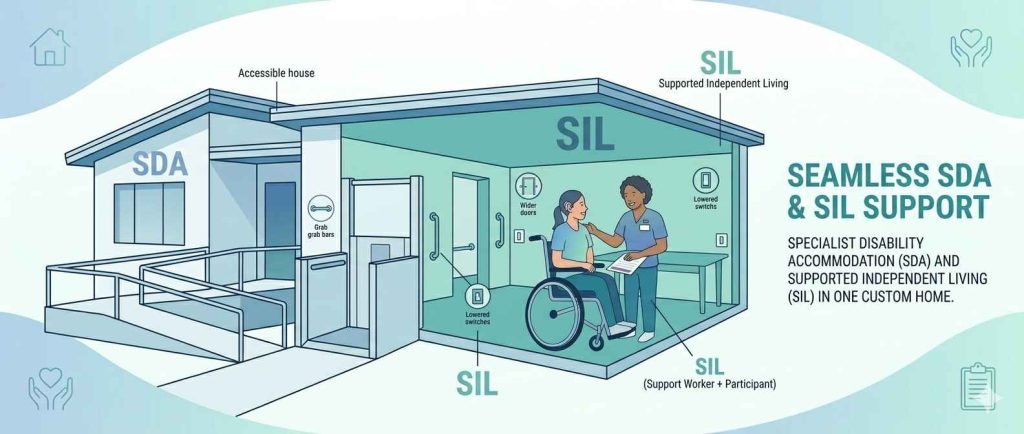
One important thing to know: some types of support require you to actually be registered, even if you want to be unregistered. Specialist Disability Accommodation, behaviour support, and (from July 2026) Supported Independent Living all need formal registration. So make sure your service type doesn’t fall into that category.

What Are Unregistered NDIS Support Workers Actually Like?

Let’s talk about the actual people providing the support. An unregistered NDIS support worker is someone who works for an unregistered provider or works independently providing NDIS support.

What makes them different from registered support workers:

  • They work outside the formal NDIS registration system
  • Their employer doesn’t have NDIS Commission oversight
  • They need the exact same screening checks and training as registered workers
  • Their quality depends on them as a person, not their registration status

Here’s something cool: some of the best NDIS support workers are unregistered. Why? Because they’re often more flexible, more personal, and more willing to go the extra mile. They might remember your birthday, adapt to your needs on the fly, or figure out creative solutions to problems.

But some unregistered NDIS support workers might be less professional or less qualified. The difference is that with a registered provider, the NDIS Commission is checking on them. With unregistered providers, you’re checking on them.

What to expect from a good unregistered NDIS support worker:

  • They show up on time and prepared
  • They listen to what you actually need
  • They’re friendly but professional
  • They keep your information private
  • They’re happy to answer your questions
  • They seem genuinely interested in helping you

Don’t settle for less than this. You deserve good support, whether it’s registered or unregistered.

The Real Advantages of Using Unregistered NDIS Providers

Okay, let’s talk about why people actually choose unregistered NDIS providers. There are some genuine benefits.

  • They’re Often More Personalized Unregistered NDIS providers often provide more personalized, tailored support. Without all the bureaucracy and paperwork requirements of registered providers, they can be more flexible and responsive to what you actually need. You’re not just another client number. You’re actually a person with specific needs and preferences.
  • Cost Can Be Lower Here’s something real: unregistered NDIS providers don’t have to pay for audits, compliance officers, or extensive quality management systems. Sometimes they pass those savings on to you. You might pay 35 dollars per hour instead of 60 dollars. That’s real money in your pocket.
  • You Can Get Service Faster Registered providers often have waiting lists. Unregistered NDIS providers might be able to start supporting you within a week or two instead of waiting months. If you need help soon, this matters.
  • Better for Specialized Needs Maybe you need help with something really specific like music lessons, hobby training, or a niche skill. Unregistered NDIS providers might be better at finding or providing these specialized services than big registered organizations.
  • More Flexibility in How You Work Together Want to change your schedule last minute? Need something that’s not quite standard NDIS support? Unregistered NDIS providers can often be more flexible about adapting to your real life instead of fitting you into their systems.
  • Direct Relationships There’s no middleman. You work directly with the person helping you. That can create a stronger relationship and better understanding of what you need.

These advantages are real, which is why unregistered NDIS providers continue to be popular. But they come with some tradeoffs, which we need to talk about too.

The Real Risks of Unregistered NDIS Providers (Being Honest)

Okay, so advantages are great. But we also need to talk about the risks. Being unregistered means there’s more responsibility on you to make sure everything’s good.

You Have a Limited Pool of Potential Clients If you’re a provider, or a smaller available pool of providers if you’re looking for support, this matters. Unregistered NDIS providers can only work with people who manage their own money or use a plan manager. That’s about 70% of NDIS participants right now, but that percentage is shrinking.

There’s Less Official Protection With a registered provider, the NDIS Commission is watching to make sure they follow the rules. With unregistered NDIS providers, there’s no official watchdog. If something goes wrong, you need to handle it yourself through complaints procedures.

Quality Can Vary Wildly One unregistered provider might be amazing. Another might be pretty mediocre. There’s no standardized quality checking, so you really need to verify that they’re any good.

Insurance and Liability Issues If something goes wrong and an unregistered provider isn’t properly insured, you could be out of luck. You’re depending on them having their own insurance coverage.

Payment Complications With unregistered NDIS providers, you usually have to pay them directly first, then claim the money back from the NDIA. This means waiting for reimbursement, dealing with claims, and hoping your claim gets approved.

The Big Risks of Unregistered NDIS providers:

  • Recent NDIS changes mean the NDIA can switch you to agency-managed funding (which means you can’t use unregistered providers anymore)
  • You could suddenly lose your support worker without warning if your funding changes
  • The market for unregistered providers is shrinking because of new regulations
  • More providers are being forced to register in certain areas

These risks are real and getting more serious as rules change. It’s not that unregistered NDIS providers are bad. It’s that the landscape is shifting, and you need to understand what that means.

Recent NDIS Changes That Actually Affect You

In late 2024, the NDIS made some big changes to how funding management works. If you’re using unregistered providers or thinking about it, you really need to understand this.

What Changed: The NDIA (the National Disability Insurance Agency) got new power to move people from self-managed or plan-managed funding to agency-managed funding. Previously, this almost never happened unless there was a serious problem. Now they can do it if they think there’s any risk that funds aren’t being used properly.

When They Can Switch You:

  • If they think you might be spending money in ways that don’t match your plan
  • If they’re worried about your safety or well-being
  • If you’ve had issues with fraud or financial problems in the past
  • If you break NDIS rules
  • If they think there’s an unreasonable risk

Why This Matters for Unregistered NDIS Providers: This is huge. If you get switched to agency-managed funding, you can’t use unregistered NDIS providers anymore. You have to switch to a registered provider. Even if you absolutely love your unregistered support worker, you might not have a choice.

Think about that for a second. You could have a great relationship with your unregistered provider, and suddenly you’re forced to switch because your funding type changed. That’s genuinely disruptive.

How to Check If an NDIS Provider Is Registered

This is practical stuff you can actually do. If you’re trying to figure out whether a provider is registered or unregistered, it’s not that complicated.

Step 1: Use the Official Finder Go to the NDIS Provider Finder on the NDIS Commission website. Search for the provider’s name. If they show up with “registered” status, they’re registered. If they don’t show up at all, they’re unregistered.

Step 2: Check Their ABN Go to the ABN Lookup website and search their business name. This tells you if they’re a legitimate business operating in Australia. Every provider should have an ABN.

Step 3: Ask Them Directly Sometimes the easiest way is to just ask. A legitimate provider will be upfront about whether they’re registered or not. If they get evasive or weird about it, that’s a red flag.

Step 4: Ask for Insurance Proof Request copies of their public liability and professional indemnity insurance. Legitimate providers should have this and be willing to show it.

Step 5: Check for NDIS Knowledge Ask them about recent NDIS rule changes, the Code of Conduct, or what NDIS practice standards mean to them. A legitimate provider will know this stuff.

Red flags when checking:

  • They can’t find an ABN
  • They’re not in the provider finder
  • They’re weird about talking about insurance
  • They seem confused about NDIS rules
  • They pressure you to decide quickly

Green flags:

  • They have a valid ABN and business registration
  • They talk openly about being registered or unregistered
  • They have insurance documentation
  • They’re knowledgeable about NDIS
  • They take time to explain things

Questions You Should Actually Ask

Before you commit to any provider, registered or unregistered, ask these questions. Seriously. Don’t skip this.

About Their Business:

  1. How long have you been providing NDIS support? (Experience matters)
  2. Are you registered with the NDIS or unregistered? (Clarity is important)
  3. Can you show me proof of your ABN? (Legitimacy check)
  4. What types of support do you specialize in? (Matching your needs)

About Qualifications: 5. What qualifications do you have for this work? (Skills matter) 6. Do all your staff have NDIS Worker Screening Checks? (Safety is essential) 7. How do you keep your skills updated? (Ongoing learning shows professionalism)

About How They Work: 8. How will you help me with my specific NDIS plan goals? (Alignment matters) 9. What happens if I need to change my support? (Flexibility is important) 10. How often will we check in about how things are going? (Regular reviews help)

About Costs: 11. How much do you charge and how is it calculated? (No surprises) 12. Are your rates within NDIS limits? (Especially if plan-managed) 13. How do I pay you and get invoices? (Clear systems help)

About Safety and Complaints: 14. Can you show me your insurance? (Protection matters) 15. What’s your process if I’m not satisfied? (Accountability is important) 16. How do you handle complaints? (Everyone needs this)

About Recent Changes: 17. Are you aware of recent NDIS rule changes? (Knowledge shows professionalism) 18. What happens if my funding type changes? (Honesty about risks matters)

If a provider won’t answer these questions or gets defensive, keep looking. You deserve someone who’s transparent and professional.

Common Misconceptions About Unregistered NDIS Providers

There’s a bunch of confusion out there about unregistered providers. Let’s clear up the biggest myths.

Myth 1: Unregistered providers are illegal. False. They’re completely legal. The only illegal thing would be if someone required to register (like SDA providers) didn’t. Otherwise, operating as unregistered is totally fine.

Myth 2: Unregistered always means lower quality. Not true. Some unregistered NDIS providers deliver amazing service. Quality depends on the individual person, not their registration status. You need to check them out carefully.

Myth 3: You can’t get money back if you use unregistered providers. False. You absolutely can get reimbursed. You have to claim it through the NDIS, but it’s possible. It just takes longer and requires more work on your part.

Myth 4: All unregistered providers are cheap. Not necessarily. Some charge the same as registered providers. They’re not cheaper just because they’re unregistered. It depends on their costs and what they think they’re worth.

Myth 5: Registered providers are always better. Not automatically. Registered providers have oversight, which is good. But they can be bureaucratic and less flexible. Bigger doesn’t always mean better.

Myth 6: You can’t check if a provider is legitimate if they’re unregistered. Actually, you can. It’s just more work. But there are clear ways to verify them, which we already talked about.

Myth 7: All unregistered providers will have to register soon. We don’t know for sure yet. Some definitely will (SIL providers from July 2026). But it’s not set in stone for all of them.

Myth 8: NDIS doesn’t care about unregistered providers. Wrong. The NDIS Commission still expects them to follow the Code of Conduct and Practice Standards. They’re just not formally registered.

Myth 9: Your money is safer with registered providers. Sometimes, sometimes not. Registered providers have audits, which is good. But unregistered providers who are legitimate are also generally careful with money. It’s more about the individual.

Myth 10: Unregistered providers can do whatever they want. False. They still have to follow all the NDIS rules. They just don’t have formal audits checking on them. The responsibility is on them to follow the rules anyway.

What You Should Actually Do Now

Okay, so you’ve learned a lot about unregistered NDIS providers. What’s the practical next step?

If You’re Looking for Support:

  • First, figure out your funding type (agency-managed, plan-managed, or self-managed)
  • If you’re agency-managed, you need registered providers only
  • If you’re plan-managed or self-managed, you have options
  • Use the steps we talked about to check out any unregistered provider you’re considering
  • Ask all those questions we listed
  • Get references and check them out
  • Make sure you have a written agreement
  • Keep everything documented

If You’re a Potential Provider:

  • Seriously consider whether unregistered is right for your business model
  • Understand the rules and follow them carefully
  • Get legitimate insurance and ABN
  • Build reputation through excellent service
  • Stay informed about regulatory changes
  • Consider if registration might be in your future
  • Document everything you do

For Everyone:

  • Stay aware that NDIS rules are changing
  • Keep learning about what’s happening in the disability sector
  • Understand that the landscape for unregistered NDIS providers is shifting
  • Make decisions with eyes wide open about both benefits and risks

Frequently Asked Questions

Q: What exactly are unregistered NDIS provider requirements?

A: They need an ABN and to be registered as a legitimate business. They need insurance. They need to follow the NDIS Code of Conduct and Practice Standards. They need to do NDIS Worker Screening Checks for staff. They need to keep good records. But they don’t need NDIS Commission registration or formal audits. Basically, they need to operate as a legitimate, legal business that follows NDIS rules.

Q: Are unregistered NDIS providers legitimate?

A: They can be. If they have a real ABN, insurance, follow the rules, and are transparent about what they do, then yes, they’re legitimate. If they’re hiding things or can’t prove they’re operating legally, then no. You have to check them out yourself.

Q: What’s the difference between registered and unregistered in practical terms?

A: Registered providers are on the official list, can work with anyone (including agency-managed participants), get audited by the NDIS, and have official oversight. Unregistered providers aren’t on the list, can only work with self-managed or plan-managed participants, don’t get formal audits, and you’re responsible for checking them out. Registered usually costs more because of audit costs.

Q: How do I know if an NDIS provider is registered?

A: Check the NDIS Provider Finder website. If they appear in the search results, they’re registered. If not, they’re unregistered. You can also ask them directly.

Q: Can I use an unregistered provider with agency-managed funding?

A: No. If your funding is agency-managed by the NDIA, you can only use registered providers. This is a hard rule.

Q: How do I become an unregistered NDIS provider?

A: Get an ABN, get insurance, learn the rules, set up your systems, hire right, and start marketing. But check if your service type requires registration. Some do.

Q: What does an unregistered NDIS support worker actually do?

A: The same things a registered support worker does. They provide disability support based on someone’s NDIS plan. The difference is their employer isn’t formally registered with the NDIS.

Q: Will unregistered providers have to register?

A: Some will definitely have to (SIL providers from July 2026). For others, we’re not sure yet. The rules seem to be getting tighter, so it’s possible.

Q: Can unregistered providers get reimbursement from NDIS?

A: Yes, participants can get reimbursed when using unregistered providers. The participant pays first, then claims back through the NDIA portal. It takes longer and requires more work.

Q: What’s the biggest risk of using unregistered providers?

A: That the NDIA switches you to agency-managed funding, forcing you to use a registered provider instead. It’s a real risk that’s becoming more common.

How to Choose the Right NDIS Provider in Melbourne: Expert Guide

Imagine you’re navigating the world of disability support in Melbourne, and you realize there are dozens, maybe even hundreds, of NDIS providers to choose from. The choices feel overwhelming. You worry about picking the wrong one. You wonder if you’ll waste your valuable NDIS funding. Maybe you’re concerned the support won’t meet your actual needs.

Here’s the thing: this confusion happens to thousands of participants and families every single year. People choose providers based on the first option they find, or worse, just pick whoever is cheapest. Then they realize months later that the support isn’t working. The staff don’t understand their goals. The service feels cold and impersonal. By then, they’ve already used precious funding that could have gone toward better support.

What if you could feel completely confident in your choice before you even sign anything? What if you knew exactly what questions to ask, what red flags to watch for, and how to evaluate whether a provider was truly the right fit? That’s what this guide does. We’re going to walk you through every single step of finding the right NDIS provider in Melbourne, using practical advice that actually works in real life.   

The truth is, finding the right NDIS provider doesn’t have to be stressful. When you understand the steps and know where to look, the whole process becomes clear and manageable. Let’s make this happen together.

Know Your Needs Before Hunting for the Right NDIS Provider

Before you start searching for providers, you need to understand what you’re actually looking for. Think of it like this: if you wanted to buy a gaming laptop, you wouldn’t just walk into a store and buy the first one you see. You’d know what games you want to play, how fast you need it to be, and what your budget is.

Community Participation Activities

Choosing the right NDIS provider works the same way.

Start by reviewing your NDIS plan document. This isn’t as boring as it sounds, I promise. Your NDIS plan outlines:

  • The supports you’ve been approved for
  • How much money is allocated for each type of support
  • What your goals are (this is the important part)
  • Whether you need core supports, capacity building, or specialist services

Ask yourself these honest questions:

  • What type of help do I need most urgently?
  • Do I need someone to help me with personal care, therapy, getting out in the community, or a combination?
  • How often will I need this support? Daily? Weekly? Monthly?
  • What are my biggest goals right now? Do I want to become more independent? Get back to work or study? Build friendships?
  • Are there specific things that worry me about my support?

Understanding the different support types helps too:

  • Core Supports: Personal care, help with daily activities, getting out in the community
  • Capacity Building Supports: Learning new skills, therapy, and education help
  • Specialist Services: Supported Independent Living (SIL), housing support, allied health, mental health support
  • Support Coordination: Someone helps you plan and organize all your other supports

When you know exactly what you need, choosing how to find an NDIS provider becomes so much easier. You’re not looking for a provider who does everything. You’re looking for a provider who does the specific things that matter to you.

Registered vs. Unregistered Providers – Why This Actually Matters

Here’s something important that many people don’t realize: not all NDIS providers are registered, and it actually matters which type you choose.

Eligible for Community Access Support

Registered NDIS Providers:

Think of registered providers as providers who have passed a rigorous background check and safety inspection. They’re approved by the NDIS Quality and Safeguards Commission. This means:

  • They’ve been thoroughly checked for safety and quality
  • They meet strict standards that the NDIS sets
  • They follow the NDIS Code of Conduct
  • They have regular audits and reviews to make sure they’re doing a good job
  • If you have problems, there’s an official complaints process
  • Your safety is prioritized and regulated

If your NDIS funding is managed by the NDIA (the government), you can ONLY use registered providers. This is non-negotiable. But if you have self-managed or plan-managed funding, you have more flexibility.

Unregistered Providers:

These are legitimate businesses or individuals who aren’t formally registered with the NDIS. They might still be really good, but here’s the thing: they don’t go through the same safety checks. They’re not regulated the same way. This can mean more flexibility, but less protection.

How to verify a provider is actually registered:

  • Visit the NDIS Quality and Safeguards Commission website and search for them
  • Use the official NDIS Provider Finder tool at ndis.gov.au
  • Ask the provider directly for their registration number
  • Check that registration number yourself
  • Look for a current registration (old registrations can expire)

If a provider gets defensive about showing their registration, that’s a red flag. A good provider will happily show you proof they’re registered.

Staff Experience and Qualifications Matter More Than You Think

Let me ask you something: would you want a tennis coach who’s never actually played tennis to teach you? Of course not. The same logic applies when choosing disability support providers.

Experience counts for everything when it comes to good support.

Before you even consider a provider, dig into their background. How long have they been operating? Do they have experience working with people who have similar needs to yours? This makes a huge difference.

The right NDIS provider should be able to tell you:

  • How long they’ve been supporting people with disabilities
  • Specific examples of people they’ve supported with similar needs
  • How many staff members they have and how long they typically stay
  • What training all their staff complete
  • Whether they specialize in particular areas (mental health, physical disabilities, autism, etc.)

Staff qualifications are really important:

  • Are support workers trained in disability support?
  • Do they have First Aid certification?
  • Are they trained in positive behavior support if that’s relevant?
  • Do they get regular ongoing training?
  • Can they work with people who use AAC devices or have communication differences?
  • Have they been background checked?

Different specializations matter for different people:

  • If you have physical disabilities, you want someone experienced in mobility and accessibility
  • If you have mental health challenges, you want someone trained in mental health support
  • If you’re on the autism spectrum, you want someone who understands autism
  • If you need housing support (SIL or SDA), you want someone experienced in those specific services

When you call providers, ask these questions directly. Don’t be shy. You’re spending your NDIS funding here. A good provider will be transparent and happy to explain their team’s qualifications. If they’re vague or defensive, that’s not the right NDIS provider for you.

Smart Ways to Find the Best NDIS Providers in Melbourne

Okay, now that you know what you’re looking for, where do you actually find good providers? There are several smart places to look.

The Official NDIS Provider Finder:

This is your first stop. Go to ndis.gov.au and use their Provider Finder tool. You can:

  • Filter by location (your suburb or area)
  • Filter by service type (what you actually need)
  • See provider details, registration status, and contact info
  • Check if they’re currently accepting new participants

It’s like Google, but specifically for NDIS providers. Use it.

Ask people who actually know:

This might be the most valuable advice in this entire guide. Your Local Area Coordinator (LAC) knows the local provider scene inside and out. They work with providers constantly. Ask them:

  • Which providers have they had good experiences with?
  • Which providers do participants and families trust?
  • Are there any providers they’d recommend specifically for your needs?
  • Are there any providers they’d suggest you avoid?

Your Support Coordinator or Plan Manager also has insider knowledge. Use them.

Check what other people are saying:

  • Read Google reviews for Melbourne NDIS providers
  • Join Facebook groups for disability support in Melbourne
  • Ask other participants and families directly what their experience has been
  • Look for honest feedback about day-to-day support quality
  • Pay attention to patterns in reviews, not just individual comments

Create your shortlist:

Don’t just go with the first provider you find. Create a shortlist of 3 to 5 providers that match your needs. Compare them. Check their availability. Look at their services. Then narrow it down.

This approach takes more time, but finding the right NDIS provider is worth the effort. You’ll be working with whoever you choose for potentially years, so choosing carefully makes sense.

Does This Provider Actually Get What You Need?

This is where it gets really important. You want a provider who understands that every single person is different. No two people have identical needs or goals.

Person-centered support means:

  • The provider actually listens to what YOU want
  • They don’t try to squeeze you into their standard “package.”
  • They’re willing to be flexible if your needs change
  • They respect your choices and preferences
  • They genuinely care about your goals, not just delivering a service

Ask these specific questions:

  • “How will you help me reach my specific goals?”
  • “Can you adjust the support if my needs change?”
  • “What happens if I want to do things differently than you normally do?”
  • “How do you involve me in planning my support?”
  • “What if I need to change things after we start?”

Watch for flexibility:

  • Can they do unusual schedules if you need them?
  • Will they accommodate cultural or religious preferences?
  • Can they scale services up or down as needed?
  • Do they support participant choice even if it’s unconventional?
  • What’s their actual process for making changes?

If a provider says “everyone gets the same support package,” run away. That’s not the right NDIS provider for you. The best providers adapt to you. You don’t adapt to them.

Location and Timing Matter More Than You Realize

Here’s something people don’t always think about: where your provider is actually located affects everything.

Think about distance:

  • Is the provider close to your home?
  • Can they get to you easily for in-home support?
  • If you need to go to them, is it accessible via public transport?
  • How much of your NDIS funding will travel cost?
  • For accommodation services, does the location support your independence and goals?

For some people, this doesn’t matter much. For others, it’s everything. If you have mobility challenges, a provider across town might not be practical. If travel costs eat up half your funding, that’s not sustainable.

Availability is crucial:

  • Can they actually start services when you need them to start?
  • Are they taking new participants or have long waiting lists?
  • Can they do the times you actually need support?
  • What happens during school holidays or staff leave?
  • How many people are they already supporting?

For accommodation services (SIL or SDA), location affects your whole life:

  • Can you still visit family and friends easily?
  • Are there shops, parks, and services nearby?
  • Does the neighborhood feel safe and welcoming?
  • Can you access employment or education opportunities?
  • Will you feel isolated or included in the community?

Don’t choose a provider just because they’re convenient. But don’t ignore convenience either. The right NDIS provider needs to be in the right location for your specific situation.

Meeting Providers Face-to-Face – What to Look For

Now comes one of the most important steps: actually meeting the provider to see if they’re right for you.

Before the meeting:

  • Write down your questions in advance so you don’t forget
  • Bring someone with you if that helps you feel more confident
  • Ask for the meeting to happen at a time that works for you
  • If it’s a facility, request a tour

When you visit or meet:

Pay attention to the environment:

  • Is it clean, safe, and welcoming?
  • Does it feel like a place where you’d want to spend time?
  • Can someone with disabilities access it easily?
  • Is there adequate privacy?
  • Do you see other participants and how are staff treating them?

Watch how staff interact:

  • Are they respectful and patient?
  • Do they listen to what people are saying?
  • Do they seem to actually enjoy their work?
  • Are they friendly and genuine?
  • How do they respond when someone has a question?

Ask the big questions:

“How will you help me achieve my goals?” This isn’t a test. Listen to how they answer. Do they actually talk about YOUR goals or do they just describe their standard services?

“What happens if I want to change things?” Good providers should say, “We can work that out.” Bad providers might seem annoyed.

“Can you tell me about your staff and their training?” Transparency is key here.

“What’s your approach to person-centered support?” The answer tells you everything.

“Can you provide references from people with similar needs?” Good providers have happy clients who’ll vouch for them.

Trust your gut:

After the meeting, how do you feel? Confident? Worried? Excited? Your instincts matter. If something feels off, it probably is. If you feel heard and understood, that’s a good sign.

Understanding Service Agreements Without Losing Your Mind

Okay, so a provider wants to work with you. They’ll give you a service agreement. This document outlines everything about your support.

What service agreements actually cover:

  • Exactly what support you’ll get
  • How often and at what times
  • How much does it cost
  • What happens if you want to cancel
  • What the provider promises and what you promise
  • Emergency procedures
  • How complaints are handled

The money part:

  • What’s the hourly rate or flat fee?
  • Will costs increase and when?
  • What’s included and what costs extra?
  • What happens if you go over a certain number of hours?
  • Are there cancellation fees if you need to change things?

The important stuff:

  • How long is the agreement?
  • What notice period do you need to give if you want to stop?
  • Can you change the service after you’ve started?
  • What happens if the provider can’t provide the service?
  • Are there backup plans?

Before you sign:

  • Read every single page
  • Ask questions about anything you don’t understand
  • Don’t let anyone pressure you to sign immediately
  • Show it to your Plan Manager or Support Coordinator
  • Keep a copy for yourself
  • Make sure it matches what you discussed

Service agreements protect both you and the provider. They’re not meant to be complicated. If something’s confusing, ask for clarification. Don’t sign anything you don’t fully understand.

Your Voice Matters Most – Involving You in the Decision

Here’s something really important that doesn’t get said enough: this is about YOU. Not about what your family thinks. Not about what’s convenient for everyone else. Your needs, goals, and preferences come first.

Why your involvement matters:

The NDIS is literally designed to give you choice and control. That’s the whole point. So you should absolutely be part of choosing your support provider. You’re going to be spending a lot of time with this person or team. You need to feel comfortable and heard.

How to get involved at each stage:

  • When your family is researching providers, ask to see the options. Ask what they like about each one. Share what matters to you. If you don’t like a provider’s website or vibe, say so.
  • When meeting providers, go to the meetings if you can. Ask your own questions. Tell people what you think about the staff and environment. Your opinion matters more than anyone else’s.
  • After choosing, check in regularly. Does this support actually feel good? Is the staff person respectful and helpful? If something’s not working, speak up early.

If communication is challenging:

Maybe you use AAC (augmentative and alternative communication). Maybe you communicate through gestures or behavior. Maybe you need more time to process things. That’s completely fine. Use whatever communication method works for you. Support people should adapt to how you communicate, not the other way around.

Trust yourself:

You know yourself better than anyone else. If something feels wrong, it probably is. If you feel respected and heard, that’s a good sign.

Keep Checking In – Your Support Isn’t Done After You Choose

Here’s the thing people often forget: choosing a provider isn’t the end of the story. It’s just the beginning.

Check in regularly:

  • Every month, think about how the support is going
  • Is it actually helping you reach your goals?
  • Do you feel comfortable with the support worker?
  • Are there any concerns, even small ones?
  • What’s going well? What could be better?

Track what matters:

Keep a simple list of:

  • How often you’re getting support
  • Whether it’s happening at the times you need
  • Progress toward your goals
  • Any problems that come up
  • What you’re happy with
  • What you’d like to change

Red flags that something’s not working:

  • You dread the support worker arriving
  • You’re not making progress on your goals
  • The provider is hard to reach or unresponsive
  • The support worker is disrespectful or unsafe
  • Things keep breaking that you asked them to fix
  • You feel like they don’t actually care about your goals

When to switch providers:

You don’t have to stay with a provider forever if it’s not working. You can switch. Yes, actually. Your NDIS funding belongs to you, not to the provider. If a provider isn’t meeting your needs:

  • Give them notice (usually 28 days, check your agreement)
  • Start looking for a new provider while you’re still being supported
  • Make sure the new provider is ready before the old one stops
  • Don’t feel guilty about switching
  • Learn from the experience to pick better next time

Switching providers is normal and acceptable. Never stay with someone just because you feel obligated to.

Red Flags – When to Walk Away

Sometimes you see signs that a provider might not be the right fit. Learning to spot these red flags saves you from wasting time and money.

Provider red flags:

  • Registration can’t be verified online
  • Staff can’t explain their qualifications
  • They seem annoyed by your questions
  • They offer you “no flexibility” in how services work
  • Reviews mention the same problem repeatedly
  • They pressure you to decide quickly
  • They have super high staff turnover
  • Safety concerns about the facility
  • They dismiss your concerns or complaints
  • They’re vague about costs or hidden fees

What to do if you spot red flags:

Don’t ignore your instincts. If something feels off, it probably is. Ask more questions. If answers don’t satisfy you, keep looking. There are other providers out there.

Common mistakes to avoid:

  • Choosing based solely on price without considering quality
  • Not checking if they’re actually registered
  • Not reading the service agreement carefully
  • Not involving the participant in the decision
  • Ignoring your gut feelings
  • Not asking for references
  • Assuming the first provider is fine

The time you spend researching now saves you from problems later. It’s worth it.

Conclusion: You’ve Got This

Finding the right NDIS provider in Melbourne doesn’t have to be overwhelming anymore. You now know exactly what to look for, what questions to ask, and which red flags to watch out for. This decision is about you and your goals, so trust yourself throughout the process.

Remember the key steps: verify provider registration, assess their experience, research thoroughly, meet them in person, understand service agreements, and involve yourself in the decision. The right provider becomes your partner in achieving independence and reaching your potential. They listen, respect your choices, and genuinely care about helping you succeed.

Start by clarifying your needs, create a shortlist of 3 to 5 providers, research carefully, and meet with them. Trust your instincts about how you feel in their presence. Once you choose, keep checking in regularly. If something isn’t working, switching providers is absolutely okay. Your NDIS funding is yours to use wisely.

If you need expert guidance through this process, Apex Support is here to help. Our team knows the Melbourne disability support landscape and specializes in helping participants find the perfect provider match. We’ll walk you through every step, from understanding your options to evaluating providers to preparing for meetings.

Contact Apex Support today, and let’s find you the right NDIS provider in Melbourne together. You deserve support that feels good and helps you thrive. You’ve got this, and we’ve got you.

Your Questions Answered – FAQ Section

Q: How do I actually verify a provider is registered?
Go to the NDIS Quality and Safeguards Commission website. Search their name. You’ll see their registration number and status. You can also call the provider and ask for their registration number, then verify it yourself. Never just take their word for it.

Q: Can I use an unregistered provider?
Only if you have self-managed or plan-managed NDIS funding. If the NDIA manages your plan, you must use registered providers. If you do use unregistered providers, research them extra carefully and get references.

Q: What if I’m not happy with my provider after I’ve started?
You can switch. Look at your service agreement for the notice period (usually 28 days). Tell them you’re leaving. Find a new provider. Start services with them. It’s that simple. You don’t need permission from the NDIS to switch providers.

Q: How often should I review whether my provider is still right for me?
Ideally, check in monthly about satisfaction and quarterly about progress toward goals. Do a big review annually. If problems come up, review immediately.

Q: What’s the right NDIS provider experience supposed to feel like?
Like a real partnership. Like they genuinely care about your goals. Like they listen when you talk. Like you feel safe and respected. Like they’re helping you become more independent and reach your potential.

Q: Do I have to use the same provider for all my services?No. You can mix and match. One provider for personal care, another for support coordination, another for community activities. Whatever works for you.

Q: What if I discover safety issues?
Report to the NDIS Quality and Safeguards Commission immediately. Tell your Local Area Coordinator. Stop using the provider. Your safety matters more than anything else.

Q: Should I trust online reviews?
Use them as one data point, not the whole picture. Read multiple reviews. Look for patterns. Use reviews to identify questions to ask during interviews. But don’t base your decision solely on reviews.

Q: How do I know if an NDIS provider is registered in Victoria? 
You can check the NDIA’s registered provider list online. Registered providers have completed compliance checks and audits. Apex Support helps you verify registration status—just ask us during consultation.

Q: What’s the difference between registered and unregistered NDIS providers in Melbourne?
Registered providers are audited by the NDIA and must meet strict compliance standards. Unregistered providers operate under plan-managed arrangements and offer more flexibility but less oversight. Both are legitimate options depending on your needs.

Q: What questions should I ask when choosing an NDIS provider?
Ask about their experience with your disability type, service availability in your area, staff qualifications, pricing flexibility, availability for plan reviews, and references from current participants.

Q: Can I change NDIS providers once I’ve signed up?
Yes, you can change providers. Most arrangements allow changes at plan review, but some offer flexibility mid-plan. Check your plan agreement or contact your plan manager for details.

Q: How much does an NDIS provider cost in Melbourne?
Costs vary based on service type and intensity. Your NDIS plan allocates specific funding for supports. Ask providers for their hourly rates and whether they charge setup fees or administration costs.

Q: Should I choose a registered or unregistered NDIS provider?
Choose registered if you want maximum oversight and compliance assurance. Choose unregistered if you need flexibility and personalized service. Many choose a mix of both within their plan.

Q: How do I know if an NDIS provider is reliable?
Check their track record, read reviews from other participants, ask for references, verify staff qualifications, and ensure they’re responsive to questions. Meet the team before committing.

Q: What happens if I’m unhappy with my NDIS provider?
You can request a change during plan review or, in some cases, immediately if there’s a safety concern. Document your concerns and contact your plan manager or local NDIA office for support.

SIL vs Others NDIS Living Arrangement: Which is Right for You? 

Picking the right NDIS living arrangement is one of the biggest decisions a participant or their family will ever make. There are so many options on the table: SIL, SDA, ILO, STA, MTA, in-home support. Each one sounds a little different, but what do they actually mean? And more importantly, which one is the right fit for you or your loved one?

Here is the tough part. Getting this decision wrong does not just mean a bit of inconvenience. It can mean funding gaps, living somewhere that does not match your needs, or missing out on the level of care that would actually make a real difference in your day-to-day life. Many NDIS participants go into their plan reviews without really understanding how the sil vs others ndis living arrangement decision works. And then they end up in a situation that does not truly support their goals.

That is exactly why this guide exists. We are going to break down every major NDIS living arrangement in plain, simple language. By the time you finish reading, you will know what each option actually means, how they compare, and which one might be the right fit for your situation. Let us get into it.

What is Supported Independent Living (SIL) Under the NDIS?

Before we can talk about the sil vs others ndis living arrangement comparison, it helps to really understand what SIL actually is. And trust us, a lot of people get this wrong.

Supported Independent Living (SIL) Under the NDIS

Supported Independent Living NDIS is a type of funding that pays for the daily support a person receives, not the house they live in. This is a really important distinction. SIL covers the help you get to go about your day, things like:

  • Personal care, like getting dressed and grooming
  • Cooking meals and managing the kitchen
  • Taking medications at the right time
  • Cleaning and household tasks
  • Getting out into the community and social activities

Your SIL support workers are usually available around the clock, 24 hours a day, 7 days a week. They are there to help you live as independently as possible, not to do everything for you, but to support you in building skills and confidence along the way.

What SIL does not cover is just as important to understand. SIL funding does not pay for your rent, electricity, food, or furniture. Those are your personal living expenses. SIL NDIS is purely about the support you receive while you live in a home, whether that is a shared house with other NDIS participants or your own standalone place.

As a registered SIL provider Australia, Apex Support helps participants navigate exactly this kind of setup, making sure you know what your funding covers and what it does not before you make any big decisions.

SIL Funding Eligibility: Who Actually Qualifies?

Not every NDIS participant automatically gets SIL funding included in their plan. So before anything else, it is worth understanding who is actually eligible and how the approval process works.

SIL Funding Eligibility

To qualify for NDIS SIL funding, the NDIA generally looks at whether a person has significant daily functional impairment. That means they need regular, ongoing support just to manage everyday tasks like cooking, personal care, or getting around safely. It is not about how severe your diagnosis sounds on paper; it is about how your disability actually affects your daily functioning.

Here are some of the signs that SIL funding eligibility might apply to you or someone you care for:

  • You need help with daily tasks like meals, hygiene, and medication consistently
  • You require overnight or 24/7 support due to safety needs
  • You are working toward building life skills and greater independence
  • Living alone without support is not safe or practical for you
  • You or your family need a structured, supported living environment

The process typically involves a functional assessment and a detailed SIL proposal put together by your support coordinator and the SIL provider. The NDIA reviews this proposal before approving funding, which is why having the right people in your corner matters a lot.

If you are not sure where to start, the Support Coordination team at Apex Support can walk you through the whole process, from assessing your eligibility to building a strong case for your plan review.

SIL vs SDA NDIS: Two Different Things That Often Work Together

This is probably the most common point of confusion in the whole sil vs others ndis living arrangement conversation. People hear SIL and SDA mentioned together all the time and assume they are the same thing. They are not.

Think of it this way. SDA is the house. SIL is the support inside the house. That is the simplest way to remember it.

SIL vs SDA NDIS

SIL vs SDA NDIS comes down to what each type of funding actually covers. SDA, or Specialist Disability Accommodation, pays for the physical building itself. These are purpose-built homes designed specifically for people with extreme functional impairment or very high support needs. The design might include wider doorways for wheelchairs, hospital-grade fixtures, or smart home technology for people with limited mobility.

SIL, on the other hand, funds the support delivered inside that home. So a participant can live in SDA housing and receive SIL support at the same time. They are funded separately but work together beautifully.

FeatureSILSDA
What it fundsDaily support and careThe physical housing (building)
Who provides itRegistered SIL support workersRegistered SDA providers
Who qualifiesHigh daily support needsExtreme functional impairment
Can be combined?Yes, SIL and SDA work togetherYes
Approximate recipients35,000+ participantsAround 6,000 participants

The key takeaway here is that SDA is for a much smaller group of participants, roughly 6,000 people compared to over 35,000 who receive SIL. You need to meet a very high threshold to qualify for SDA. But if you do qualify, combining SDA and SIL gives you both a purpose-built accessible home and the daily support to live in it well.

SIL vs ILO NDIS: Which Model Gives You More Choice?

SIL vs ILO NDIS is a comparison that is coming up more and more as the NDIS evolves. And it is a really important one to understand, especially if you value flexibility and having more say in how your support is delivered.

ILO stands for Individualised Living Options. It is a newer model under the NDIS that focuses on how you live, rather than where you live. Unlike SIL, which tends to follow a more structured, provider-led setup, ILO is co-designed with the participant. That means you get to have a bigger say in shaping what your support looks like day to day.

ILO can look quite different depending on the person. Some people use it to get support in their own home. Others might use it to live with a host family or a trusted person. The support arrangement is built around your individual goals and lifestyle, rather than fitting you into a fixed model.

SIL tends to work well when:

  • You need high-level support around the clock
  • You require consistent overnight care or active supervision
  • A structured environment with a regular support team suits you
  • You are moving out of home for the first time and want a steady routine

ILO tends to work well when:

  • You want more control and flexibility over your support
  • You value living in a setting that feels more personal and less institutional
  • Your support needs are more moderate and do not require 24/7 staffing
  • You want to live with a trusted person or in your own space with tailored help

It is also worth noting that ILO is still developing within the NDIS framework, so the availability of providers varies. Talking to your support coordinator is the best way to figure out whether ILO is a realistic option for your plan.

SIL vs In-Home Support: Do You Have to Move Out?

One of the biggest questions families ask is whether getting NDIS support means their loved one has to move out of the family home. The short answer is no, not necessarily. It depends on the type of support you choose.

In-home support is exactly what it sounds like. It brings NDIS-funded support directly to wherever you already live, whether that is your own home, a rental, or the family home you grew up in. Support workers come to you on a scheduled basis, helping with personal care, daily tasks, or community access, and then they leave. You stay in your space, in your routine.

SIL is different. It usually means moving into a supported living home, either a shared house with other participants or occasionally a standalone property. The support workers are there with you far more consistently, often around the clock.

FeatureSILIn-Home Support
Living EnvironmentShared home with housematesYour own or family home
Support Availability24/7 on-site careScheduled visits only
Social SettingBuilt-in peer communityExisting family/social network
Privacy LevelOwn room, shared spacesFull privacy in your home
Best ForHigh and complex support needsIntermittent support needs

So who is better suited to in-home support? Generally, people who need occasional or scheduled help, who have strong family networks already in place, or who really value the privacy and familiarity of their own home. If a family member already provides a lot of informal care but just needs some extra professional help alongside that, in-home support often fits well.

SIL tends to suit people who need more intensive, ongoing support that would not be practical to deliver in a standard home setting. It also works really well for people who are ready for more independence and want to experience living in a community with peers.

Leaving home can feel like a big step. But many participants find that moving into a well-run SIL home actually builds their confidence faster than staying in an environment where everything is done for them. If you are searching for a reliable NDIS service near me, reaching out to a local SIL provider to tour a home and ask questions is a great first step.

SIL vs Short Term and Medium Term Accommodation: Is It Temporary or Long-Term?

Not everyone who enters NDIS housing is looking for a permanent arrangement right away. Sometimes you just need a short break, a trial, or a temporary place to stay while something more permanent gets sorted. That is where STA and MTA come in.

STA (Short Term Accommodation) is sometimes called respite care. It provides temporary housing and support for up to 14 days at a time. It is great for situations like:

  • A family carer needs a short break from daily caring responsibilities
  • A participant has just been discharged from hospital and needs temporary care
  • Someone wants to trial what SIL living feels like before committing
  • A person needs support while their usual home is being modified or repaired

MTA (Medium Term Accommodation) sits in between. It is designed as a bridge for participants who have been approved for long-term housing like SIL or SDA, but their permanent placement is not ready yet. MTA gives them somewhere stable and supportive to stay in the meantime.

SIL, by contrast, is a long-term model. It is not about a 2-week stay or a temporary fix. It is about building a life, learning skills, and having consistent support over months and years.

The journey often looks like this: a participant might try STA first to get a feel for supported living. If that goes well and their goals align, they might move into MTA while a permanent SIL home is arranged. Then once their NDIS SIL funding is confirmed and a home is ready, they transition into long-term SIL. It is a gradual, well-supported process.

Apex Support’s Respite Services can help participants and families explore short-term options as a stepping stone toward more permanent supported living.

SIL vs Others NDIS Living Arrangement: The Full Comparison at a Glance

Now that we have walked through each option in detail, here is the full sil vs others ndis living arrangement comparison laid out in one easy-to-read table. This can help you quickly see which option lines up with your situation.

OptionDurationSupport LevelHousingBest For
SILLong-termHigh, often 24/7Shared/StandaloneComplex daily needs
SDALong-termVariesSpecialist-builtExtreme impairment
ILOLong-termFlexibleFlexibleChoice and control
In-Home SupportOngoingScheduled visitsOwn/family homeIntermittent needs
STAShort-term (14 days)HighTemporaryRespite, trial stays
MTAMedium-termVariesTemporaryBridging placement

Reading this table, you can see that there is no single option that beats the others. Each one exists because different people have different lives. A participant with very high support needs and complex care requirements will likely find SIL to be the best long-term fit. Someone with more moderate needs who values staying at home will suit in-home support much better. And someone still figuring things out might start with STA and work their way toward SIL over time.

The sil vs others ndis living arrangement decision is not one-size-fits-all. It is personal. And that is actually a good thing.

Not Sure Which NDIS Living Support Fits? Here is How to Decide

If you have read through everything above and are still not sure which arrangement is right for you, that is completely normal. These are big decisions, and there is a lot to think about. Here is a simple framework to help you work through it.

Ask yourself these four questions:

1. How much daily support do you need? If you need help with personal care, meals, and supervision throughout the day and night, SIL is likely the right fit. If you just need a few hours of help each week, in-home support makes more sense.

2. Do you want to stay in your current home or move somewhere new? If staying in a familiar environment matters to you or your family, in-home support keeps things stable. If moving to a more independent setting is the goal, SIL opens that door.

3. Do you value social connection or privacy more? SIL homes often have multiple residents, which creates a built-in social community. That is wonderful for some people and challenging for others. ILO might be a better fit if you want more control over who you live with.

4. Are you looking for something short-term or long-term? If this is a temporary situation, look at STA or MTA. If you are planning for the long haul, SIL or ILO is the way forward.

Your support coordinator plays a huge role in this process. They can help you weigh your options, prepare for plan reviews, and make sure your NDIS plan reflects what you actually need. If SIL funding eligibility is part of the picture, a good coordinator will help you build the strongest possible case.

It is also worth remembering that your living arrangement can change as your needs change. You are not locked into one option forever. Many participants start with in-home support or STA and transition into SIL as their goals and circumstances evolve. If you are looking for a trusted NDIS service near me, Apex Support serves participants across Melbourne and Hobart with a full range of living support options.

Looking for a Trusted SIL Provider in Australia? Apex Support is Here

Choosing a living arrangement is one thing. Finding the right team to support you through it is another. Apex Support is a registered NDIS provider offering a full range of services designed around real people and real goals.

Here is what the Apex Support team offers:

  • Supported Independent Living: Long-term, person-centred SIL homes in Melbourne and Hobart
  • Support Coordination: Expert help navigating your NDIS plan and finding the right services
  • Respite Services: Short-term accommodation options for participants and carers who need a break
  • Community Access: Support to get out, participate, and connect with the wider community
  • Mental Health Support: Specialised care from qualified clinicians for participants with mental health needs
  • Assist Life Stages and Transitions: Support through major life changes, including moving into SIL

Whether you are just starting to explore your options or you are ready to make a move, the Apex Support team is ready to listen. We can help you understand your options, request an NDIS SIL quote, and take the next step with confidence.

You do not have to figure this out alone. Reach out to Apex Support today and let us find the right fit together.

Finding Your Right NDIS Living Arrangement Starts with the Right Conversation

The sil vs others ndis living arrangement decision is not something you need to rush. It is one of the most personal choices a participant and their family will make, and it is okay to take the time to understand your options properly.

What we have covered in this guide is a lot of ground. From what supported independent living NDIS actually funds, to how it compares with SDA, ILO, in-home support, STA, and MTA. Each option has a place. Each one was created because real people have real, varied needs.

What matters most is not which option sounds most impressive. It is which option helps you or your loved one live a life that feels safe, fulfilling, and full of possibility. That is the whole point of the NDIS, and it is the whole point of finding the right living arrangement to go with it.

If you are ready to start that conversation, Apex Support is just a call away. Let us talk about what the right support looks like for you.

Frequently Asked Questions

1. What is the difference between SIL and SDA under the NDIS?

 SIL funds the daily support a person receives, like help with personal care, meals, and household tasks. SDA funds the specialist-built housing itself. They serve different purposes but can be used together. A participant might live in an SDA property and receive SIL support inside that same home.

2. Who is eligible for SIL funding in Australia? 

SIL funding eligibility is generally for NDIS participants who have significant daily functional impairment and need regular, ongoing support to manage everyday tasks. This is assessed through functional capacity evaluations and a SIL proposal submitted to the NDIA for approval.

3. Can I receive SIL support if I live in my own home?

 Supported Independent Living NDIS is typically delivered in a shared or standalone supported living home rather than in a standard private residence. If you want support in your own home, in-home support or ILO may be more suitable options to explore with your support coordinator.

4. How is SIL different from ILO?

 SIL vs ILO NDIS comes down to flexibility and structure. SIL is a provider-led model with consistent support, often 24/7, in a shared home. ILO is co-designed with the participant and offers more flexibility in how and where support is delivered. ILO suits those who want greater choice and control over their living arrangement.

5. How do I get an NDIS SIL quote?

 To get an NDIS SIL quote, you will typically work with your chosen SIL provider and support coordinator. The provider assesses your support needs, prepares a detailed quote, and this is submitted to the NDIA for approval as part of your plan review. Apex Support can assist with this process from start to finish.

6. What do SIL support workers actually do day to day? 

SIL support workers help participants with personal care, meal preparation, medication management, household tasks, and community participation. They are also there to encourage skill-building and independence, not just to do things for you, but to support you in learning to do more for yourself over time.

7. How long does it take to get NDIS SIL funding approved? 

The NDIS SIL funding approval process can take several weeks to a few months, depending on the complexity of the participant’s needs and the quality of the SIL proposal submitted. Having a strong support coordinator and an experienced provider on your side can make the process faster and smoother.

8. How do I find a reliable NDIS service near me for SIL? 

Start by searching the NDIS provider finder on the official NDIS website, or ask your support coordinator for recommendations. You can also contact a provider directly, like Apex Support, to ask about available SIL homes in your area, tour the properties, and ask questions before making any decisions.

What is Community Access NDIS Support? (Complete Guide)

A lot of people with disability know about the NDIS but feel completely lost when it comes to understanding community access NDIS support. The plan is approved, the funding is there, and yet nobody explained what this support is actually meant to do or how to use it properly.

And that is where things get really frustrating. Without the right support, daily life can feel isolating. Staying indoors, missing out on activities, not building friendships, not feeling like a real part of the community. It chips away at confidence and well-being over time, and that is not something anyone should have to go through.

That is exactly why community access NDIS support exists. It is designed to help people with disability step into community life, build real skills, make meaningful connections, and live with more independence. This complete guide breaks it all down in plain, simple language so you know exactly what it covers, how to access it, and how to make the most of it.

What Is Community Access NDIS Support?

Think about all the everyday things people do without a second thought: going to a local sports game, visiting the library, joining a hobby group, catching a bus to the shops. For some people with disability, these things are not so simple without the right support in place.

Community Access Support

Community access NDIS support is funding in your NDIS plan that helps you do exactly that. It covers the support you need to get out, join in, and be part of community life. It is sometimes also called Social and Community Participation, and it sits under the broader NDIS framework that is built on three big values: choice, control, and community inclusion.

But here is the thing that many people miss. This support is about so much more than just going out somewhere. It is about:

  • Building confidence to try new things
  • Developing social skills through real experience
  • Reducing isolation and loneliness
  • Growing independence over time
  • Feeling like a true part of your local community

If you have ever wondered what community access is in NDIS and why it even matters, the short answer is this: it is one of the most life-changing supports in any NDIS plan. It helps people move from sitting on the sidelines to actually living their life.

Who Is Eligible for Community Access Support?

Not everyone gets community access automatically included in their NDIS plan, and that confuses a lot of families. So let us clear it up.

Eligible for Community Access Support

To access NDIS funding in general, you need to meet the standard NDIS eligibility criteria: you must be under 65 years of age when you first apply, be an Australian citizen, permanent resident, or Protected Special Category Visa holder, and have a permanent or significant disability that affects your daily life.

But for community access NDIS support specifically, the key is that your goals must be linked to social participation and community engagement. The NDIS needs to see that this support will genuinely help you achieve something meaningful, whether that is building social skills, reducing isolation, or developing independence.

Common reasons people receive this support include:

  • A physical disability that makes attending activities harder without assistance
  • An intellectual disability where social skills need practice in real environments
  • A psychosocial disability like anxiety or depression that limits participation in daily life
  • An autism diagnosis where sensory and social navigation support is needed

If community access is not yet in your plan, that does not mean you cannot get it. You can raise it at your next plan review and explain how it connects to your goals. That conversation is worth having, and a good support coordinator can help you frame it the right way.

How Is Community Access NDIS Support Funded?

One of the most common questions people have is where the funding for community access actually comes from in an NDIS plan. The answer is that it can come from two different budget categories, and understanding the difference between them really matters.

Core Supports: Assistance with Social and Community Participation

This is the most common way community access under NDIS  gets funded. Core Supports cover the day-to-day help you need to get out and take part in community life. For example, if you need a support worker to come with you to an art class or a sporting event, that is funded here.

Core Supports are flexible, meaning you can shift funds between some categories depending on how your plan is managed. This gives you more control over how you use your community access funding.

Capacity Building: Increased Social and Community Participation

This category is about building skills for longer-term independence. It might fund:

  • Social skills training programs
  • Travel training to learn how to use public transport
  • Group programs designed to build confidence
  • Workshops focused on communication and self-advocacy

The difference is subtle but important. Core Supports help you participate right now. Capacity Building helps you need less support in the future because your skills grow over time.

Transport is another thing worth mentioning. Depending on how your plan is written, you may also have transport funding to help you get to and from community activities. It is worth checking with your plan manager or support coordinator to understand exactly what is available to you.

What Activities Count as NDIS Community Participation Activities?

This is where things get really interesting, because NDIS community participation activities are far more varied than most people expect. The range is wide, and it is designed to suit different interests, goals, and abilities.

Community Participation Activities

Here is a look at what community access can actually look like in real life:

Individual (One-on-One) Activities

  • Going to the gym, a fitness class, or a swimming pool
  • Visiting local shops, cafes, or the library
  • Attending community events, markets, or festivals
  • Going to cultural or religious events that matter to you
  • Medical or therapy appointments with a support worker
  • Learning to use public transport independently

Group-Based Activities

  • Joining a social club or hobby group
  • Adaptive and inclusive sports programs
  • Art, music, drama, or creative workshops
  • Peer support groups and community circles
  • Volunteering programs that build work-readiness skills
  • Sensory-friendly outings and inclusive community programs

The great thing about NDIS community participation activities is that there is no single right answer. What works for one person might not suit another, and that is perfectly fine. The activities you choose should always line up with your personal goals, your interests, and the kind of life you want to build.

If you are unsure what activities are available near you, a registered NDIS provider like the team at Apex Support can help match you with programs that fit your needs and your NDIS plan goals.

What Does a Community Access Support Worker Do?

A community access support worker is one of the most important parts of this whole picture. They are not just someone who comes along for the ride. They play an active, skilled role in helping participants get the most out of every outing and activity.

Here is what a community access support worker typically helps with:

  • Providing physical assistance during activities or outings
  • Supporting social navigation, like helping you feel comfortable in group settings
  • Assisting with transport to and from activities
  • Encouraging skill development and building confidence along the way
  • Helping you communicate with others in community environments
  • Adapting activities to suit your accessibility needs

A great support worker does not do everything for you. Instead, they work alongside you, encouraging you to do as much as you can independently, and stepping in only where you genuinely need help. That is what person-centred support actually looks like in practice.

When it comes to choosing the right community access support worker, there are a few things worth looking for:

  • Experience working with people who have similar needs to yours
  • Good communication and patience
  • Cultural awareness and respect for your values
  • A genuine interest in helping you reach your goals

If you are self-managed or plan-managed, you can choose your own support worker. If you are NDIA-managed, you will need to use a registered provider. Either way, finding someone you feel comfortable with makes a real difference to how well your community access support works for you.

Community Access vs Other NDIS Supports: What Is the Difference?

People often mix up community access with other types of NDIS support, and it is an easy mistake to make. Here is a simple way to understand what sets NDIS community access apart from the rest.

  • Community Access (Social and Community Participation): Focuses on helping you take part in social, recreational, and civic activities outside the home. The main outcome is participation, connection, and independence.
  • Daily Activities (Core Supports): This covers help with everyday tasks like cooking, cleaning, personal care, and getting ready. It is mostly home-based.
  • Supported Independent Living (SIL): This is 24/7 residential support for people who need help living in shared or independent accommodation. It is about where you live, not what you do in the community.
  • Allied Health (Capacity Building): This covers clinical supports like physiotherapy, occupational therapy, speech pathology, and psychology. The focus is on health and clinical outcomes.

The key thing to remember is that community access NDIS support is not clinical. Its whole purpose is participation and connection. The good news is that many of these supports can actually work together. For example, occupational therapy might build skills that then allow you to participate more fully in community activities. That is when the NDIS really starts to shine.

How to Get Community Access Added to Your NDIS Plan

If community access is not yet part of your NDIS plan, or you feel the funding you have is not enough, here is a practical, step-by-step guide to getting it sorted.

Step 1: Get clear on your goals. Think about what you actually want to do in your community. Do you want to join a sports team? Make new friends? Learn to travel independently? Write it down in specific terms, because vague goals get vague outcomes.

Step 2: Connect what you want to how disability affects your life. The NDIS needs to understand why you need funded support to participate. Be honest and clear about the barriers you face.

Step 3: Gather supporting evidence. This could be a letter from your GP, an occupational therapy assessment, or a report from a psychologist. The stronger your evidence, the easier the conversation becomes.

Step 4: Talk to your support coordinator or Local Area Coordinator (LAC). They can help you frame your request properly before your planning meeting and make sure your goals are clear and well-supported.

Step 5: Raise it at your plan review. Bring your goals, your evidence, and a clear explanation of how community access NDIS support will help you work toward those goals. Specific is always better than general.

The most important thing is to advocate for yourself. If the support you need is not yet in your plan, keep having the conversation. You deserve to be part of your community just as much as anyone else.

Tips to Make the Most of Your Community Access Support

Getting the funding is one thing. Actually making the most of it is another. Here are some practical tips that can genuinely help.

  • Start with what you love. Activities that match your real interests are always going to feel more meaningful than ones chosen just to fill a schedule.
  • Set small, clear goals with your support worker. For example, committing to attending one group activity per week is a great starting point.
  • Try group programs. They are a great way to build peer connections faster and often come at a lower cost than one-on-one support.
  • Keep a simple record of your progress. Notes about what you enjoyed, what felt hard, and what you achieved are gold at plan review time.
  • Look for sensory-friendly or culturally appropriate programs. Many community organisations now offer inclusive options designed for people with disability.
  • Do not be afraid to try something new and then change it. If an activity is not working for you, that is completely fine. Switch it up and try something else.

The whole point of NDIS community access is to help you build a life that feels good to live. So keep adjusting, keep exploring, and keep showing up. Every step forward counts.

Final Thoughts

Community access NDIS support is one of the most impactful things in any participant’s plan because it directly shapes the quality of everyday life. It is the bridge between staying at home and actually being part of the world around you.

Whether you are just starting to explore your NDIS plan or you are looking to make better use of what you already have, it is worth taking the time to understand what this support can do for you. Talk to your support coordinator, revisit your goals, and do not settle for a plan that leaves you feeling disconnected.

Everyone deserves to feel included, valued, and part of their community. That is not just a nice idea; it is what the NDIS is built to support.

If you want help finding the right community access supports and providers, the team at Apex Support is a great place to start or to ask any questions

Reach out and take the first step toward a more connected life.

Frequently Asked Questions About Community Access NDIS Support

What is community access in NDIS?

Community access in the NDIS refers to funded supports that help people with disability take part in social, recreational, and community activities. It is designed to reduce isolation, build skills, and increase independence in everyday life. It is also commonly known as Social and Community Participation.

What does community access NDIS support actually pay for?

It can pay for a support worker to accompany you to activities, transport assistance, group programs, social skills training, and travel training. Exactly what is covered depends on your individual NDIS plan and how your goals are written.

How many hours of community access can I get?

There is no fixed number of hours. The funding you receive depends on your individual goals, your level of disability-related need, and what your planning meeting determines is reasonable and necessary. A support coordinator can help you request the right amount.

Can a family member be my community access support worker?

In some circumstances, yes. If you are self-managed, you have more flexibility. However, there are specific NDIS rules about family members being paid as support workers, and it is important to check with the NDIA or your plan manager before going down that path.

Is community access the same as social participation?

They are very closely related. Social and Community Participation is the official NDIS budget category name, and community access is the term most commonly used in everyday conversation. For practical purposes, they refer to the same type of support.

What NDIS community participation activities are most popular?

Popular NDIS community participation activities include adaptive sports programs, social clubs, arts and crafts workshops, volunteering, fitness classes, supported shopping outings, and peer support groups. The best activities are always the ones that align with your own interests and goals.

Do I need a registered provider for community access?

If your plan is NDIA-managed, yes, you must use a registered provider. If you are plan-managed or self-managed, you have the option to use both registered and unregistered providers, giving you more choice and flexibility.

Can community access funding cover transport?

Transport is sometimes included in NDIS plans as a separate support, but it depends on your individual plan. Some participants have transport funding built in, while others use Core Support funds. Always check your plan or speak to your support coordinator for clarity.

How do I find a community access support worker near me?

You can find support workers through registered NDIS providers in your area. A great place to start is by reaching out to a local provider, asking your support coordinator for recommendations, or checking the NDIS Provider Finder on the official NDIS website.

What if my plan does not include community access funding?

Raise it at your next plan review. Come prepared with clear goals, evidence of how your disability creates barriers to participation, and a specific explanation of how community access NDIS support will help you. You have every right to advocate for the support you need.