
Skip to content

Unregistered NDIS Providers: What You Need to Know Before Choosing

If you or someone you love is trying to navigate the NDIS, you’ve probably come across the phrase unregistered NDIS providers and wondered what on earth it actually means. Are they legal? Are they safe? Can you even use them?

The honest answer is: it depends. And that’s exactly why so many people get confused.

We’ve spoken to NDIS participants across Melbourne and Hobart who’ve had brilliant experiences with unregistered providers. We’ve also seen what happens when someone chooses without doing their homework, and it can mean disrupted care, funding complications, or worse.

This guide is written to give you real clarity, not just definitions. By the end, you’ll know exactly what unregistered NDIS providers can and can’t do, how to spot a legitimate one, what the recent 2024 rule changes mean for you, and whether a registered NDIS provider like Apex Support might actually be the better fit for your situation.

Let’s get into it.

What Are Unregistered NDIS Providers, Really?

Here’s the simplest way to think about it: an unregistered NDIS provider is a person or business that delivers disability support services but hasn’t gone through the formal registration process with the NDIS Quality and Safeguards Commission. That’s the government body that oversees quality and safety in disability services.

Being unregistered doesn’t mean being unskilled, uncaring, or even unlicensed. It simply means they haven’t been through the formal audit and approval process. They won’t appear on the official NDIS Provider Finder online. You find them through word of mouth, referrals from plan managers, or community networks.

Here’s what every participant needs to know: 

  • Unregistered providers can only work with participants who are self-managed or plan-managed.
  • They cannot support anyone whose plan is agency-managed by the NDIA; that’s a hard rule.
  • They are still required to follow the NDIS Code of Conduct.
  • Their services are not subject to formal NDIS audits.
  • Operating this way is completely legal in Australia.

Roughly 70% of NDIS participants currently have the flexibility to use unregistered providers. But as we’ll explain shortly, that number is shrinking, and the rules around it are tightening fast.

Unregistered NDIS Provider Requirements: What They’re Actually Obligated to Do

One of the biggest misconceptions is that unregistered providers have no obligations. That’s simply not true.

Yes, they skip the formal NDIS registration process. But they still operate within a legal framework that requires real accountability. Here’s what any legitimate unregistered provider must have in place:

Business Legitimacy

  • A valid ABN (Australian Business Number) is non-negotiable
  • Proper business registration as a sole trader, partnership, or company
  • Organized financial records and a legitimate business bank account

Insurance The Big One

  • Public liability insurance covers incidents or injuries during service delivery
  • Professional indemnity insurance protects against complaints or claims about their work

If a provider can’t show you current insurance certificates, walk away. This isn’t bureaucracy, it’s what protects you if something goes wrong.

Conduct and Standards

  • Full compliance with the NDIS Code of Conduct (this applies whether registered or not)
  • Alignment with NDIS Practice Standards
  • NDIS Worker Screening Checks for all support workers
  • Proper record keeping and strict client confidentiality

The key takeaway: unregistered doesn’t mean unaccountable. The difference is that nobody is externally checking whether they’re following these rules. That responsibility shifts to you.

NDIS Registered vs Unregistered Providers: The Honest Comparison

Let’s lay this out clearly, because this is where most confusion lives.

Registered NDIS Providers

  • Listed on the official NDIS Provider Finder, easy to verify
  • Formally approved by the NDIS Quality and Safeguards Commission
  • Subject to regular external audits (usually annual or biennial)
  • Can work with all participants, including agency-managed plans
  • Must meet strict compliance and quality management frameworks
  • Typically costs more due to audit, admin, and compliance overhead
  • Have a formal, government-backed complaints process behind them

Unregistered NDIS Providers

  • Not on the official directory found through referrals and networks
  • Not formally reviewed or audited by the NDIS Commission
  • Can only work with self-managed or plan-managed participants
  • Must still follow the Code of Conduct, just without an external auditor checking
  • Often more affordable because of lower operational overhead
  • Quality is entirely your responsibility to assess

Think of it this way: registered providers have a watchdog. With unregistered providers, you become the watchdog. That’s not inherently a problem, but it does require more work on your part, and you need to know what you’re looking for.

Are Unregistered NDIS Providers Legitimate? Here’s the Honest Truth

Yes, they absolutely can be. Some of the most dedicated, personalised support workers in Australia operate as unregistered providers. They choose to work that way because it gives them flexibility to build genuine relationships with clients rather than navigating mountains of compliance paperwork.

But here’s the other side of that coin: without formal oversight, the gap between a great unregistered provider and a poor one is much wider than it is with registered providers. Your job is to tell the difference.

Signs You’re Dealing with a Legitimate Unregistered Provider

  • They have an active ABN and can prove it search abr.business.gov.au
  • They hold current public liability and professional indemnity insurance
  • They follow the NDIS Code of Conduct and can discuss it confidently
  • All their workers have completed NDIS Worker Screening Checks
  • They provide a written service agreement before work begins
  • They’re transparent about their qualifications and happy to answer questions
  • They can offer client references or testimonials

Red Flags That Should Stop You in Your Tracks

  • No ABN, or they refuse to share it
  • Evasive or defensive when you ask about insurance
  • Wants to operate with no written agreement
  • Requests cash-only payments
  • Can’t explain basic NDIS rules or seems unaware of the Code of Conduct
  • Pressure to sign up quickly without giving you time to think
  • No references, no reviews, no verifiable track record

Being unregistered is not a crime. But the absence of formal oversight means you need to be the one asking hard questions. If a provider makes you feel uncomfortable asking them, that’s your answer.

How to Check If an NDIS Provider Is Registered (Takes 5 Minutes)

Verifying a provider’s status isn’t complicated. Here’s exactly how to do it:

Step 1: Use the Official NDIS Provider Finder

Go to the NDIS Commission website and search for the provider’s name. If they appear with ‘registered’ status, they’re registered. If they don’t appear at all, they’re unregistered.

Step 2: Verify Their ABN

Visit abr.business.gov.au and search for their business name or ABN. This confirms they’re operating as a legitimate Australian business. An active, matching ABN is a basic trust signal.

Step 3: Ask Them Directly

Just ask. Any legitimate provider, registered or not, will answer this without hesitation. Vagueness or evasion is an immediate red flag.

Step 4: Request Insurance Certificates

Ask for copies of their public liability and professional indemnity certificates. Reputable providers keep these ready because clients ask for them regularly.

Step 5: Test Their NDIS Literacy

Ask about the Code of Conduct, recent rule changes, or how Worker Screening Checks work. Genuine providers know this material. It’s their professional responsibility to know it.

So What’s the Right Choice for You?

There’s no single answer that fits every participant. Unregistered NDIS providers are a real and legitimate part of the disability support ecosystem. When the right person is doing the right work with the right oversight from you, they can be excellent.

But let’s be honest about the direction things are heading. The NDIS system is moving toward more regulation, not less. The 2024 funding management changes, the July 2026 SIL registration requirement, and the broader pattern of reform all point in the same direction: the window for accessing unregistered providers is narrowing.

For participants who want certainty, long-term stability, formal quality assurance, and the ability to access a wider range of support types, a registered NDIS provider is the more secure foundation to build your support on.

Whatever you decide, hold these principles close: 

  • Always verify the basics: ABN, insurance, and Worker Screening Checks before any support starts.
  • Never begin support without a written service agreement in place.
  • Know your funding type and what it allows you to do.
  • Stay informed, NDIS rules are changing, and the changes directly affect your options.
  • Prioritise quality, consistency, and genuine alignment with your personal goals.

Good support changes lives. You deserve someone, whether registered or not, who understands that and shows up for you accordingly.

Looking for a trusted, registered NDIS provider in Melbourne or Hobart?

At Apex Support, we’re fully registered with the NDIS Quality and Safeguards Commission, which means formal quality audits, proper oversight, and the assurance that your care meets national standards.

Our team includes registered psychiatric nurses, qualified social workers, and experienced support professionals who genuinely care about the people they work with. We provide SIL, support coordination, community access, mental health support, and more, all tailored to your individual plan and goals.

Call us: 1800 358 688

Email: info@apexsupport.com.au

Melbourne (Greenvale VIC) | Hobart (Glenorchy TAS)

Frequently Asked Questions

These are the questions we hear most often answered directly.

What are the actual requirements for unregistered NDIS providers?

They need a valid ABN, proper business registration, public liability and professional indemnity insurance, NDIS Worker Screening Checks for all staff, and compliance with the NDIS Code of Conduct and Practice Standards. What they don’t need is NDIS Commission registration or formal audits.

Are unregistered NDIS providers legitimate?

Yes, when they operate transparently, hold proper insurance, follow the Code of Conduct, and can demonstrate the credentials above. Verifying this is your responsibility. Ask directly and check documentation.

What’s the real difference between registered and unregistered, in plain terms?

Registered providers are on the official list, work with all funding types, and get audited by the NDIS Commission. Unregistered providers work outside that system, with the same rules, less oversight, and more responsibility on the participant to verify quality.

How do I check if an NDIS provider is registered?

Use the NDIS Provider Finder on the NDIS Commission website. Type in their name. If they appear, they’re registered. If not, they’re unregistered. You can also simply ask them; any honest provider will tell you.

Can I use an unregistered provider if I’m agency-managed?

No. This is a hard rule. Agency-managed participants can only use registered providers. Full stop.

How do I start as an unregistered NDIS provider?

Get an ABN, secure insurance, read and understand the Code of Conduct, set up service agreements and record-keeping, ensure all workers have Screening Checks, and build your reputation through referrals. And always confirm your service type doesn’t require mandatory registration first.

What does an unregistered support worker actually do?

Exactly what any support worker does is personal care, daily living assistance, community access, and skill development. The difference is the regulatory framework their employer operates in, not the tasks they perform.

Will all unregistered providers have to register eventually?

SIL providers must register from July 2026. Platform-based providers must register now. The regulatory direction suggests more categories may follow, but no blanket timeline exists for all providers.

What’s the single biggest risk of using an unregistered provider?

That your funding gets moved to agency-managed by the NDIA which immediately cuts off access to all unregistered providers, including long-term workers you depend on. This risk became significantly more real after the 2024 NDIA rule changes.

How to Choose the Right NDIS Provider in Melbourne: Expert Guide

Imagine you’re navigating the world of disability support in Melbourne, and you realize there are dozens, maybe even hundreds, of NDIS providers to choose from. The choices feel overwhelming. You worry about picking the wrong one. You wonder if you’ll waste your valuable NDIS funding. Maybe you’re concerned the support won’t meet your actual needs.

Here’s the thing: this confusion happens to thousands of participants and families every single year. People choose providers based on the first option they find, or worse, just pick whoever is cheapest. Then they realize months later that the support isn’t working. The staff don’t understand their goals. The service feels cold and impersonal. By then, they’ve already used precious funding that could have gone toward better support.

What if you could feel completely confident in your choice before you even sign anything? What if you knew exactly what questions to ask, what red flags to watch for, and how to evaluate whether a provider was truly the right fit? That’s what this guide does. We’re going to walk you through every single step of finding the right NDIS provider in Melbourne, using practical advice that actually works in real life.   

The truth is, finding the right NDIS provider doesn’t have to be stressful. When you understand the steps and know where to look, the whole process becomes clear and manageable. Let’s make this happen together.

Know Your Needs Before Hunting for the Right NDIS Provider

Before you start searching for providers, you need to understand what you’re actually looking for. Think of it like this: if you wanted to buy a gaming laptop, you wouldn’t just walk into a store and buy the first one you see. You’d know what games you want to play, how fast you need it to be, and what your budget is.

Community Participation Activities

Choosing the right NDIS provider works the same way.

Start by reviewing your NDIS plan document. This isn’t as boring as it sounds, I promise. Your NDIS plan outlines:

  • The supports you’ve been approved for
  • How much money is allocated for each type of support
  • What your goals are (this is the important part)
  • Whether you need core supports, capacity building, or specialist services

Ask yourself these honest questions:

  • What type of help do I need most urgently?
  • Do I need someone to help me with personal care, therapy, getting out in the community, or a combination?
  • How often will I need this support? Daily? Weekly? Monthly?
  • What are my biggest goals right now? Do I want to become more independent? Get back to work or study? Build friendships?
  • Are there specific things that worry me about my support?

Understanding the different support types helps too:

  • Core Supports: Personal care, help with daily activities, getting out in the community
  • Capacity Building Supports: Learning new skills, therapy, and education help
  • Specialist Services: Supported Independent Living (SIL), housing support, allied health, mental health support
  • Support Coordination: Someone helps you plan and organize all your other supports

When you know exactly what you need, choosing how to find an NDIS provider becomes so much easier. You’re not looking for a provider who does everything. You’re looking for a provider who does the specific things that matter to you.

Registered vs. Unregistered Providers – Why This Actually Matters

Here’s something important that many people don’t realize: not all NDIS providers are registered, and it actually matters which type you choose.

Eligible for Community Access Support

Registered NDIS Providers:

Think of registered providers as providers who have passed a rigorous background check and safety inspection. They’re approved by the NDIS Quality and Safeguards Commission. This means:

  • They’ve been thoroughly checked for safety and quality
  • They meet strict standards that the NDIS sets
  • They follow the NDIS Code of Conduct
  • They have regular audits and reviews to make sure they’re doing a good job
  • If you have problems, there’s an official complaints process
  • Your safety is prioritized and regulated

If your NDIS funding is managed by the NDIA (the government), you can ONLY use registered providers. This is non-negotiable. But if you have self-managed or plan-managed funding, you have more flexibility.

Unregistered Providers:

These are legitimate businesses or individuals who aren’t formally registered with the NDIS. They might still be really good, but here’s the thing: they don’t go through the same safety checks. They’re not regulated the same way. This can mean more flexibility, but less protection.

How to verify a provider is actually registered:

  • Visit the NDIS Quality and Safeguards Commission website and search for them
  • Use the official NDIS Provider Finder tool at ndis.gov.au
  • Ask the provider directly for their registration number
  • Check that registration number yourself
  • Look for a current registration (old registrations can expire)

If a provider gets defensive about showing their registration, that’s a red flag. A good provider will happily show you proof they’re registered.

Staff Experience and Qualifications Matter More Than You Think

Let me ask you something: would you want a tennis coach who’s never actually played tennis to teach you? Of course not. The same logic applies when choosing disability support providers.

Experience counts for everything when it comes to good support.

Before you even consider a provider, dig into their background. How long have they been operating? Do they have experience working with people who have similar needs to yours? This makes a huge difference.

The right NDIS provider should be able to tell you:

  • How long they’ve been supporting people with disabilities
  • Specific examples of people they’ve supported with similar needs
  • How many staff members they have and how long they typically stay
  • What training all their staff complete
  • Whether they specialize in particular areas (mental health, physical disabilities, autism, etc.)

Staff qualifications are really important:

  • Are support workers trained in disability support?
  • Do they have First Aid certification?
  • Are they trained in positive behavior support if that’s relevant?
  • Do they get regular ongoing training?
  • Can they work with people who use AAC devices or have communication differences?
  • Have they been background checked?

Different specializations matter for different people:

  • If you have physical disabilities, you want someone experienced in mobility and accessibility
  • If you have mental health challenges, you want someone trained in mental health support
  • If you’re on the autism spectrum, you want someone who understands autism
  • If you need housing support (SIL or SDA), you want someone experienced in those specific services

When you call providers, ask these questions directly. Don’t be shy. You’re spending your NDIS funding here. A good provider will be transparent and happy to explain their team’s qualifications. If they’re vague or defensive, that’s not the right NDIS provider for you.

Smart Ways to Find the Best NDIS Providers in Melbourne

Okay, now that you know what you’re looking for, where do you actually find good providers? There are several smart places to look.

The Official NDIS Provider Finder:

This is your first stop. Go to ndis.gov.au and use their Provider Finder tool. You can:

  • Filter by location (your suburb or area)
  • Filter by service type (what you actually need)
  • See provider details, registration status, and contact info
  • Check if they’re currently accepting new participants

It’s like Google, but specifically for NDIS providers. Use it.

Ask people who actually know:

This might be the most valuable advice in this entire guide. Your Local Area Coordinator (LAC) knows the local provider scene inside and out. They work with providers constantly. Ask them:

  • Which providers have they had good experiences with?
  • Which providers do participants and families trust?
  • Are there any providers they’d recommend specifically for your needs?
  • Are there any providers they’d suggest you avoid?

Your Support Coordinator or Plan Manager also has insider knowledge. Use them.

Check what other people are saying:

  • Read Google reviews for Melbourne NDIS providers
  • Join Facebook groups for disability support in Melbourne
  • Ask other participants and families directly what their experience has been
  • Look for honest feedback about day-to-day support quality
  • Pay attention to patterns in reviews, not just individual comments

Create your shortlist:

Don’t just go with the first provider you find. Create a shortlist of 3 to 5 providers that match your needs. Compare them. Check their availability. Look at their services. Then narrow it down.

This approach takes more time, but finding the right NDIS provider is worth the effort. You’ll be working with whoever you choose for potentially years, so choosing carefully makes sense.

Does This Provider Actually Get What You Need?

This is where it gets really important. You want a provider who understands that every single person is different. No two people have identical needs or goals.

Person-centered support means:

  • The provider actually listens to what YOU want
  • They don’t try to squeeze you into their standard “package.”
  • They’re willing to be flexible if your needs change
  • They respect your choices and preferences
  • They genuinely care about your goals, not just delivering a service

Ask these specific questions:

  • “How will you help me reach my specific goals?”
  • “Can you adjust the support if my needs change?”
  • “What happens if I want to do things differently than you normally do?”
  • “How do you involve me in planning my support?”
  • “What if I need to change things after we start?”

Watch for flexibility:

  • Can they do unusual schedules if you need them?
  • Will they accommodate cultural or religious preferences?
  • Can they scale services up or down as needed?
  • Do they support participant choice even if it’s unconventional?
  • What’s their actual process for making changes?

If a provider says “everyone gets the same support package,” run away. That’s not the right NDIS provider for you. The best providers adapt to you. You don’t adapt to them.

Location and Timing Matter More Than You Realize

Here’s something people don’t always think about: where your provider is actually located affects everything.

Think about distance:

  • Is the provider close to your home?
  • Can they get to you easily for in-home support?
  • If you need to go to them, is it accessible via public transport?
  • How much of your NDIS funding will travel cost?
  • For accommodation services, does the location support your independence and goals?

For some people, this doesn’t matter much. For others, it’s everything. If you have mobility challenges, a provider across town might not be practical. If travel costs eat up half your funding, that’s not sustainable.

Availability is crucial:

  • Can they actually start services when you need them to start?
  • Are they taking new participants or have long waiting lists?
  • Can they do the times you actually need support?
  • What happens during school holidays or staff leave?
  • How many people are they already supporting?

For accommodation services (SIL or SDA), location affects your whole life:

  • Can you still visit family and friends easily?
  • Are there shops, parks, and services nearby?
  • Does the neighborhood feel safe and welcoming?
  • Can you access employment or education opportunities?
  • Will you feel isolated or included in the community?

Don’t choose a provider just because they’re convenient. But don’t ignore convenience either. The right NDIS provider needs to be in the right location for your specific situation.

Meeting Providers Face-to-Face – What to Look For

Now comes one of the most important steps: actually meeting the provider to see if they’re right for you.

Before the meeting:

  • Write down your questions in advance so you don’t forget
  • Bring someone with you if that helps you feel more confident
  • Ask for the meeting to happen at a time that works for you
  • If it’s a facility, request a tour

When you visit or meet:

Pay attention to the environment:

  • Is it clean, safe, and welcoming?
  • Does it feel like a place where you’d want to spend time?
  • Can someone with disabilities access it easily?
  • Is there adequate privacy?
  • Do you see other participants and how are staff treating them?

Watch how staff interact:

  • Are they respectful and patient?
  • Do they listen to what people are saying?
  • Do they seem to actually enjoy their work?
  • Are they friendly and genuine?
  • How do they respond when someone has a question?

Ask the big questions:

“How will you help me achieve my goals?” This isn’t a test. Listen to how they answer. Do they actually talk about YOUR goals or do they just describe their standard services?

“What happens if I want to change things?” Good providers should say, “We can work that out.” Bad providers might seem annoyed.

“Can you tell me about your staff and their training?” Transparency is key here.

“What’s your approach to person-centered support?” The answer tells you everything.

“Can you provide references from people with similar needs?” Good providers have happy clients who’ll vouch for them.

Trust your gut:

After the meeting, how do you feel? Confident? Worried? Excited? Your instincts matter. If something feels off, it probably is. If you feel heard and understood, that’s a good sign.

Understanding Service Agreements Without Losing Your Mind

Okay, so a provider wants to work with you. They’ll give you a service agreement. This document outlines everything about your support.

What service agreements actually cover:

  • Exactly what support you’ll get
  • How often and at what times
  • How much does it cost
  • What happens if you want to cancel
  • What the provider promises and what you promise
  • Emergency procedures
  • How complaints are handled

The money part:

  • What’s the hourly rate or flat fee?
  • Will costs increase and when?
  • What’s included and what costs extra?
  • What happens if you go over a certain number of hours?
  • Are there cancellation fees if you need to change things?

The important stuff:

  • How long is the agreement?
  • What notice period do you need to give if you want to stop?
  • Can you change the service after you’ve started?
  • What happens if the provider can’t provide the service?
  • Are there backup plans?

Before you sign:

  • Read every single page
  • Ask questions about anything you don’t understand
  • Don’t let anyone pressure you to sign immediately
  • Show it to your Plan Manager or Support Coordinator
  • Keep a copy for yourself
  • Make sure it matches what you discussed

Service agreements protect both you and the provider. They’re not meant to be complicated. If something’s confusing, ask for clarification. Don’t sign anything you don’t fully understand.

Your Voice Matters Most – Involving You in the Decision

Here’s something really important that doesn’t get said enough: this is about YOU. Not about what your family thinks. Not about what’s convenient for everyone else. Your needs, goals, and preferences come first.

Why your involvement matters:

The NDIS is literally designed to give you choice and control. That’s the whole point. So you should absolutely be part of choosing your support provider. You’re going to be spending a lot of time with this person or team. You need to feel comfortable and heard.

How to get involved at each stage:

  • When your family is researching providers, ask to see the options. Ask what they like about each one. Share what matters to you. If you don’t like a provider’s website or vibe, say so.
  • When meeting providers, go to the meetings if you can. Ask your own questions. Tell people what you think about the staff and environment. Your opinion matters more than anyone else’s.
  • After choosing, check in regularly. Does this support actually feel good? Is the staff person respectful and helpful? If something’s not working, speak up early.

If communication is challenging:

Maybe you use AAC (augmentative and alternative communication). Maybe you communicate through gestures or behavior. Maybe you need more time to process things. That’s completely fine. Use whatever communication method works for you. Support people should adapt to how you communicate, not the other way around.

Trust yourself:

You know yourself better than anyone else. If something feels wrong, it probably is. If you feel respected and heard, that’s a good sign.

Keep Checking In – Your Support Isn’t Done After You Choose

Here’s the thing people often forget: choosing a provider isn’t the end of the story. It’s just the beginning.

Check in regularly:

  • Every month, think about how the support is going
  • Is it actually helping you reach your goals?
  • Do you feel comfortable with the support worker?
  • Are there any concerns, even small ones?
  • What’s going well? What could be better?

Track what matters:

Keep a simple list of:

  • How often you’re getting support
  • Whether it’s happening at the times you need
  • Progress toward your goals
  • Any problems that come up
  • What you’re happy with
  • What you’d like to change

Red flags that something’s not working:

  • You dread the support worker arriving
  • You’re not making progress on your goals
  • The provider is hard to reach or unresponsive
  • The support worker is disrespectful or unsafe
  • Things keep breaking that you asked them to fix
  • You feel like they don’t actually care about your goals

When to switch providers:

You don’t have to stay with a provider forever if it’s not working. You can switch. Yes, actually. Your NDIS funding belongs to you, not to the provider. If a provider isn’t meeting your needs:

  • Give them notice (usually 28 days, check your agreement)
  • Start looking for a new provider while you’re still being supported
  • Make sure the new provider is ready before the old one stops
  • Don’t feel guilty about switching
  • Learn from the experience to pick better next time

Switching providers is normal and acceptable. Never stay with someone just because you feel obligated to.

Red Flags – When to Walk Away

Sometimes you see signs that a provider might not be the right fit. Learning to spot these red flags saves you from wasting time and money.

Provider red flags:

  • Registration can’t be verified online
  • Staff can’t explain their qualifications
  • They seem annoyed by your questions
  • They offer you “no flexibility” in how services work
  • Reviews mention the same problem repeatedly
  • They pressure you to decide quickly
  • They have super high staff turnover
  • Safety concerns about the facility
  • They dismiss your concerns or complaints
  • They’re vague about costs or hidden fees

What to do if you spot red flags:

Don’t ignore your instincts. If something feels off, it probably is. Ask more questions. If answers don’t satisfy you, keep looking. There are other providers out there.

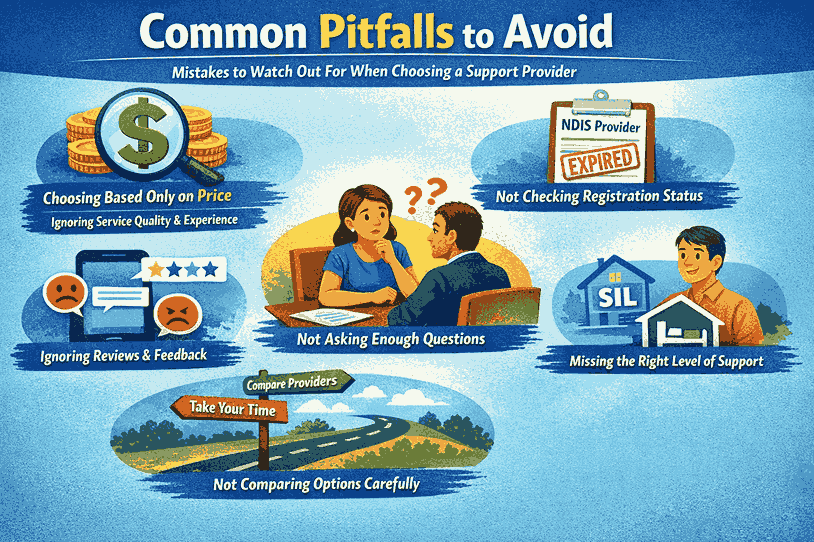
Common mistakes to avoid:

  • Choosing based solely on price without considering quality
  • Not checking if they’re actually registered
  • Not reading the service agreement carefully
  • Not involving the participant in the decision
  • Ignoring your gut feelings
  • Not asking for references
  • Assuming the first provider is fine

The time you spend researching now saves you from problems later. It’s worth it.

Conclusion: You’ve Got This

Finding the right NDIS provider in Melbourne doesn’t have to be overwhelming anymore. You now know exactly what to look for, what questions to ask, and which red flags to watch out for. This decision is about you and your goals, so trust yourself throughout the process.

Remember the key steps: verify provider registration, assess their experience, research thoroughly, meet them in person, understand service agreements, and involve yourself in the decision. The right provider becomes your partner in achieving independence and reaching your potential. They listen, respect your choices, and genuinely care about helping you succeed.

Start by clarifying your needs, create a shortlist of 3 to 5 providers, research carefully, and meet with them. Trust your instincts about how you feel in their presence. Once you choose, keep checking in regularly. If something isn’t working, switching providers is absolutely okay. Your NDIS funding is yours to use wisely.

If you need expert guidance through this process, Apex Support is here to help. Our team knows the Melbourne disability support landscape and specializes in helping participants find the perfect provider match. We’ll walk you through every step, from understanding your options to evaluating providers to preparing for meetings.

Contact Apex Support today, and let’s find you the right NDIS provider in Melbourne together. You deserve support that feels good and helps you thrive. You’ve got this, and we’ve got you.

Your Questions Answered – FAQ Section

Q: How do I actually verify a provider is registered?

Go to the NDIS Quality and Safeguards Commission website. Search their name. You’ll see their registration number and status. You can also call the provider and ask for their registration number, then verify it yourself. Never just take their word for it.

Q: Can I use an unregistered provider?

Only if you have self-managed or plan-managed NDIS funding. If the NDIA manages your plan, you must use registered providers. If you do use unregistered providers, research them extra carefully and get references.

Q: What if I’m not happy with my provider after I’ve started?

You can switch. Look at your service agreement for the notice period (usually 28 days). Tell them you’re leaving. Find a new provider. Start services with them. It’s that simple. You don’t need permission from the NDIS to switch providers.

Q: How often should I review whether my provider is still right for me?

Ideally, check in monthly about satisfaction and quarterly about progress toward goals. Do a big review annually. If problems come up, review immediately.

Q: What’s the right NDIS provider experience supposed to feel like?

Like a real partnership. Like they genuinely care about your goals. Like they listen when you talk. Like you feel safe and respected. Like they’re helping you become more independent and reach your potential.

Q: Do I have to use the same provider for all my services?

No. You can mix and match. One provider for personal care, another for support coordination, another for community activities. Whatever works for you.

Q: What if I discover safety issues?

Report to the NDIS Quality and Safeguards Commission immediately. Tell your Local Area Coordinator. Stop using the provider. Your safety matters more than anything else.

Q: Should I trust online reviews?

Use them as one data point, not the whole picture. Read multiple reviews. Look for patterns. Use reviews to identify questions to ask during interviews. But don’t base your decision solely on reviews.

SIL vs Others NDIS Living Arrangement: Which is Right for You? 

Picking the right NDIS living arrangement is one of the biggest decisions a participant or their family will ever make. There are so many options on the table: SIL, SDA, ILO, STA, MTA, in-home support. Each one sounds a little different, but what do they actually mean? And more importantly, which one is the right fit for you or your loved one?

Here is the tough part. Getting this decision wrong does not just mean a bit of inconvenience. It can mean funding gaps, living somewhere that does not match your needs, or missing out on the level of care that would actually make a real difference in your day-to-day life. Many NDIS participants go into their plan reviews without really understanding how the sil vs others ndis living arrangement decision works. And then they end up in a situation that does not truly support their goals.

That is exactly why this guide exists. We are going to break down every major NDIS living arrangement in plain, simple language. By the time you finish reading, you will know what each option actually means, how they compare, and which one might be the right fit for your situation. Let us get into it.

What is Supported Independent Living (SIL) Under the NDIS?

Before we can talk about the sil vs others ndis living arrangement comparison, it helps to really understand what SIL actually is. And trust us, a lot of people get this wrong.

Supported Independent Living (SIL) Under the NDIS

Supported Independent Living NDIS is a type of funding that pays for the daily support a person receives, not the house they live in. This is a really important distinction. SIL covers the help you get to go about your day, things like:

  • Personal care, like getting dressed and grooming
  • Cooking meals and managing the kitchen
  • Taking medications at the right time
  • Cleaning and household tasks
  • Getting out into the community and social activities

Your SIL support workers are usually available around the clock, 24 hours a day, 7 days a week. They are there to help you live as independently as possible, not to do everything for you, but to support you in building skills and confidence along the way.

What SIL does not cover is just as important to understand. SIL funding does not pay for your rent, electricity, food, or furniture. Those are your personal living expenses. SIL NDIS is purely about the support you receive while you live in a home, whether that is a shared house with other NDIS participants or your own standalone place.

As a registered SIL provider Australia, Apex Support helps participants navigate exactly this kind of setup, making sure you know what your funding covers and what it does not before you make any big decisions.

SIL Funding Eligibility: Who Actually Qualifies?

Not every NDIS participant automatically gets SIL funding included in their plan. So before anything else, it is worth understanding who is actually eligible and how the approval process works.

SIL Funding Eligibility

To qualify for NDIS SIL funding, the NDIA generally looks at whether a person has significant daily functional impairment. That means they need regular, ongoing support just to manage everyday tasks like cooking, personal care, or getting around safely. It is not about how severe your diagnosis sounds on paper; it is about how your disability actually affects your daily functioning.

Here are some of the signs that SIL funding eligibility might apply to you or someone you care for:

  • You need help with daily tasks like meals, hygiene, and medication consistently
  • You require overnight or 24/7 support due to safety needs
  • You are working toward building life skills and greater independence
  • Living alone without support is not safe or practical for you
  • You or your family need a structured, supported living environment

The process typically involves a functional assessment and a detailed SIL proposal put together by your support coordinator and the SIL provider. The NDIA reviews this proposal before approving funding, which is why having the right people in your corner matters a lot.

If you are not sure where to start, the Support Coordination team at Apex Support can walk you through the whole process, from assessing your eligibility to building a strong case for your plan review.

SIL vs SDA NDIS: Two Different Things That Often Work Together

This is probably the most common point of confusion in the whole sil vs others ndis living arrangement conversation. People hear SIL and SDA mentioned together all the time and assume they are the same thing. They are not.

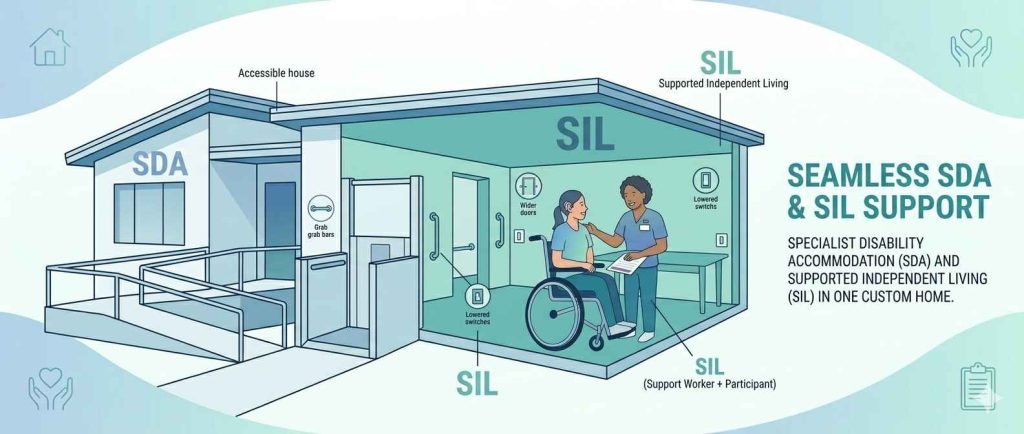
Think of it this way. SDA is the house. SIL is the support inside the house. That is the simplest way to remember it.

SIL vs SDA NDIS

SIL vs SDA NDIS comes down to what each type of funding actually covers. SDA, or Specialist Disability Accommodation, pays for the physical building itself. These are purpose-built homes designed specifically for people with extreme functional impairment or very high support needs. The design might include wider doorways for wheelchairs, hospital-grade fixtures, or smart home technology for people with limited mobility.

SIL, on the other hand, funds the support delivered inside that home. So a participant can live in SDA housing and receive SIL support at the same time. They are funded separately but work together beautifully.

FeatureSILSDA
What it fundsDaily support and careThe physical housing (building)
Who provides itRegistered SIL support workersRegistered SDA providers
Who qualifiesHigh daily support needsExtreme functional impairment
Can be combined?Yes, SIL and SDA work togetherYes
Approximate recipients35,000+ participantsAround 6,000 participants

The key takeaway here is that SDA is for a much smaller group of participants, roughly 6,000 people compared to over 35,000 who receive SIL. You need to meet a very high threshold to qualify for SDA. But if you do qualify, combining SDA and SIL gives you both a purpose-built accessible home and the daily support to live in it well.

SIL vs ILO NDIS: Which Model Gives You More Choice?

SIL vs ILO NDIS is a comparison that is coming up more and more as the NDIS evolves. And it is a really important one to understand, especially if you value flexibility and having more say in how your support is delivered.

ILO stands for Individualised Living Options. It is a newer model under the NDIS that focuses on how you live, rather than where you live. Unlike SIL, which tends to follow a more structured, provider-led setup, ILO is co-designed with the participant. That means you get to have a bigger say in shaping what your support looks like day to day.

ILO can look quite different depending on the person. Some people use it to get support in their own home. Others might use it to live with a host family or a trusted person. The support arrangement is built around your individual goals and lifestyle, rather than fitting you into a fixed model.

SIL tends to work well when:

  • You need high-level support around the clock
  • You require consistent overnight care or active supervision
  • A structured environment with a regular support team suits you
  • You are moving out of home for the first time and want a steady routine

ILO tends to work well when:

  • You want more control and flexibility over your support
  • You value living in a setting that feels more personal and less institutional
  • Your support needs are more moderate and do not require 24/7 staffing
  • You want to live with a trusted person or in your own space with tailored help

It is also worth noting that ILO is still developing within the NDIS framework, so the availability of providers varies. Talking to your support coordinator is the best way to figure out whether ILO is a realistic option for your plan.

SIL vs In-Home Support: Do You Have to Move Out?

One of the biggest questions families ask is whether getting NDIS support means their loved one has to move out of the family home. The short answer is no, not necessarily. It depends on the type of support you choose.

In-home support is exactly what it sounds like. It brings NDIS-funded support directly to wherever you already live, whether that is your own home, a rental, or the family home you grew up in. Support workers come to you on a scheduled basis, helping with personal care, daily tasks, or community access, and then they leave. You stay in your space, in your routine.

SIL is different. It usually means moving into a supported living home, either a shared house with other participants or occasionally a standalone property. The support workers are there with you far more consistently, often around the clock.

FeatureSILIn-Home Support
Living EnvironmentShared home with housematesYour own or family home
Support Availability24/7 on-site careScheduled visits only
Social SettingBuilt-in peer communityExisting family/social network
Privacy LevelOwn room, shared spacesFull privacy in your home
Best ForHigh and complex support needsIntermittent support needs

So who is better suited to in-home support? Generally, people who need occasional or scheduled help, who have strong family networks already in place, or who really value the privacy and familiarity of their own home. If a family member already provides a lot of informal care but just needs some extra professional help alongside that, in-home support often fits well.

SIL tends to suit people who need more intensive, ongoing support that would not be practical to deliver in a standard home setting. It also works really well for people who are ready for more independence and want to experience living in a community with peers.

Leaving home can feel like a big step. But many participants find that moving into a well-run SIL home actually builds their confidence faster than staying in an environment where everything is done for them. If you are searching for a reliable NDIS service near me, reaching out to a local SIL provider to tour a home and ask questions is a great first step.

SIL vs Short Term and Medium Term Accommodation: Is It Temporary or Long-Term?

Not everyone who enters NDIS housing is looking for a permanent arrangement right away. Sometimes you just need a short break, a trial, or a temporary place to stay while something more permanent gets sorted. That is where STA and MTA come in.

STA (Short Term Accommodation) is sometimes called respite care. It provides temporary housing and support for up to 14 days at a time. It is great for situations like:

  • A family carer needs a short break from daily caring responsibilities
  • A participant has just been discharged from hospital and needs temporary care
  • Someone wants to trial what SIL living feels like before committing
  • A person needs support while their usual home is being modified or repaired

MTA (Medium Term Accommodation) sits in between. It is designed as a bridge for participants who have been approved for long-term housing like SIL or SDA, but their permanent placement is not ready yet. MTA gives them somewhere stable and supportive to stay in the meantime.

SIL, by contrast, is a long-term model. It is not about a 2-week stay or a temporary fix. It is about building a life, learning skills, and having consistent support over months and years.

The journey often looks like this: a participant might try STA first to get a feel for supported living. If that goes well and their goals align, they might move into MTA while a permanent SIL home is arranged. Then once their NDIS SIL funding is confirmed and a home is ready, they transition into long-term SIL. It is a gradual, well-supported process.

Apex Support’s Respite Services can help participants and families explore short-term options as a stepping stone toward more permanent supported living.

SIL vs Others NDIS Living Arrangement: The Full Comparison at a Glance

Now that we have walked through each option in detail, here is the full sil vs others ndis living arrangement comparison laid out in one easy-to-read table. This can help you quickly see which option lines up with your situation.

OptionDurationSupport LevelHousingBest For
SILLong-termHigh, often 24/7Shared/StandaloneComplex daily needs
SDALong-termVariesSpecialist-builtExtreme impairment
ILOLong-termFlexibleFlexibleChoice and control
In-Home SupportOngoingScheduled visitsOwn/family homeIntermittent needs
STAShort-term (14 days)HighTemporaryRespite, trial stays
MTAMedium-termVariesTemporaryBridging placement

Reading this table, you can see that there is no single option that beats the others. Each one exists because different people have different lives. A participant with very high support needs and complex care requirements will likely find SIL to be the best long-term fit. Someone with more moderate needs who values staying at home will suit in-home support much better. And someone still figuring things out might start with STA and work their way toward SIL over time.

The sil vs others ndis living arrangement decision is not one-size-fits-all. It is personal. And that is actually a good thing.

Not Sure Which NDIS Living Support Fits? Here is How to Decide

If you have read through everything above and are still not sure which arrangement is right for you, that is completely normal. These are big decisions, and there is a lot to think about. Here is a simple framework to help you work through it.

Ask yourself these four questions:

1. How much daily support do you need? If you need help with personal care, meals, and supervision throughout the day and night, SIL is likely the right fit. If you just need a few hours of help each week, in-home support makes more sense.

2. Do you want to stay in your current home or move somewhere new? If staying in a familiar environment matters to you or your family, in-home support keeps things stable. If moving to a more independent setting is the goal, SIL opens that door.

3. Do you value social connection or privacy more? SIL homes often have multiple residents, which creates a built-in social community. That is wonderful for some people and challenging for others. ILO might be a better fit if you want more control over who you live with.

4. Are you looking for something short-term or long-term? If this is a temporary situation, look at STA or MTA. If you are planning for the long haul, SIL or ILO is the way forward.

Your support coordinator plays a huge role in this process. They can help you weigh your options, prepare for plan reviews, and make sure your NDIS plan reflects what you actually need. If SIL funding eligibility is part of the picture, a good coordinator will help you build the strongest possible case.

It is also worth remembering that your living arrangement can change as your needs change. You are not locked into one option forever. Many participants start with in-home support or STA and transition into SIL as their goals and circumstances evolve. If you are looking for a trusted NDIS service near me, Apex Support serves participants across Melbourne and Hobart with a full range of living support options.

Looking for a Trusted SIL Provider in Australia? Apex Support is Here

Choosing a living arrangement is one thing. Finding the right team to support you through it is another. Apex Support is a registered NDIS provider offering a full range of services designed around real people and real goals.

Here is what the Apex Support team offers:

  • Supported Independent Living: Long-term, person-centred SIL homes in Melbourne and Hobart
  • Support Coordination: Expert help navigating your NDIS plan and finding the right services
  • Respite Services: Short-term accommodation options for participants and carers who need a break
  • Community Access: Support to get out, participate, and connect with the wider community
  • Mental Health Support: Specialised care from qualified clinicians for participants with mental health needs
  • Assist Life Stages and Transitions: Support through major life changes, including moving into SIL

Whether you are just starting to explore your options or you are ready to make a move, the Apex Support team is ready to listen. We can help you understand your options, request an NDIS SIL quote, and take the next step with confidence.

You do not have to figure this out alone. Reach out to Apex Support today and let us find the right fit together.

Finding Your Right NDIS Living Arrangement Starts with the Right Conversation

The sil vs others ndis living arrangement decision is not something you need to rush. It is one of the most personal choices a participant and their family will make, and it is okay to take the time to understand your options properly.

What we have covered in this guide is a lot of ground. From what supported independent living NDIS actually funds, to how it compares with SDA, ILO, in-home support, STA, and MTA. Each option has a place. Each one was created because real people have real, varied needs.

What matters most is not which option sounds most impressive. It is which option helps you or your loved one live a life that feels safe, fulfilling, and full of possibility. That is the whole point of the NDIS, and it is the whole point of finding the right living arrangement to go with it.

If you are ready to start that conversation, Apex Support is just a call away. Let us talk about what the right support looks like for you.

Frequently Asked Questions

1. What is the difference between SIL and SDA under the NDIS?

 SIL funds the daily support a person receives, like help with personal care, meals, and household tasks. SDA funds the specialist-built housing itself. They serve different purposes but can be used together. A participant might live in an SDA property and receive SIL support inside that same home.

2. Who is eligible for SIL funding in Australia? 

SIL funding eligibility is generally for NDIS participants who have significant daily functional impairment and need regular, ongoing support to manage everyday tasks. This is assessed through functional capacity evaluations and a SIL proposal submitted to the NDIA for approval.

3. Can I receive SIL support if I live in my own home?

 Supported Independent Living NDIS is typically delivered in a shared or standalone supported living home rather than in a standard private residence. If you want support in your own home, in-home support or ILO may be more suitable options to explore with your support coordinator.

4. How is SIL different from ILO?

 SIL vs ILO NDIS comes down to flexibility and structure. SIL is a provider-led model with consistent support, often 24/7, in a shared home. ILO is co-designed with the participant and offers more flexibility in how and where support is delivered. ILO suits those who want greater choice and control over their living arrangement.

5. How do I get an NDIS SIL quote?

 To get an NDIS SIL quote, you will typically work with your chosen SIL provider and support coordinator. The provider assesses your support needs, prepares a detailed quote, and this is submitted to the NDIA for approval as part of your plan review. Apex Support can assist with this process from start to finish.

6. What do SIL support workers actually do day to day? 

SIL support workers help participants with personal care, meal preparation, medication management, household tasks, and community participation. They are also there to encourage skill-building and independence, not just to do things for you, but to support you in learning to do more for yourself over time.

7. How long does it take to get NDIS SIL funding approved? 

The NDIS SIL funding approval process can take several weeks to a few months, depending on the complexity of the participant’s needs and the quality of the SIL proposal submitted. Having a strong support coordinator and an experienced provider on your side can make the process faster and smoother.

8. How do I find a reliable NDIS service near me for SIL? 

Start by searching the NDIS provider finder on the official NDIS website, or ask your support coordinator for recommendations. You can also contact a provider directly, like Apex Support, to ask about available SIL homes in your area, tour the properties, and ask questions before making any decisions.

What is Community Access NDIS Support? (Complete Guide)

A lot of people with disability know about the NDIS but feel completely lost when it comes to understanding community access NDIS support. The plan is approved, the funding is there, and yet nobody explained what this support is actually meant to do or how to use it properly.

And that is where things get really frustrating. Without the right support, daily life can feel isolating. Staying indoors, missing out on activities, not building friendships, not feeling like a real part of the community. It chips away at confidence and well-being over time, and that is not something anyone should have to go through.

That is exactly why community access NDIS support exists. It is designed to help people with disability step into community life, build real skills, make meaningful connections, and live with more independence. This complete guide breaks it all down in plain, simple language so you know exactly what it covers, how to access it, and how to make the most of it.

What Is Community Access NDIS Support?

Think about all the everyday things people do without a second thought: going to a local sports game, visiting the library, joining a hobby group, catching a bus to the shops. For some people with disability, these things are not so simple without the right support in place.

Community Access Support

Community access NDIS support is funding in your NDIS plan that helps you do exactly that. It covers the support you need to get out, join in, and be part of community life. It is sometimes also called Social and Community Participation, and it sits under the broader NDIS framework that is built on three big values: choice, control, and community inclusion.

But here is the thing that many people miss. This support is about so much more than just going out somewhere. It is about:

  • Building confidence to try new things
  • Developing social skills through real experience
  • Reducing isolation and loneliness
  • Growing independence over time
  • Feeling like a true part of your local community

If you have ever wondered what community access is in NDIS and why it even matters, the short answer is this: it is one of the most life-changing supports in any NDIS plan. It helps people move from sitting on the sidelines to actually living their life.

Who Is Eligible for Community Access Support?

Not everyone gets community access automatically included in their NDIS plan, and that confuses a lot of families. So let us clear it up.

Eligible for Community Access Support

To access NDIS funding in general, you need to meet the standard NDIS eligibility criteria: you must be under 65 years of age when you first apply, be an Australian citizen, permanent resident, or Protected Special Category Visa holder, and have a permanent or significant disability that affects your daily life.

But for community access NDIS support specifically, the key is that your goals must be linked to social participation and community engagement. The NDIS needs to see that this support will genuinely help you achieve something meaningful, whether that is building social skills, reducing isolation, or developing independence.

Common reasons people receive this support include:

  • A physical disability that makes attending activities harder without assistance
  • An intellectual disability where social skills need practice in real environments
  • A psychosocial disability like anxiety or depression that limits participation in daily life
  • An autism diagnosis where sensory and social navigation support is needed

If community access is not yet in your plan, that does not mean you cannot get it. You can raise it at your next plan review and explain how it connects to your goals. That conversation is worth having, and a good support coordinator can help you frame it the right way.

How Is Community Access NDIS Support Funded?

One of the most common questions people have is where the funding for community access actually comes from in an NDIS plan. The answer is that it can come from two different budget categories, and understanding the difference between them really matters.

Core Supports: Assistance with Social and Community Participation

This is the most common way community access under NDIS  gets funded. Core Supports cover the day-to-day help you need to get out and take part in community life. For example, if you need a support worker to come with you to an art class or a sporting event, that is funded here.

Core Supports are flexible, meaning you can shift funds between some categories depending on how your plan is managed. This gives you more control over how you use your community access funding.

Capacity Building: Increased Social and Community Participation

This category is about building skills for longer-term independence. It might fund:

  • Social skills training programs
  • Travel training to learn how to use public transport
  • Group programs designed to build confidence
  • Workshops focused on communication and self-advocacy

The difference is subtle but important. Core Supports help you participate right now. Capacity Building helps you need less support in the future because your skills grow over time.

Transport is another thing worth mentioning. Depending on how your plan is written, you may also have transport funding to help you get to and from community activities. It is worth checking with your plan manager or support coordinator to understand exactly what is available to you.

What Activities Count as NDIS Community Participation Activities?

This is where things get really interesting, because NDIS community participation activities are far more varied than most people expect. The range is wide, and it is designed to suit different interests, goals, and abilities.

Community Participation Activities

Here is a look at what community access can actually look like in real life:

Individual (One-on-One) Activities

  • Going to the gym, a fitness class, or a swimming pool
  • Visiting local shops, cafes, or the library
  • Attending community events, markets, or festivals
  • Going to cultural or religious events that matter to you
  • Medical or therapy appointments with a support worker
  • Learning to use public transport independently

Group-Based Activities

  • Joining a social club or hobby group
  • Adaptive and inclusive sports programs
  • Art, music, drama, or creative workshops
  • Peer support groups and community circles
  • Volunteering programs that build work-readiness skills
  • Sensory-friendly outings and inclusive community programs

The great thing about NDIS community participation activities is that there is no single right answer. What works for one person might not suit another, and that is perfectly fine. The activities you choose should always line up with your personal goals, your interests, and the kind of life you want to build.

If you are unsure what activities are available near you, a registered NDIS provider like the team at Apex Support can help match you with programs that fit your needs and your NDIS plan goals.

What Does a Community Access Support Worker Do?

A community access support worker is one of the most important parts of this whole picture. They are not just someone who comes along for the ride. They play an active, skilled role in helping participants get the most out of every outing and activity.

Here is what a community access support worker typically helps with:

  • Providing physical assistance during activities or outings
  • Supporting social navigation, like helping you feel comfortable in group settings
  • Assisting with transport to and from activities
  • Encouraging skill development and building confidence along the way
  • Helping you communicate with others in community environments
  • Adapting activities to suit your accessibility needs

A great support worker does not do everything for you. Instead, they work alongside you, encouraging you to do as much as you can independently, and stepping in only where you genuinely need help. That is what person-centred support actually looks like in practice.

When it comes to choosing the right community access support worker, there are a few things worth looking for:

  • Experience working with people who have similar needs to yours
  • Good communication and patience
  • Cultural awareness and respect for your values
  • A genuine interest in helping you reach your goals

If you are self-managed or plan-managed, you can choose your own support worker. If you are NDIA-managed, you will need to use a registered provider. Either way, finding someone you feel comfortable with makes a real difference to how well your community access support works for you.

Community Access vs Other NDIS Supports: What Is the Difference?

People often mix up community access with other types of NDIS support, and it is an easy mistake to make. Here is a simple way to understand what sets NDIS community access apart from the rest.

  • Community Access (Social and Community Participation): Focuses on helping you take part in social, recreational, and civic activities outside the home. The main outcome is participation, connection, and independence.
  • Daily Activities (Core Supports): This covers help with everyday tasks like cooking, cleaning, personal care, and getting ready. It is mostly home-based.
  • Supported Independent Living (SIL): This is 24/7 residential support for people who need help living in shared or independent accommodation. It is about where you live, not what you do in the community.
  • Allied Health (Capacity Building): This covers clinical supports like physiotherapy, occupational therapy, speech pathology, and psychology. The focus is on health and clinical outcomes.

The key thing to remember is that community access NDIS support is not clinical. Its whole purpose is participation and connection. The good news is that many of these supports can actually work together. For example, occupational therapy might build skills that then allow you to participate more fully in community activities. That is when the NDIS really starts to shine.

How to Get Community Access Added to Your NDIS Plan

If community access is not yet part of your NDIS plan, or you feel the funding you have is not enough, here is a practical, step-by-step guide to getting it sorted.

Step 1: Get clear on your goals. Think about what you actually want to do in your community. Do you want to join a sports team? Make new friends? Learn to travel independently? Write it down in specific terms, because vague goals get vague outcomes.

Step 2: Connect what you want to how disability affects your life. The NDIS needs to understand why you need funded support to participate. Be honest and clear about the barriers you face.

Step 3: Gather supporting evidence. This could be a letter from your GP, an occupational therapy assessment, or a report from a psychologist. The stronger your evidence, the easier the conversation becomes.

Step 4: Talk to your support coordinator or Local Area Coordinator (LAC). They can help you frame your request properly before your planning meeting and make sure your goals are clear and well-supported.

Step 5: Raise it at your plan review. Bring your goals, your evidence, and a clear explanation of how community access NDIS support will help you work toward those goals. Specific is always better than general.

The most important thing is to advocate for yourself. If the support you need is not yet in your plan, keep having the conversation. You deserve to be part of your community just as much as anyone else.

Tips to Make the Most of Your Community Access Support

Getting the funding is one thing. Actually making the most of it is another. Here are some practical tips that can genuinely help.

  • Start with what you love. Activities that match your real interests are always going to feel more meaningful than ones chosen just to fill a schedule.
  • Set small, clear goals with your support worker. For example, committing to attending one group activity per week is a great starting point.
  • Try group programs. They are a great way to build peer connections faster and often come at a lower cost than one-on-one support.
  • Keep a simple record of your progress. Notes about what you enjoyed, what felt hard, and what you achieved are gold at plan review time.
  • Look for sensory-friendly or culturally appropriate programs. Many community organisations now offer inclusive options designed for people with disability.
  • Do not be afraid to try something new and then change it. If an activity is not working for you, that is completely fine. Switch it up and try something else.

The whole point of NDIS community access is to help you build a life that feels good to live. So keep adjusting, keep exploring, and keep showing up. Every step forward counts.

Final Thoughts

Community access NDIS support is one of the most impactful things in any participant’s plan because it directly shapes the quality of everyday life. It is the bridge between staying at home and actually being part of the world around you.

Whether you are just starting to explore your NDIS plan or you are looking to make better use of what you already have, it is worth taking the time to understand what this support can do for you. Talk to your support coordinator, revisit your goals, and do not settle for a plan that leaves you feeling disconnected.

Everyone deserves to feel included, valued, and part of their community. That is not just a nice idea; it is what the NDIS is built to support.

If you want help finding the right community access supports and providers, the team at Apex Support is a great place to start or to ask any questions

Reach out and take the first step toward a more connected life.

Frequently Asked Questions About Community Access NDIS Support

What is community access in NDIS?

Community access in the NDIS refers to funded supports that help people with disability take part in social, recreational, and community activities. It is designed to reduce isolation, build skills, and increase independence in everyday life. It is also commonly known as Social and Community Participation.

What does community access NDIS support actually pay for?

It can pay for a support worker to accompany you to activities, transport assistance, group programs, social skills training, and travel training. Exactly what is covered depends on your individual NDIS plan and how your goals are written.

How many hours of community access can I get?

There is no fixed number of hours. The funding you receive depends on your individual goals, your level of disability-related need, and what your planning meeting determines is reasonable and necessary. A support coordinator can help you request the right amount.

Can a family member be my community access support worker?

In some circumstances, yes. If you are self-managed, you have more flexibility. However, there are specific NDIS rules about family members being paid as support workers, and it is important to check with the NDIA or your plan manager before going down that path.

Is community access the same as social participation?

They are very closely related. Social and Community Participation is the official NDIS budget category name, and community access is the term most commonly used in everyday conversation. For practical purposes, they refer to the same type of support.

What NDIS community participation activities are most popular?

Popular NDIS community participation activities include adaptive sports programs, social clubs, arts and crafts workshops, volunteering, fitness classes, supported shopping outings, and peer support groups. The best activities are always the ones that align with your own interests and goals.

Do I need a registered provider for community access?

If your plan is NDIA-managed, yes, you must use a registered provider. If you are plan-managed or self-managed, you have the option to use both registered and unregistered providers, giving you more choice and flexibility.

Can community access funding cover transport?

Transport is sometimes included in NDIS plans as a separate support, but it depends on your individual plan. Some participants have transport funding built in, while others use Core Support funds. Always check your plan or speak to your support coordinator for clarity.

How do I find a community access support worker near me?

You can find support workers through registered NDIS providers in your area. A great place to start is by reaching out to a local provider, asking your support coordinator for recommendations, or checking the NDIS Provider Finder on the official NDIS website.

What if my plan does not include community access funding?

Raise it at your next plan review. Come prepared with clear goals, evidence of how your disability creates barriers to participation, and a specific explanation of how community access NDIS support will help you. You have every right to advocate for the support you need.

NDIS Support Coordination Explained: Roles, Costs & Eligibility 

Starting the NDIS journey can feel confusing, especially when you are handed a plan filled with terms, budgets, and services that are hard to understand. Many participants and families feel overwhelmed trying to connect supports, choose providers, and make sure funding is used the right way. Without guidance, people can miss out on opportunities that could make daily life easier and more independent.

This is where ndis support coordination becomes important. Across NDIS support coordination Australia, participants are using this service to turn complicated plans into real, practical help. Instead of feeling stuck, they gain direction, confidence, and clarity about what to do next.

With the right guidance, a plan becomes more than paperwork. It becomes a pathway to independence, community participation, and personal growth. NDIS support coordination helps transform uncertainty into action, ensuring participants are not navigating the system alone but building the skills to manage their supports with confidence over time.

What is NDIS Support Coordination?

To understand how the system works, it helps to first answer the question, what is NDIS support coordination. It is a capacity-building service funded in some plans to help participants understand, implement, and manage their supports.

What Is Support Coordination

Think of it like having a guide who shows you how to use everything included in your plan instead of leaving you to figure it out yourself. NDIS support coordination focuses on teaching skills so participants can make informed choices and become more independent.

In simple terms, what is ndis support coordination really about? It is about:

  • Understanding your NDIS funding and goals
  • Connecting you with the right services
  • Helping solve problems if supports are not working
  • Building confidence to manage your own plan over time

Rather than taking control, coordinators walk beside participants, helping them learn how to navigate services safely and effectively. This makes support coordination an empowering service, not just an administrative one.

What Does a Support Coordinator Do?

Many people think coordinators only organise appointments, but their role is much broader. NDIS support coordination is about creating a strong network of supports that work together to improve everyday life.

NDIS support coordination Australia

Professionals delivering these services, including experienced NDIS support coordination providers, help participants:

  • Break down their plan into clear steps
  • Find services that match personal goals and culture
  • Coordinate multiple providers so everyone works as a team
  • Prepare for plan reviews and track progress
  • Build decision-making and problem-solving skills

A good coordinator does not replace independence. They teach participants how to lead their own support journey. Over time, many people rely less on assistance because ndis support coordination helps them develop confidence and understanding of the system.

This practical guidance is what turns funding into real-world outcomes such as joining community activities, learning new skills, or improving well-being.

Levels of NDIS Support Coordination

Not every participant needs the same level of help. NDIS support coordination is delivered at different levels depending on individual needs and life situations.

ndis support coordination melbourne

These levels include:

  • Support Connection: Helps participants start using their plan and connect with services.
  • Coordination of Supports: A more involved level where multiple services are managed together.
  • Specialist Support Coordination: Designed for participants with complex needs, major transitions, or higher risks.

Each level still focuses on building independence. The difference is how much guidance is required. Regardless of level, support coordination aims to strengthen a participant’s ability to manage supports in the long term, not create reliance.

This flexible approach ensures people receive just the right amount of assistance for their circumstances.

Who is Eligible for Support Coordination?

Funding for ndis support coordination is not automatically included in every plan. It is added when participants need extra help due to complexity, life transitions, or challenges managing services alone.

Eligibility is often linked to situations such as:

  • Moving into SIL arrangements for more independent living
  • Navigating multiple service systems at once
  • Requiring collaboration with professionals like therapists or Social Workers
  • Experiencing major life changes such as leaving school or starting work

The goal is to make sure participants can safely connect with supports while building skills for the future. When used effectively, support coordination reduces confusion and increases confidence, helping individuals take greater control of their lives.

How Much Does NDIS Support Coordination Cost?

One of the most common concerns families have is cost. The good news is that when approved in a plan, ndis support coordination is funded under the Capacity Building budget. This means participants usually do not pay out of pocket.

Funding is structured according to NDIS pricing guidelines and depends on:

  • The level of coordination required
  • The complexity of the participant’s needs
  • The length of time support is needed

Rather than being an extra expense,support coordination is an investment in helping participants use their funding wisely. By ensuring services are chosen correctly and working well together, coordinators can actually prevent wasted funding and improve outcomes.

This makes the service both practical and financially protective for participants and their families.

Finding Support Coordination in Melbourne

For participants living in Victoria, accessing ndis support coordination melbourne services can make a significant difference because local knowledge matters. A registered NDIS provider Melbourne understands nearby programs, transport options, and community networks.

Choosing a registered NDIS provider in Melbourne means the coordinator is familiar with local systems and can connect participants faster to the right supports.

Local expertise helps with:

  • Accessing community activities and therapies
  • Navigating housing and employment pathways
  • Building relationships with trusted providers

Because ndis support coordination is most effective when it reflects real community connections, working with someone who understands the Melbourne landscape can make supports more meaningful and easier to access.

How to Search for the Right Help

Many families begin by searching online for ndis support coordination near me, hoping to find guidance they can trust. While searching, it is also helpful to explore disability support services near me to understand what options are available locally.

Working with a local NDIS support coordinator offers advantages such as:

  • Faster communication and face-to-face support
  • Knowledge of nearby programs and resources
  • Stronger connections with community services
  • Easier coordination between providers

The purpose of support coordination is to simplify choices, not complicate them. Local guidance ensures participants spend less time searching and more time benefiting from the supports available around them.

Benefits of NDIS Support Coordination

When used well, ndis support coordination creates lasting positive change, not just short term assistance. Participants often experience improvements in confidence, independence, and community participation.

Key benefits include:

  • Clear understanding of how to use NDIS funding
  • Better connection between different services
  • Reduced stress for families and carers
  • Stronger progress toward personal goals
  • Development of life skills that continue beyond the plan

Instead of feeling lost in the system, participants gain direction and empowerment. ndis support coordination focuses on teaching people how to manage supports themselves, which builds long term resilience and independence.

When You May Not Need Support Coordination

Although valuable, ndis support coordination is not necessary for everyone. Some participants feel confident managing their own services and only require minimal assistance.

You may not need it if:

  • Your plan is simple and easy to manage
  • You already understand the NDIS system well
  • You are comfortable organising services independently

The NDIS is designed to be flexible, and support coordination is there when guidance is needed, not as a one size fits all solution.

Choosing the Right Provider

Selecting the right professional is important because the quality of ndis support coordination can shape your entire NDIS experience. A strong coordinator focuses on listening, teaching, and building independence rather than making decisions for you.

Look for someone who:

  • Understands your goals and values
  • Communicates clearly and regularly
  • Encourages choice and control
  • Helps you build skills, not dependence

The right match ensures support coordination becomes a partnership that supports growth, confidence, and meaningful participation in everyday life.

Final Thoughts

Understanding the NDIS is a journey, and having the right guidance can make all the difference. ndis support coordination helps turn complex plans into real support that improves everyday life, builds independence, and connects participants with the right services at the right time.

If you or your loved one need help making sense of your plan, finding reliable providers, or building confidence to manage supports, the team at Apex Support is here to help. As an experienced provider, we focus on personalised guidance, practical solutions, and empowering participants to reach their goals with clarity and confidence.

Reach out to Apex Support today to learn how the right support coordination can help you get the most from your NDIS plan and move forward with assurance.

Frequently Asked Questions (FAQs)

1. What is NDIS support coordination?
It is a service that helps participants understand their plan, connect with providers, and build the skills needed to manage supports independently.

2. Is support coordination included in every NDIS plan?
No. It is only funded when the NDIS decides it is reasonable and necessary based on a participant’s needs.

3. How does support coordination help participants?
It helps organise services, solve problems, prepare for plan reviews, and ensure supports are working together effectively.

4. Can I choose my own support coordinator?
Yes. Participants have choice and control and can select a provider that suits their needs and preferences.

5. Can I change my support coordinator if I am not satisfied?
Yes. You can switch providers at any time if the service is not the right fit.

6. Is support coordination the same as plan management?
No. Plan managers handle funding and invoices, while support coordinators help organise and connect services.

7. Who benefits most from support coordination?
People with complex needs, those new to the NDIS, or participants going through life transitions often benefit the most.

8. Does support coordination cost me anything?
If it is included in your plan, it is funded by the NDIS, so there is usually no out-of-pocket cost.

9. How often will I meet my support coordinator?
This depends on your needs and plan. Some participants require regular contact, while others need occasional guidance.

10. Can support coordination help me become more independent?
Yes. A key goal is to build your confidence and skills so you can manage your supports more independently over time.

How to Find a Registered NDIS Provider in Melbourne (Step-by-Step)

Finding the right support under the NDIS can feel confusing, especially when there are so many options and unfamiliar terms. Many participants and families worry about choosing the wrong provider, wasting funding, or not getting the care they truly need. These worries are real, and you are not alone in feeling this way.

The good news is that finding a registered ndis provider melbourne does not have to be stressful. When you understand the steps and know where to look, the process becomes much clearer and more manageable. Registered providers follow strict quality and safety rules, which help protect participants and ensure reliable support.

This guide is designed to walk you through the process step by step, using simple language and real-life examples. Whether you are new to the NDIS or helping a family member, you will learn how to search, check, compare, and confidently choose a registered ndis provider melbourne that fits your needs and goals.

What Is a Registered NDIS Provider and Why Is It Important

A registered ndis provider in Melbourne is an organisation or individual that has been officially approved by the NDIS Commission. This means they meet national standards for safety, training, and service quality. Registration is not just a label. It is a promise that the provider follows clear rules designed to protect participants.

What Is a Registered NDIS Provider

Registered providers are especially important if your NDIS plan is agency-managed. In this case, you can only use registered services. Even if you are self-managed, choosing a registered ndis provider melbourne gives extra peace of mind.

Here is why registration matters:

  • Providers are regularly checked for quality and safety
  • Staff must meet training and background requirements
  • Complaints can be formally investigated if something goes wrong
  • Services are delivered in line with NDIS rules

When people search for NDIS providers in Melbourne, registration helps narrow down safe and trustworthy options. It ensures you are not taking risks with your health, money, or well-being.

Guide to Find a Registered NDIS Provider Melbourne

Step 1: Understand Your Support Needs First

Before looking for a registered ndis provider Melbourne, it helps to understand what kind of support you actually need. Think of this step like making a shopping list before going to the store. Without a list, it is easy to get confused or distracted.

Start by looking at your NDIS plan and your personal goals. Ask yourself:

  • Do I need help at home with daily tasks?
  • Am I looking for therapy or health support?
  • Do I want help joining community activities?
  • Do I need short-term or long-term support?

Writing these needs down makes your search clearer and faster. It also helps providers understand you better when you contact them.

This step is a big part of learning how to choose NDIS provider options wisely. When your needs are clear, it becomes easier to find a registered NDIS provider in Melbourne that matches your goals instead of trying to fit into services that do not suit you.

Step 2: Use Official NDIS Provider Finder Tools

Once you know your needs, the next step is searching in the right places. The safest way to find a registered ndis provider melbourne is by using official NDIS tools. These tools only show providers who are currently registered and approved.

The NDIS Provider Finder allows you to:

  • Search by suburb or postcode
  • Filter by support type
  • Check registration details
  • Compare nearby options

This is especially helpful when people search online for a registered NDIS provider near me, because the tool shows services available close to your location.

Using official platforms protects you from outdated information or unverified providers. It also saves time by showing accurate details upfront. A registered ndis provider melbourne listed here has already met national standards, making your decision safer and more confident.

Step 3: Check Registration and Provider Details Carefully

Finding a name is not enough. You should always double-check that a registered ndis provider melbourne is approved for the services they offer. Registration can cover different support categories, so this step is important.

Take time to:

  • Confirm the provider is listed with the NDIS Commission
  • Check which services they are registered to deliver
  • Look at how long they have been operating
  • Review any public feedback or reviews

A trustworthy registered ndis provider melbourne will be open about their registration and happy to explain their services clearly.

Think of this like checking a teacher’s qualifications before joining a class. You want someone trained, experienced, and reliable.

Step 4: Shortlist and Compare Providers

Now that you have checked registration, it is time to narrow your choices. Instead of choosing the first option you see, create a small shortlist of two or three providers.

When comparing a registered ndis provider melbourne, look beyond just price. Consider:

  • How clearly do they explain their services?
  • Do they listen to your goals?
  • Do they offer flexible support options?
  • How quickly do they respond to questions?

Good providers communicate well and make you feel comfortable. They do not rush you or pressure you into decisions. Comparing options helps you feel confident and in control.

This step turns your search into a thoughtful decision rather than a guess.

Step 5: Meet the Provider and Ask Simple Questions

Meeting a registered ndis provider melbourne helps you understand how they work in real life. This meeting can be in person, over the phone, or online. The goal is to see if you feel comfortable and respected.

Ask simple questions like:

  • How will you support my goals?
  • Who will be delivering the support?
  • How do you handle changes or problems?
  • How often will we review progress?

A good provider will answer patiently and clearly. They will explain things in a way that is easy to understand, even for a teenager. This shows real experience and care, not just marketing words.

Step 6: Make Your Choice and Start Support Confidently

After comparing and meeting providers, trust your judgment. Choose the registered ndis provider melbourne that feels right for you, not just the one that looks best on paper.

Once chosen:

  • Review the service agreement carefully
  • Confirm goals and expectations
  • Start with clear communication
  • Give feedback early if something feels off

Support should grow with you, not confuse or stress you. A Registered NDIS Provider in Melbourne that values your voice will help you feel safe, supported, and confident moving forward.

Bonus Tips to Refine Your Search

Once you have followed the main steps, a few extra tips can make your search even smoother and more confident. These small actions often lead people to the best support options without extra stress.

  • Speak with your support coordinator or Local Area Coordinator (LAC), as they often work closely with a Registered NDIS Provider in Melbourne and understand which services are reliable and participant-focused. Their local knowledge can save you time and help you avoid trial-and-error choices.
  • Join community groups or online forums where participants openly share their experiences with Disability Support Services Near Me. These real-life recommendations often highlight how providers treat participants on a day-to-day basis, not just what they advertise.
  • If you are planning for long-term housing or higher-level daily assistance, it may help to explore options such as Supported Independent Living (SIL) early in your search. Understanding these services can guide you toward providers who offer consistent, structured support.
  • Some participants also require hands-on help with daily routines like bathing, dressing, or mobility. In such cases, asking whether a provider offers support as an NDIS personal care provider can help ensure your needs are met with dignity and respect.
  • When using search terms like a registered NDIS provider near me, always combine online research with personal recommendations to get a clearer picture of service quality.

Common Pitfalls to Avoid

While looking for support, it is easy to make quick decisions that seem convenient at the time but cause problems later. Knowing what to avoid can save you time, money, and frustration.

Common Pitfalls to Avoid
  • Choosing a provider based only on price without considering service quality, staff experience, or communication style.
  • Assuming a provider is still registered without confirming their current status, especially when selecting a Registered NDIS Provider in Melbourne for agency-managed plans.
  • Overlooking reviews or participant feedback that could reveal repeated service issues or strengths.
  • Not asking enough questions during meetings, particularly about how services such as personal care or community support are delivered.
  • Rushing the decision instead of taking time to compare providers and understand what level of support, including Supported Independent Living (SIL) or in-home care, best suits your situation.

Final Thoughts

Finding the right registered ndis provider melbourne takes time, but the effort is worth it when you receive support that genuinely fits your life. The right provider should listen, adapt, and support your goals at every stage of your NDIS journey.

At Apex Support, we focus on delivering personalised, reliable disability services that help participants feel confident, respected, and supported. As a trusted registered ndis provider melbourne, our team offers tailored support across Melbourne, including daily assistance, personal care, and community access.

If you are ready to work with a provider that truly puts people first, Apex Support is here to support your independence and well-being. Get in touch today to learn how our NDIS services can help you move forward with confidence.

FAQs – Registered NDIS Provider in Melbourne

  1. What is a registered NDIS provider in Melbourne?
    A registered NDIS provider in Melbourne is a service approved by the NDIS Commission. They meet strict quality, safety, and staff training standards to provide support legally and reliably.
  2. How do I find a registered NDIS provider near me?
    Use the official NDIS Provider Finder online, search by postcode, and filter services. You can also ask your support coordinator or join participant forums for local recommendations.
  3. Can You Change Your NDIS Provider? Step-by-Step Guide
    Yes, you can switch providers anytime. First, review your current plan. Then, find a new registered provider, notify your current provider, and update your plan details with the NDIS if needed.
  4. How long does NDIS approval take in Australia?
    NDIS approval times vary depending on your application. Usually, it takes 3–6 weeks for initial plan approval, but complex plans may take longer. Planning ahead helps reduce delays.
  5. How do I choose the right NDIS provider?
    Check registration status, services offered, staff qualifications, communication style, and reviews. Matching a provider to your goals ensures better support outcomes.
  6. What is Supported Independent Living (SIL)?
    SIL is an accommodation support where participants live more independently while receiving daily help. Providers must be registered to deliver SIL safely and effectively.
  7. Can an unregistered provider offer services under NDIS?
    Only under self-managed or plan-managed arrangements. For agency-managed plans, participants must use a registered provider to ensure compliance with NDIS rules.
  8. What types of services do NDIS providers offer?
    Services include personal care, therapy, community access, Supported Independent Living (SIL), skill development, and more. Choose based on your NDIS plan goals.
  9. How can I check if a provider is trustworthy?
    Confirm registration with the NDIS Commission, read participant reviews, and ask questions about staff, service delivery, and complaint handling.
  10. Are all NDIS providers available across Melbourne?
    No. Availability depends on your suburb and support type. Searching “NDIS providers in Melbourne” via official tools or local coordinators helps you find nearby options.

NDIS Services Across Melbourne: Which Supports Are Available in Your Suburb?

Finding the right disability support can feel confusing, especially when services change depending on where you live. Many families across Victoria struggle to understand what help is available, who provides it, and how to access it locally. This confusion often leads to delays, missed opportunities, and unnecessary stress for participants and carers.

The good news is that NDIS services across Melbourne are designed to support people in every suburb, from the CBD to growing outer communities. When you understand how local NDIS supports work, choosing the right provider and service becomes much easier and more empowering.

This guide explains NDIS services across Melbourne in a simple, practical way. It breaks down what supports are available, how they differ by suburb, and how trusted providers like Apex Support help participants live safely, confidently, and independently. Whether you are new to the NDIS or reviewing your current supports, this blog will help you make informed decisions with clarity and confidence.

How NDIS Services Work Across Melbourne Suburbs

NDIS supports are not limited to one central location. Instead, NDIS services across Melbourne are delivered through local teams that travel into communities or operate from nearby hubs. This flexible approach allows participants to receive support at home, in the community, or within supported accommodation.

Common NDIS Supports

In inner Melbourne suburbs, services are often easier to access due to higher workforce availability. In outer suburbs, providers may use mobile support teams to ensure coverage. This is why choosing the right NDIS provider in Melbourne matters. A good provider understands how to deliver consistent care regardless of postcode.

Across the city, NDIS services in Melbourne are shaped by participant needs rather than fixed locations. Supports can include daily living help, community access, mental health support, or clinical care. What changes is how those services are scheduled and delivered locally.

Key things that affect suburb-based services include:

  • Workforce availability
  • Travel time and support hours
  • Housing and accommodation options
  • Community facilities and programs

Understanding these factors helps families plan better and avoid service gaps.

Common NDIS Supports Available Across Melbourne

Most participants can access a similar range of supports through NDIS services across Melbourne, regardless of suburb. These supports are grouped into areas that focus on daily life, skill building, and long-term wellbeing.

Common supports include:

  • Assistance with daily living like personal care and meals
  • Community participation and social activities
  • Support coordination to manage plans
  • Mental health and psychosocial disability support
  • Supported Independent Living and respite care

What makes NDIS services across Melbourne effective is how these supports are matched to individual goals. For example, a young adult may focus on independence skills, while someone with complex needs may require 24/7 clinical support.

Quality providers look beyond checklists. They focus on building trust, routines, and confidence. This is why NDIS services across Melbourne work best when delivered by experienced teams who understand local communities and individual challenges.

A strong support plan grows with the participant, adapting as goals, health, and living situations change.

NDIS Services by Melbourne Region

While NDIS services across Melbourne are available citywide, the type of support often reflects local demand. Inner suburbs usually offer quicker access to allied health and mental health services. Growth corridors see higher demand for Supported Independent Living and community access programs.

Services Across Melbourne

Northern and western suburbs often support participants with complex needs and psychosocial disabilities. Eastern suburbs commonly focus on family-based and independent living supports. South-east Melbourne continues to expand housing and respite options.

Despite these differences, NDIS services across Melbourne aim to provide equal access and choice. Good providers adjust staffing, schedules, and delivery methods to suit each suburb. This regional understanding helps families avoid frustration and find services that truly work for their lifestyle and goals.

How to Check Which Supports Are Available in Your Suburb

Finding the right support starts with understanding your plan and location. While online tools can help, speaking directly with a registered NDIS provider in Melbourne often gives clearer answers.

NDIS Supports Available Across Melbourne

Steps to take include:

  • Review your NDIS plan goals and funding categories
  • Confirm your management type
  • Ask providers about local availability
  • Discuss travel, schedules, and flexibility

Accessing the right NDIS support in your local area is crucial for consistent and reliable care. Working with a registered NDIS provider in Melbourne ensures that participants receive quality services that comply with NDIS standards while being tailored to their individual needs. Many participants and families searching online for disability support services near me find that local providers offer better community connections, timely support, and staff who understand the unique needs of their suburb.

Why Registration Matters When Choosing a Provider

Working with a Registered NDIS provider in Melbourne ensures services meet strict safety and quality standards. Registered providers follow national guidelines, train staff properly, and protect participant rights.

A Trusted NDIS Provider in Melbourne offers more than compliance. They bring experience, transparency, and accountability. This matters when supports involve personal care, mental health, or clinical needs.

Choosing registered providers gives families peace of mind and long-term stability.

How Apex Support Delivers Services Across Melbourne

Apex Support delivers NDIS services across Melbourne with a strong focus on people, not processes. As an NDIS provider in Melbourne, Apex Support works closely with participants, families, and coordinators to build practical, goal-focused supports.

Services include:

  • Supported Independent Living
  • Psychosocial disability support
  • Complex and high-intensity care
  • Community participation

Their team understands local suburbs and adapts services as needs change. This approach ensures NDIS services across Melbourne remain consistent, respectful, and empowering.

Choosing the Right Provider for Your Suburb

The best provider listens first. When comparing options, look beyond availability. Ask how they handle changes, emergencies, and long-term goals.

Strong NDIS services across Melbourne are built on trust, communication, and flexibility. Providers should explain things clearly and involve participants in every decision.

Final Thoughts

Understanding NDIS services across Melbourne gives participants and families the confidence to make informed choices about their care and future. When you know what supports are available in your suburb and how they can be delivered, the NDIS becomes less overwhelming and more empowering. The right supports can help participants build daily living skills, strengthen mental wellbeing, and stay connected to their local community.

The quality of support depends greatly on the provider you choose. A provider that listens, adapts, and understands local needs can turn an NDIS plan into meaningful, real-life outcomes. When delivered with care, consistency, and experience, NDIS services across Melbourne can support independence, dignity, and long-term stability at every stage of life.

If you are looking for guidance from a trusted NDIS provider in Melbourne, Apex Support is here to help. Our team works closely with participants, families, and support coordinators to deliver personalised, reliable supports across Melbourne suburbs. Contact Apex Support today to discuss your goals and take the next step in your NDIS journey with confidence.

FAQs – NDIS Services Across Melbourne

  1. What NDIS services are available across Melbourne?
    NDIS supports include SIL, daily living, community participation, mental health, and respite services.
  2. How do I find a registered NDIS provider in Melbourne?
    Use the NDIS Provider Finder or contact trusted providers like Apex Support.
  3. Can I access NDIS services in every Melbourne suburb?
    Yes, but service type and availability may vary depending on local workforce and location.
  4. What is the difference between SIL, SDA, and STA?
    SIL: daily living support, SDA: specialist housing, STA: short-term or respite stays.
  5. How do I switch to a new NDIS provider in Melbourne?
    You can change anytime; your new provider assists with a smooth transition.
  6. Do NDIS providers in Melbourne offer psychosocial disability support?
    Yes, many provide mental health services, including trauma-informed and recovery-focused care.
  7. What is the role of a support coordinator in Melbourne?
    Support coordinators help manage your plan, connect with providers, and track goals.
  8. Why choose Apex Support as an NDIS provider in Melbourne?
    Apex Support is a registered provider delivering personalised, reliable, and high-quality NDIS supports.

Registered vs Unregistered NDIS Providers in Melbourne: What’s the Difference?

Finding the right disability support can feel confusing, especially when people start talking about different types of providers. Many participants and families in Australia feel unsure when choosing between options, and this confusion often leads to stress or delayed support. This is a real problem because the right support can make everyday life easier, safer, and more independent.

The good news is that understanding the difference between Registered vs Unregistered NDIS Providers in Melbourne does not have to be complicated. Once you know how each option works, the choice becomes much clearer and more confident.

This guide explains Registered vs Unregistered NDIS Providers in Melbourne in a simple, friendly way. It shares real-world examples, clear explanations, and practical advice so participants can make choices that truly suit their needs, goals, and lifestyle.

What Is an NDIS Provider?

An NDIS provider is a person or organisation that delivers support services to people who are part of the National Disability Insurance Scheme. These services can include personal care, community access, therapy, help at home, and assistance from trained Disability Support Workers, ensuring participants receive professional and safe support. When people talk about Registered vs Unregistered NDIS Providers in Melbourne, they are really talking about how these providers are approved and managed.

NDIS Provider

Some important things to know about NDIS providers:

  • They help participants reach their personal goals
  • They support daily living, learning, and social activities
  • They can work with individuals, families, or support coordinators

NDIS providers Melbourne participants choose may operate in different ways. Some follow strict government rules, while others offer more flexibility. Both options can be helpful, depending on the participant’s plan type and comfort level.

Understanding Registered vs Unregistered NDIS Providers in Melbourne helps participants avoid confusion and choose support that fits their needs instead of choosing based on pressure or fear.

Understanding Registered NDIS Providers in Melbourne

Registered NDIS providers are organisations that are officially approved by the NDIS Quality and Safeguards Commission. They must follow strict rules to keep participants safe and supported. When people think about Registered vs Unregistered NDIS Providers in Melbourne, registered providers are often seen as the more formal option.

Understanding Registered NDIS Providers

Registered NDIS providers must:

  • Pass regular quality audits
  • Follow safety and reporting rules
  • Train staff under national standards
  • Follow the NDIS Code of Conduct to ensure participant safety and ethical service delivery

These providers can support participants with all types of NDIS plans, including NDIA-managed plans. This makes them a common choice for people who want strong oversight and clear systems.

However, some participants feel registered providers can be less flexible. Because they follow many rules, they may have fixed schedules or pricing structures. Still, for participants who value structure, safety, and regulation, registered providers play an important role in Registered vs Unregistered NDIS Providers in Melbourne decisions.

Understanding Unregistered NDIS Providers in Melbourne

Unregistered NDIS providers are not approved by the NDIS Commission, but they are still legal to use in many situations. This is an important part of understanding Registered vs Unregistered NDIS Providers in Melbourne.

These providers can work with:

  • Self-managed participants
  • Plan-managed participants

Unregistered NDIS providers often focus on flexibility and personalised support. Many are small businesses or independent workers who build close relationships with participants.

Key features include:

  • Flexible service times
  • Customised support options
  • Often faster to start services
  • Prices may be negotiable

The responsibility for checking quality is higher for participants when using unregistered providers. Families may need to check experience, references, and background carefully. For many people, this extra effort is worth it because of the freedom and comfort these providers offer.

When comparing Registered vs Unregistered NDIS Providers in Melbourne, unregistered providers appeal to participants who value trust, personal connection, and flexibility.

Registered vs Unregistered NDIS Providers in Melbourne: Key Differences

Comparison AreaRegistered NDIS ProvidersUnregistered NDIS Providers
Government OversightMust follow the strict rules set by the NDIS Quality and Safeguards CommissionDo not need to register with the NDIS Commission
Level of FlexibilityServices follow structured policies and proceduresServices are more flexible and personalised
Suitable Plan TypesBest suited for NDIA-managed plansSuitable for self-managed and plan-managed plans
Compliance FocusStrong focus on safety, reporting, and quality standardsFocus on participant choice and individual needs
Participant ResponsibilityProvider handles most compliance and reportingParticipant takes more responsibility for quality checks
Service StyleFormal systems with standard processesRelationship-based and adaptable support

When deciding between registered and unregistered providers, it’s important to understand the benefits of working with a registered NDIS provider in Melbourne, such as guaranteed compliance with NDIS standards and access to a wider range of supports. Many participants and families searching for disability support services near me find that registered providers offer added peace of mind, transparent pricing, and experienced staff who understand individual goals and needs.

Which Option Is Better for Participants in Melbourne?

The question of which is better registered or unregistered NDIS provider, depends on the person, not the provider type. This is why Registered vs Unregistered NDIS Providers in Melbourne should never be treated as a one-size-fits-all decision.

Registered providers are better when:

  • Supports are complex or high-risk
  • Participants want strong safeguards
  • Plans are NDIA-managed

Unregistered providers are better when:

  • Participants want flexible schedules
  • Personal relationships matter
  • Plans are self or plan-managed

Many NDIS providers Melbourne participants choose will explain these differences honestly and help participants decide without pressure. The best choice is the one that supports independent living, safety, and personal goals. For participants exploring housing options, learning about supported independent living in Melbourne is a great next step — it shows exactly what daily support looks like inside a real SIL home.

Understanding NDIS registered vs non-registered providers empowers participants to feel confident instead of confused.

Which Is Better – Registered or Unregistered NDIS Provider?

The question of which is better registered or unregistered NDIS provider depends on the person, not the provider type. A key principle is participant choice and control, which ensures individuals can decide the type of support that best fits their needs and lifestyle. Every participant has different needs, confidence levels, and goals, so the right choice looks different for everyone.

Registered or Unregistered NDIS Provider

The decision usually depends on a few key factors:

  • How your NDIS plan is managed
  • How complex your support needs are
  • How confident do you feel managing services
  • How flexible does your budget need to be

Choose Registered Providers If You:

Registered providers are often a good fit if you prefer structure and clear systems.

They are suitable if you:

  • Are NDIA-managed and must use registered services
  • Need high-risk or complex supports that require strict safeguards
  • Feel more comfortable knowing providers follow strong compliance rules

These providers can feel reassuring for participants who want extra oversight and formal processes.

Choose Unregistered Providers If You:

Unregistered providers can be a great option for participants who value flexibility and personal connection.

They are suitable if you:

  • Want more control over schedules and services
  • Are self-managed or plan-managed
  • Prefer personalised, relationship-based support

Understanding the difference between Registered and Unregistered NDIS Providers in Melbourne helps participants choose confidently rather than feeling unsure or pressured.

How to Choose the Right NDIS Provider in Melbourne

Finding the right support is not just about registration status. Choosing the right provider means finding someone who understands you and fits into your life. When looking at NDIS providers in Melbourne, asking the right questions can make a big difference.

Here are some helpful things to consider:

  • What experience do they have with similar support needs?
  • Do they clearly explain how they work and communicate?
  • Are their staff trained, respectful, and reliable?
  • How do they handle safety and feedback?
  • Are they familiar with local Melbourne communities and cultures?
  • Do they provide clear service agreements outlining responsibilities, costs, and expectations?

A good provider will also help you stay socially active through community access services, connecting you with local activities, groups, and events that match your interests and goals. Even when working with unregistered providers, it is important to check experience, references, and basic safety practices. Local availability also matters because support works best when providers understand the area, transport, and community services nearby.

If you are unsure where to start, Apex Support can help make the process easier. Our team takes the time to listen, understand your goals, and connect you with support that truly suits your needs. Choosing carefully, with guidance from Apex Support, helps ensure your support feels comfortable, consistent, and genuinely helpful every step of the way.

Common Myths About Registered vs Non-Registered NDIS Providers

There are many misunderstandings about NDIS registered vs non-registered providers, and these myths often cause unnecessary fear or confusion.

Let’s clear up some common ones.

  • “Unregistered providers are illegal”
    This is not true. Unregistered providers are legal for self-managed and plan-managed participants.
  • “Registered providers are always better”
    This is not true. Registered providers are not automatically the best choice for everyone.
  • “Only registered providers are safe”
    This is also not true. Many unregistered providers deliver high-quality, safe, and trusted support.

Knowing the facts about Registered vs Unregistered NDIS Providers in Melbourne helps participants make decisions based on understanding rather than myths.

What the NDIS Quality and Safeguards Commission Says

The NDIS Quality and Safeguards Commission exists to protect participants while supporting choice and control. Their guidance explains that participants have the right to choose who supports them, as long as it matches their plan type.

The Commission emphasises that:

  • Registered providers must meet strict quality and safety rules
  • Unregistered providers can still deliver services legally
  • Participants have a responsibility when choosing unregistered providers
  • Safety, respect, and dignity should always come first

This guidance supports the idea that Registered vs Unregistered NDIS Providers in Melbourne is about balance. It encourages participants to stay informed, ask questions, and choose supports that feel right for their situation.

Final Thoughts: Making the Right Choice

Choosing between Registered vs Unregistered NDIS Providers in Melbourne is really about understanding what works best for you, your lifestyle, and your goals, rather than following what others suggest. Both options are designed to support choice and control, which sits at the heart of the NDIS. What matters most is feeling safe, comfortable, and confident with the support you receive, while also having the flexibility and trust needed to live life your way. When support fits naturally into your daily routine, it becomes easier to build independence and move forward with confidence. If you are still weighing up your options, our guide on the best NDIS providers in Australia walks you through exactly what to look for before you commit.

When participants clearly understand Registered vs Unregistered NDIS Providers in Melbourne, they are better equipped to make informed decisions that genuinely improve their quality of life. With the right guidance and a provider who truly listens, NDIS support can feel respectful, empowering, and personalised. 

If you are unsure which option is right for you, Apex Support is here to help. Our experienced team takes the time to understand your needs and guide you through your choices so you can feel confident in every step of your NDIS journey. Reach out to Apex Support today and discover support that is built around you.

FAQs About Registered vs Unregistered NDIS Providers in Melbourne

Can I switch between registered and unregistered NDIS providers?
Yes. Many participants switch or even use both, depending on their needs and plan management.

Do unregistered providers need qualifications?
They are not required to meet NDIS registration standards, but many still have strong experience and relevant training.

Are registered NDIS providers more expensive?
Registered NDIS providers must adhere to the official NDIS Pricing Arrangements and Price Limits, ensuring transparent and regulated costs for participants..

Can plan-managed participants use unregistered providers?
Yes. Plan-managed participants can choose both registered and unregistered providers.

How do I check if a provider is registered?
You can search the official NDIS provider register on the NDIS Commission website.

How to choose NDIS personal care provider in Melbourne

Finding the right support can change someone’s everyday life in powerful ways. For people living with disability, personal care is not just about help with daily tasks. It is about dignity, comfort, trust, and feeling safe in your own home. When families rush into decisions or feel overwhelmed by choices, they may end up with support that does not truly fit their needs.

Many people in Victoria feel confused when they try to choose NDIS personal care provider in Melbourne. There are many providers, many promises, and a lot of information to understand. This confusion can lead to stress, wasted funding, or support that feels impersonal.

This guide is here to help. It breaks everything down in a clear, friendly way so anyone can understand it. By the end, you will feel more confident, informed, and ready to choose NDIS personal care provider in Melbourne who truly supports independence, comfort, and quality of life.

Understanding Personal Care Under the NDIS

Personal care support under the NDIS focuses on helping people with everyday activities while respecting their independence. These supports are designed to fit into daily routines, not control them. When you choose NDIS personal care provider in Melbourne, it helps to understand what personal care actually includes.

Understanding Personal Care Under the NDIS

Personal care may involve:

  • Help with showering, dressing, or grooming
  • Support with eating or meal preparation
  • Assistance with mobility or transferring safely
  • Help with daily routines at home

Quality NDIS personal care services Melbourne are not rushed or robotic. Good providers take time to understand preferences, privacy, and comfort levels. They train their staff to be respectful and patient, and often work alongside professionals such as a Social worker when additional guidance is needed.

When selecting a personal care provider, it is important to consider experience, staff training, and how well the service aligns with individual needs and goals. Working with a registered NDIS provider in Melbourne can provide added confidence that supports meet required standards while remaining person-centred and flexible. Many participants and families searching online for disability support services near me also value providers who offer consistent communication, respect, and reliable day-to-day assistance.

Start With Your Needs, Goals, and Daily Life

Every person is different. Some people need help in the morning, others at night, and some throughout the day. Before you choose NDIS personal care provider in Melbourne, it is important to think about what support is really needed.

Start by looking at daily life:

  • Which tasks feel difficult or tiring?
  • What kind of help feels comfortable?
  • How often is support needed?

NDIS plans are built around goals. These goals might include living more independently, feeling safer at home, or improving emotional wellbeing through gentle mental health support when daily challenges feel overwhelming.

When selecting a personal care provider NDIS Melbourne, the best providers listen first. They ask questions, not just about tasks, but about lifestyle, personality, and preferences. This shows experience and care.

Why NDIS Registration and Compliance Matter

NDIS registration is more than just paperwork. It shows that a provider meets national safety and quality standards. When families choose NDIS personal care provider in Melbourne, registration gives peace of mind.

Registered providers must:

  • Follow strict safety guidelines
  • Train staff properly
  • Respect participant rights
  • Handle complaints professionally

This does not mean unregistered providers are always unsuitable, but registration adds trust. Some registered providers can also coordinate specialised supports such as 24/7 nursing for participants with complex medical needs.

The best NDIS personal care provider in Melbourne will be open about their registration, policies, and processes. They will happily explain how they keep participants safe and supported.

Choosing a registered provider helps ensure consistent, reliable NDIS personal care support in Melbourne that meets national standards and protects participant wellbeing.

Experience, Training, and Specialisation Matter

Experience shows in small details. Skilled support workers know how to move safely, communicate clearly, and stay calm in difficult moments. When you choose NDIS personal care provider in Melbourne, experience makes daily support smoother and more comfortable.

Experience, Training, and Specialisation Matter

Good providers invest in:

  • Ongoing staff training
  • Disability-specific knowledge
  • Emotional awareness and communication skills

Some providers specialise in certain needs, while others offer other services that allow support to feel more connected and less fragmented. The best NDIS personal care provider in Melbourne does not rely on one-size-fits-all care. Instead, they adjust support styles to suit each person.

Choosing experienced providers ensures NDIS personal care support in Melbourne that feels confident, respectful, and consistent every day.

Flexibility and Service Range Make a Big Difference

Life changes, and support should change too. When people choose NDIS personal care provider in Melbourne, flexibility is one of the most important qualities to look for.

A flexible provider can:

  • Adjust support times when routines change
  • Increase or reduce care hours as needed
  • Respond quickly to unexpected situations

Many providers also support activities outside the home through a community access service, helping people stay connected and active in their local area. Strong NDIS personal care services Melbourne grow with the participant, not against them.

Communication, Trust, and Personal Connection

Good communication builds trust. When people choose NDIS personal care provider in Melbourne, they should feel heard, respected, and involved.

Strong providers:

  • Explain things clearly
  • Respond quickly to concerns
  • Check in regularly
  • Encourage feedback

Personal care is very personal. A good match between support worker and participant matters. Providers who value relationships focus on comfort, personality, and emotional wellbeing. The best NDIS personal care provider in Melbourne treats participants like people, not schedules. They understand that trust leads to better care outcomes.

Clear communication strengthens NDIS personal care support in Melbourne and helps everyone feel confident and safe.

Reviews, Reputation, and Real Experiences

Other people’s experiences tell powerful stories. Before you choose NDIS personal care provider in Melbourne, it helps to listen to families and participants who already receive support.

Look for:

  • Online reviews
  • Testimonials
  • Word-of-mouth recommendations

Positive feedback often mentions kindness and reliability. Reputation reflects how providers treat people over time, including how they support families who may rely on a short-term respite service.

Meeting Providers and Asking the Right Questions

Meeting a provider helps turn information into understanding. When families choose NDIS personal care provider in Melbourne, meeting the team makes the decision feel real and personal.

During meetings, ask about:

  • Staff training and experience
  • How care plans are created
  • What happens if a worker is unavailable
  • How feedback is handled

Good providers welcome questions. They explain without rushing and make people feel comfortable. The best NDIS personal care provider in Melbourne wants families to feel confident, not pressured.

Taking time to meet providers leads to stronger, more supportive NDIS personal care support in Melbourne.

Final Thoughts

Choosing personal care support is not just about finding help. It is about creating a daily life that feels safe, respectful, and empowering. When support fits well, people gain confidence, families feel relief, and everyday moments become easier and calmer.

The right provider listens, adapts, and genuinely cares. They understand that needs can change and that support should grow alongside the person, not limit them. Taking time to choose thoughtfully leads to better comfort, stronger trust, and long-term wellbeing.

If you are looking for compassionate, reliable, and person-focused personal care support in Melbourne, Apex Support is here to help. Our experienced team focuses on dignity, flexibility, and building meaningful relationships, making sure support feels human, not rushed. Reach out to Apex Support to start a care journey built around real understanding and everyday confidence.

FAQs

1. What is personal care support?

Personal care support helps with daily activities like hygiene, dressing, meals, and mobility while respecting independence and privacy.

2. Who can receive personal care support?

People living with disability or long-term health conditions who need help with everyday tasks can receive this type of support.

3. Can personal care be provided at home?

Yes, personal care is commonly provided in the comfort of a person’s own home to maintain routine and familiarity.

4. How do I know if a NDIS provider is right for me?

A good provider listens carefully, explains things clearly, and adjusts support to suit individual needs and preferences.

5. Is personal care only physical support?

No, it also includes emotional reassurance, respect, patience, and building trust over time.

6. Can support hours change if needs change?

Yes, flexible providers adjust support as routines, health, or goals change.

7. What should I ask when meeting a NDIS provider?

Ask about staff training, communication, backup plans, and how care plans are updated.

8. Can families be involved in care planning?

Yes, families are often involved to ensure care aligns with routines, preferences, and goals.

9. What if the support worker is not a good match?

Providers should offer alternatives and work to find someone who feels comfortable and respectful.

10. How long does it take to start receiving care?

This depends on availability and planning, but good providers aim to begin support as smoothly and quickly as possible.

What to expect from NDIS SIL Melbourne

Many people feel unsure when trying to understand what life will look like in an NDIS SIL Melbourne home. It can feel confusing, especially when you are hoping for a safe and stable place to grow your independence. Families often worry if the support will match their needs, if the routines will feel comforting, or if the home will actually help someone build confidence. These worries can make the whole process stressful, and it becomes harder to imagine what daily life might look like or how the right support can change everything.

The good news is that NDIS SIL Melbourne is designed to give people the chance to enjoy independence with the support they need. With the right guidance, the right team, and the right environment, daily tasks become easier, goals feel achievable, and life becomes more meaningful. This guide will walk you through what to expect, how it works in real life, and what makes this support so valuable for people wanting a stable and supportive living experience.

What is NDIS Supported Independent Living in Melbourne?

NDIS SIL Melbourne is all about helping people live more independently with the right level of daily support. It focuses on everyday tasks like personal care, cooking, tidying up, or building new skills that make life easier. Unlike more restricted care settings, NDIS Supported Independent Living gives you more freedom to choose your routines and build confidence at your own pace.

ndis care

Imagine living in a place where someone can guide you through your morning routine, help you prepare meals, or support you when learning how to manage money. That is what this type of support is designed for. While Supported Independent Living Melbourne homes are structured, they also feel warm and welcoming.

This support is especially helpful for people who need regular assistance throughout the day. It creates a living environment where you can feel safe, work on your goals, and develop independence step by step. Many families say that knowing their loved one is supported brings huge peace of mind. NDIS SIL Melbourne is not just a service. It is a pathway toward a more confident and capable version of yourself.

Who is SIL Suitable For?

NDIS SIL Melbourne is ideal for people who need everyday support to live comfortably and safely. It suits individuals who may find tasks like showering, getting dressed, preparing meals, or managing time a little challenging on their own. In many cases, people who choose this support benefit from having help available throughout the day and sometimes at night.

Who is SIL Suitable For

You might be a good fit if:

  • You need regular help with personal care.
  • You need support with daily chores.
  • You want to learn new skills that help you become more independent.
  •  You feel more confident living with support nearby.

Many people who join Supported Independent Living Melbourne settings appreciate the shared home experience. Living with others teaches teamwork, builds friendships, and creates a sense of belonging. Even if you prefer more private space, SIL can be adjusted to suit different needs.

The NDIS looks at what kind of support will help you reach your long-term goals. That is why SIL is offered to people who need more than occasional help. Overall, NDIS SIL Melbourne is designed for anyone who wants to grow their independence but still needs regular, ongoing guidance to feel safe and supported.

Types of SIL Accommodation in Melbourne

There are several types of homes available through NDIS SIL Melbourne, and each one offers a different experience depending on what you need. Many people enjoy shared homes where a few housemates live together and receive support as a team. These homes often feel lively, social, and warm.

Other people prefer more private or quieter living. For them, SIL providers in Melbourne offer houses or units with fewer residents or even individual living spaces. These arrangements can give you more personal time while still ensuring help is available whenever you need it.

Here are the common types of SIL homes: 

  • Shared SIL homes for those who enjoy company.
  • Dual occupancy for small and comfortable living.
  • Individual units for people who prefer privacy.
  • Transitional SIL for short-term support while building independence.

Each type of accommodation is designed to provide comfort, structure, and routine. The goal is to help you enjoy your home while growing your independence. When choosing Supported Independent Living Melbourne, the key is finding a place that feels right for your lifestyle, your goals, and your comfort level.

Daily Life and Support You Can Expect

Daily life in an NDIS SIL Melbourne home is built around routines, comfort, and helpful support. The aim is to make each day smoother and more enjoyable. Support workers assist with personal care, help you get ready for the day, and guide you through meals and chores. They are trained to understand your needs and support you in a friendly, respectful way.

Here is what a day might look like:

  • Morning routine support like getting dressed and having breakfast.
  • Learning or improving skills like cooking or money management.
  • Help with cleaning, laundry, and taking care of the home.
  • Encouragement to join activities or hobbies.

The support you receive is not only practical but also empowering. SIL services Melbourne focus on helping you build confidence and make decisions more independently. You get the chance to practice life skills and discover what you enjoy doing.

Every home is a little different, but the focus remains the same. It is about helping you live comfortably while giving you space to grow. NDIS SIL Melbourne creates a balance between receiving support and becoming your best version at your own pace.

Community Access and Social Inclusion

Living in an NDIS SIL Melbourne setting is not just about support inside the home. It is also about joining the community, building friendships, and exploring new experiences. Support workers encourage you to take part in local activities and help you feel confident when stepping out into the world.

Community Access

Here are common activities participants enjoy:

  • Visiting parks or enjoying coffee shops.
  • Joining hobby groups or classes.
  • Going to community events or social gatherings.
  • Learning to use public transport safely.

These experiences help you feel connected and included. They also give you the chance to try new things and discover what you enjoy. Supported Independent Living Melbourne encourages every participant to grow socially and emotionally.

Many families say the community aspect is one of the biggest benefits because it helps build independence in a natural and enjoyable way. NDIS Supported Independent Living is not just about home support. It is about helping you enjoy life and take part in your community with confidence.

How SIL Services Work in Real Life

NDIS SIL Melbourne homes run on a plan called a roster of care. This means support workers are available at scheduled times to help with different tasks. You might not have one person dedicated only to you all day, but you will always have trained staff available when you need them.

In real life, this looks like:

  • Morning support to help you start your day.
  • Staff checking in during meals or chores.
  • Evening routines and bedtime support.
  • Overnight assistance if needed.

Some days may be more active, and some may be calmer. What matters most is that support is always available in a structured and predictable way. This helps create a comfortable rhythm that feels safe and easy to follow.

Many people appreciate that NDIS SIL Melbourne gives them both support and freedom. You can choose activities, make decisions, and enjoy your time while having staff ready to step in whenever you need help. SIL services Melbourne are designed to make life easier and more stable while helping you grow new skills.

Choosing the Right SIL Provider for You

Choosing the best SIL providers Melbourne is one of the most important steps. The right provider can make your home feel safe, friendly, and supportive. When you visit a home or meet a team, you can often feel if the environment matches your personality and needs.

Here are things to look for:

  • Friendly staff who listen and treat you with respect.
  • Clean, comfortable homes with good facilities.
  • A flexible approach that lets you make choices.
  • Strong communication with families and support coordinators.
  • A track record of good service and participant satisfaction.

When you choose the right provider, you feel supported, understood, and ready to try new things. A great team feels like a community you trust.

Apex Support is one provider known for person-centred, welcoming support. They help people live more independently, build confidence, and take part in the community. If you’re ready to explore your options and find a provider that feels right for you, Apex Support offers friendly guidance to help you every step of the way.

Understanding what to expect from Supported Independent Living helps participants and families make informed decisions about long-term support. Choosing a registered NDIS provider in Melbourne with experience in SIL ensures participants receive consistent care, qualified support staff, and services aligned with their individual goals. Many people researching options online for disability support services near me also look for providers who offer transparency, local knowledge, and a strong focus on participant wellbeing.

Conclusion

NDIS SIL Melbourne is a powerful support option for people who want greater independence while still having help nearby. It brings structure, comfort, and meaningful growth to everyday life. Whether you are learning new skills, making friends, or simply enjoying a stable routine, this type of support can make a big difference. With friendly staff, the right home environment, and the guidance of caring SIL providers Melbourne, you can move toward a more confident and independent future. Supported Independent Living Melbourne is not just support. It is a pathway to a fuller, more comfortable, and more exciting life.

If you want a trusted partner in your NDIS journey, consider Apex Support, a registered and experienced NDIS provider offering a range of services right here in Melbourne and Tasmania. We provide fully furnished SIL homes designed to help you live comfortably while still receiving personalised support that helps you grow.

FAQs

1. What is NDIS SIL Melbourne?

NDIS SIL Melbourne provides daily living support for people who need help with personal care, routines, and building independence in a supported home environment.

2. Who can access Supported Independent Living in Melbourne?

SIL is suitable for people who need regular support throughout the day and night due to disability-related needs.

3. What support is included in SIL services Melbourne?

Support includes personal care, cooking, cleaning, medication reminders, social participation help, and skill development.

4. Is SIL the same as Specialist Disability Accommodation?

No. SIL is the support you receive, while SDA refers to the physical building you live in.

5. How does the NDIS decide if someone is eligible for SIL?

The NDIS assesses your daily needs, reports, risk factors, and goals to determine whether SIL is reasonable and necessary.

6. Do SIL providers Melbourne offer 24-hour support?

Most SIL homes provide 24/7 support, including overnight assistance, depending on the participant’s needs.

7. Can I choose my housemates in a SIL home?

Yes. Participants often meet potential housemates to ensure compatibility and comfort before moving in.

8. What skills can I learn in NDIS Supported Independent Living?

Participants learn cooking, budgeting, communication, time management, home management, and independent living skills.

9. Can families visit SIL homes in Melbourne?

Yes, visits are allowed. SIL homes encourage family involvement and communication.